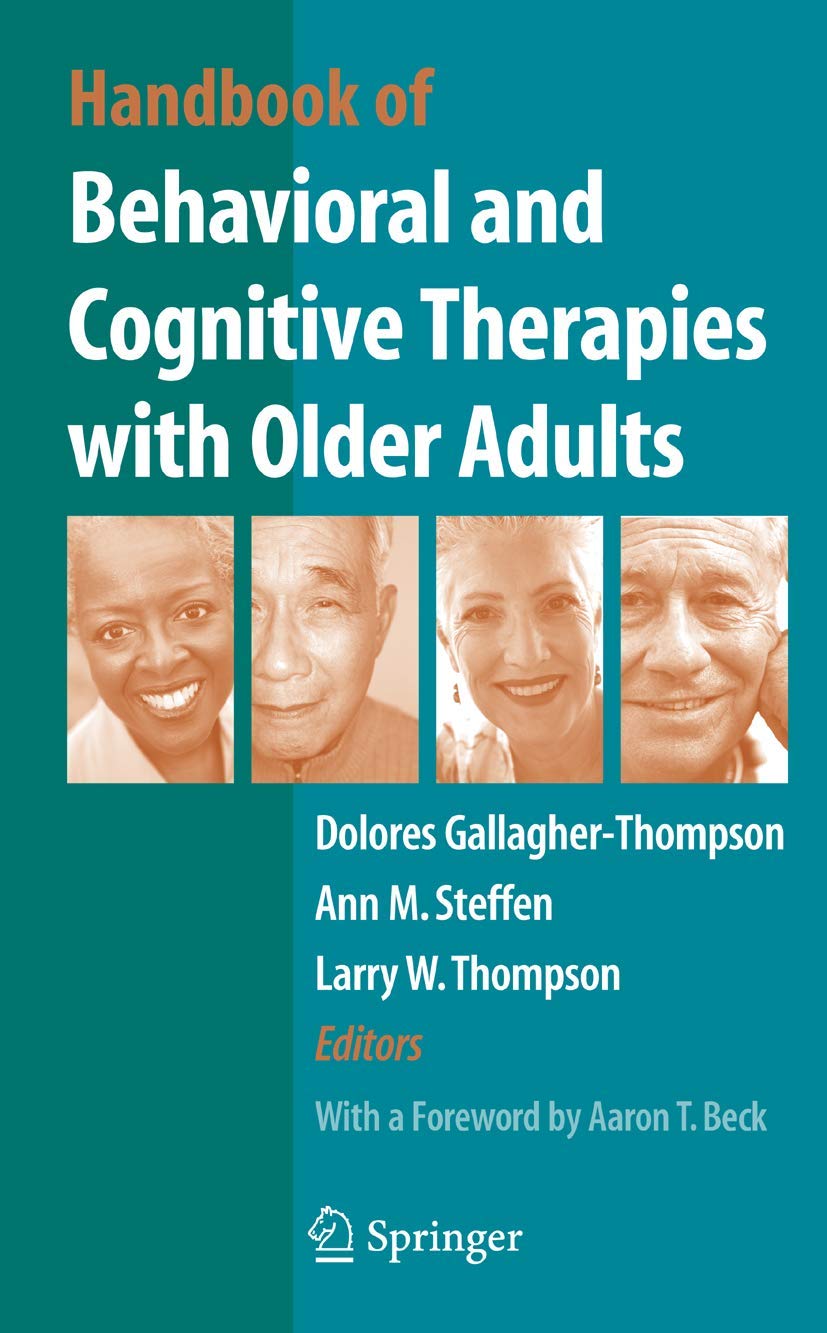
Handbook of Behavioral and Cognitive Therapies with Older Adults
$114.00
by Dolores Gallagher Thompson



It gives me great pleasure to witness continued growth in the application of cognitive and behavioral theories and therapies to more diverse populations – including, in this volume, their application to the mental health problems of later life. Evidence continues to accumulate, demonstrating that these are effective in treating a broad range of elderly patient groups. This is the first book to examine a number of these evidence-based interventions currently in use with older adults. The editors have assembled chapters developed in many of the leading clinical and clinical research programs focusing on elderly patients, both in this country and in the UK. Since the emphasis of this volume is primarily on clinical appli- tion, each author group was asked to discuss the empirical data for the treatment strategies it is using with the specific patient group selected. Typically, this was followed by a detailed description of treatment procedures that were then ill- trated by one or more clinical examples. The book begins by examining the treatment of depressive and anxiety dis- ders and then moves on to more complicated and/or serious disorders, including schizophrenia and other psychoses, suicidal behavior, personality disorders, bipolar disorders, dementia, and complicated bereavement. A chapter on the problems and issues in training therapists to use evidence-based interventions effectively is also included, along with a chapter discussing the implications of Medicare policies and guidelines for service delivery. From the reviews: "The book is geared for mental health professionals, including clinical psychologists, geriatric psychiatrists, gerontological nurses, clinical social workers, occupational therapists, and marriage and family therapists as well as students in graduate and advanced courses in these fields. … This excellent book deals with a broad range of disorders, both physical and psychological, covering different cognitive-behavioral therapy options backed by research. … is a good starting point for learning about treatment of older adults." (Gary B Kaniuk, Doody’s Review Service, August, 2008) “Behavioral and Cognitive Therapies with Older Adults will therefore be welcomed by those with an interest in this growing field. … Each chapter follows a broadly similar structure and helpfully includes a case study. Assessment is focused on extensively and at times seems to be at the expense of detail regarding the therapy. Whilst primarily a book for practicing CBT therapists, it is potentially an invaluable reference for any professional working with older adults.” (Ceri Evans, International Psychogeriatrics, Vol. 21 (3), 2009) Handbook of Behavioral and Cognitive Therapies with Older Adults Edited by Dolores Gallagher-Thompson, Ann M. Steffen, and Larry W. Thompson The physical health of older individuals presents many complex issues for providers; equally challenging are the increasingly complicated mental health problems of older adults. Although behavioral and cognitive interventions have been successfully used for a variety of mental and psychological disorders, there is an ongoing need for professional training in applications of these strategies with older individuals. The Handbook of Behavioral and Cognitive Therapies with Older Adults brings together expert scientist practitioners and the full spectrum of cognitive and behavioral interventions to promote age-appropriate best practice. The book enhances the professional’s understanding of the learning and self regulating capacities of older adults. Its consistent and easy-access format features empirical reviews, recommended cognitive and behavioral interventions specific to the problem, instructive case studies, and salient diversity issues. In their choice of topics, the editors have assembled the Handbook to fit the unique challenges of both older individuals and the practitioners working with them. Topics covered include: Common conditions, including depression, anxiety, insomnia, and pain syndromes Severe mental illnesses such as bipolar disorder, schizophrenia, dementia Grief and loss, family caregiving, suicidality Underserved populations, including ethnically and culturally diverse individuals Emerging areas of mental illness management, and effects of Medicare on practice This is important information for use by frontline mental health professionals, including clinical psychologists, geropsychiatrists, gerontologicalnurses, clinical social workers, occupational therapists, and marriage and family therapists. The Handbook is also suited to graduate and advanced courses in these professions. Reflecting a rapidly developing field, this resource will open up new areas of research and inspire the next wave of treatments tailored to this rapidly expanding population. Dr. Dolores Gallagher Thompson is Professor of Research in the Dept. of Psychiatry and Behavioral Sciences, Stanford University School of Medicine. She has been b