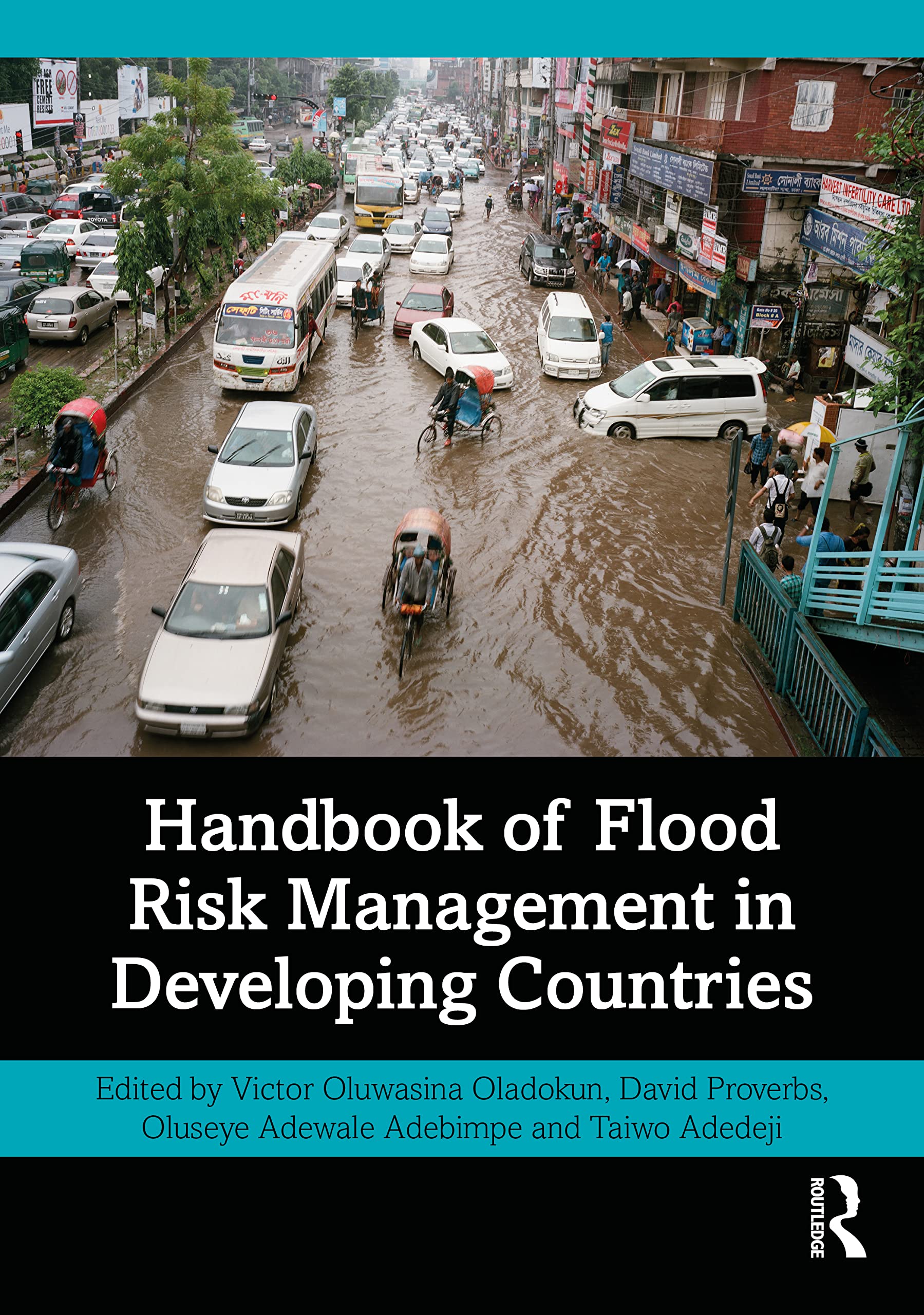



This new handbook brings together various views and experiences of the impacts of flooding and its management in Africa, Asia and Latin America by drawing from traditional and modern approaches adopted by communities, homeowners, academics, project managers, institutions and policy makers. Key stakeholders provide insights and perspectives on flood hazards, flood impacts, flood control and adaptation strategies across these regions. The inclusion of policy makers, emergency responders, leaders of key organizations and managers of flood defence projects makes this volume a unique addition to the flood management literature. The chapters are organized to reveal various impacts and challenges associated with the management of flooding, including response and recovery. The chapter contributions bring together the different impacts of flooding and propose various mitigation approaches. They describe procedures for managing flooding and reducing the impacts from the perspectives of policy makers, environmental planners and restorers of flood-affected communities. Also, the book considers some of the related aspects including land use, waste management, drainage systems, security challenges, urban planning and development and their contributions to flooding. The book's primary target is experienced researchers and practitioners in flood risk management. It would also serve as a key text for postgraduate students studying related programmes. Inhabitants of flood prone communities in such developing countries will also find the text an important resource for guidance and understanding. This multi-disciplinary book represents a valuable contribution for a wide range of professionals (e.g. in engineering, built environment, health, retail, etc) who are interested in flood control and management and/or faced with flood-related challenges in the course of their work. Victor Oluwasina Oladokun , Ph.D., a professor of industrial and production engineering at the University of Ibadan, Nigeria, is a senior Fulbright scholar and a Commonwealth academic fellow. Professor Oladokun, a certified SAP trainer/consultant, is the Deputy Dean, University of Ibadan School of Business. He is a member of the Academic Board of SAP University Alliances Africa (ESEFA) and a member of the Commonwealth Scholarship Commission Alumni Advisory Panel. Engr. Oladokun, a member of the Nigerian Society of Engineers, worked in the heavy equipment service sector before joining academics. He has extensive experience in teaching, research, mentoring, leadership and curricula development and has been involved in several multidisciplinary and international collaborative initiatives. As the Chair of the Department of Industrial and Production Engineering, he led the successful development and deployment of a new professional master’s program in engineering management to create a vital university–industry link. Professor Oladokun has served as a visiting research fellow at universities in the United Kingdom, United States and Nigeria. His research interests include disaster risk management and resilience modelling. His ongoing research includes the application of digital twin and IoT systems for disaster risk management and supply chain resilience improvement. Prof Oladokun teaches undergraduate and postgraduate courses in applied optimization, operation management, project management, scheduling, reliability engineering, soft computing, entrepreneurship, supply chain management and enterprise systems. Professor David Proverbs is Dean of the Faculty of Science and Engineering at the University of Wolverhampton. He has over 25 □years of experience in higher education and has held strategic leadership roles in three modern universities, where he has championed student learning as a research-driven, curriculum-active and enterprising academic. David has developed significant regional, national and international research and enterprise collaborations, drawing on a range of funding sources to pioneer innovative solutions towards improving resilience to flooding. He has pioneered the development of flood recovery approaches to the benefit of many governments, agencies, charities, companies and institutions worldwide. His research has had significant national and international impact in the development of UK climate change policy; as a trustee advising on global research grant awards; and through supporting the development of national flood risk strategies, for example, in Brazil, China, Nigeria, Peru and the United Kingdom. He is a member and lead innovation adviser to the Environment Agency’s Regional Flood and Coastal Committee. He has published extensively on a range of flood risk management topics, including adaptation, resilience and recovery. David is an experienced editor and is Chief Editor of the International Journal of Building Pathology and Adaptation (Emerald), Guest Editor of two recent special issues of the Water journal on flood risk and Editor