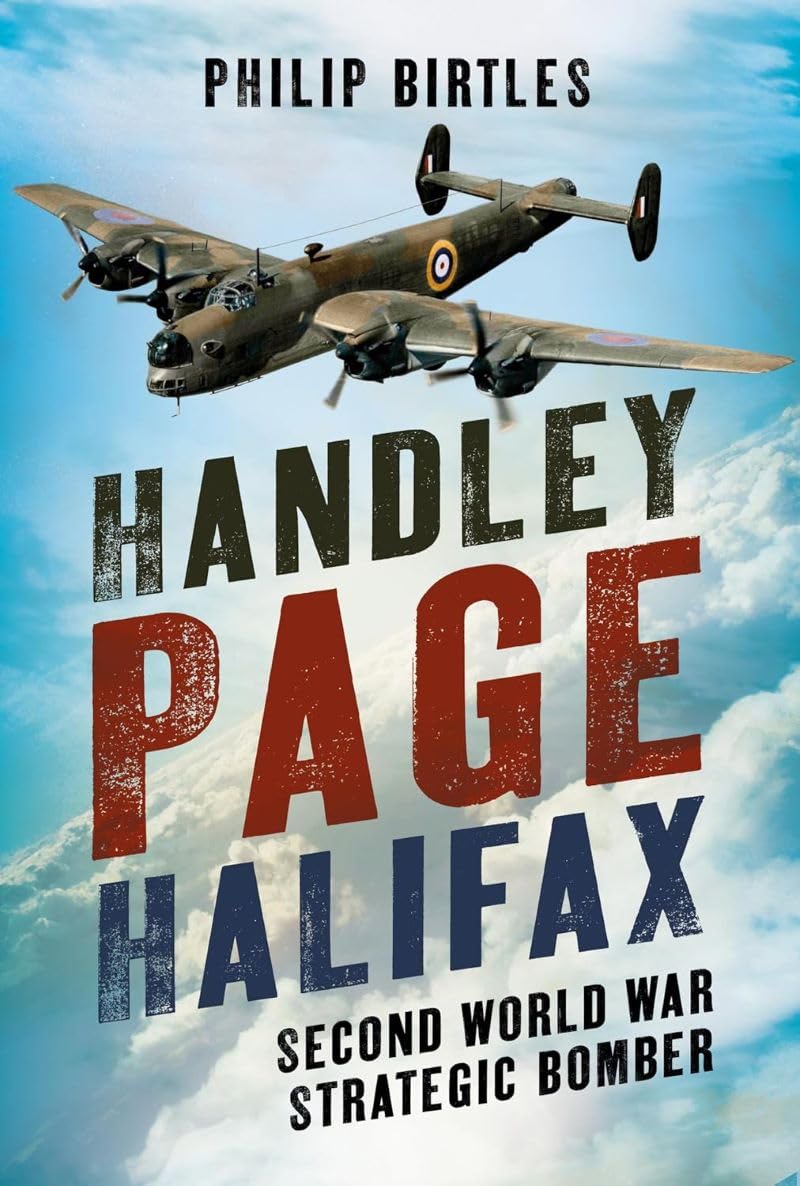



While not as famous as the Avro Lancaster, the Handley Page Halifax was developed to the same specification as the Lancaster’s predecessor, the Avro Manchester, and suffered similar engine-related issues. However, once the early Rolls-Royce Merlins had been replaced with Bristol Hercules air-cooled radial engines, the bomber’s performance and reliability were transformed. The Halifax accounted for around 40 per cent of the RAF’s total heavy bomber fleet throughout the war, with production coming out of Handley Page at Cricklewood and Radlett, as well as English Electric at Samlesbury and Rootes Securities at Speke among other manufacturers located across Britain. After the engine change in 1943, the Halifax became a valued and reliable stablemate of the Lancaster, equipping two major Bomber Command Groups, including Canadian squadrons, and specialising in glider towing and maritime reconnaissance. Handley Page Halifax: Second World War Strategic Bomber is a comprehensive assessment of the aircraft, covering its design, production, testing and RAF service, both as a bomber and in its other roles. Philip Birtles joined the de Havilland Aeronautical School as an engineering apprentice in September 1957. Following training, he joined John Cunningham― the chief test pilot as PA. Philip was then appointed deputy PR Manager at Hawker Siddeley Aviation, before moving to BAe Dynamics Group at Stevenage as PR Manager. A return was made to Hatfield with responsibility for customer acceptances for the BAe.146 airliner, until the factory closed in early 1994. Philip has written some 40 books on aerospace, his first one being published in 1980 and has been involved with the de Havilland Aircraft Museum for over 40 years.