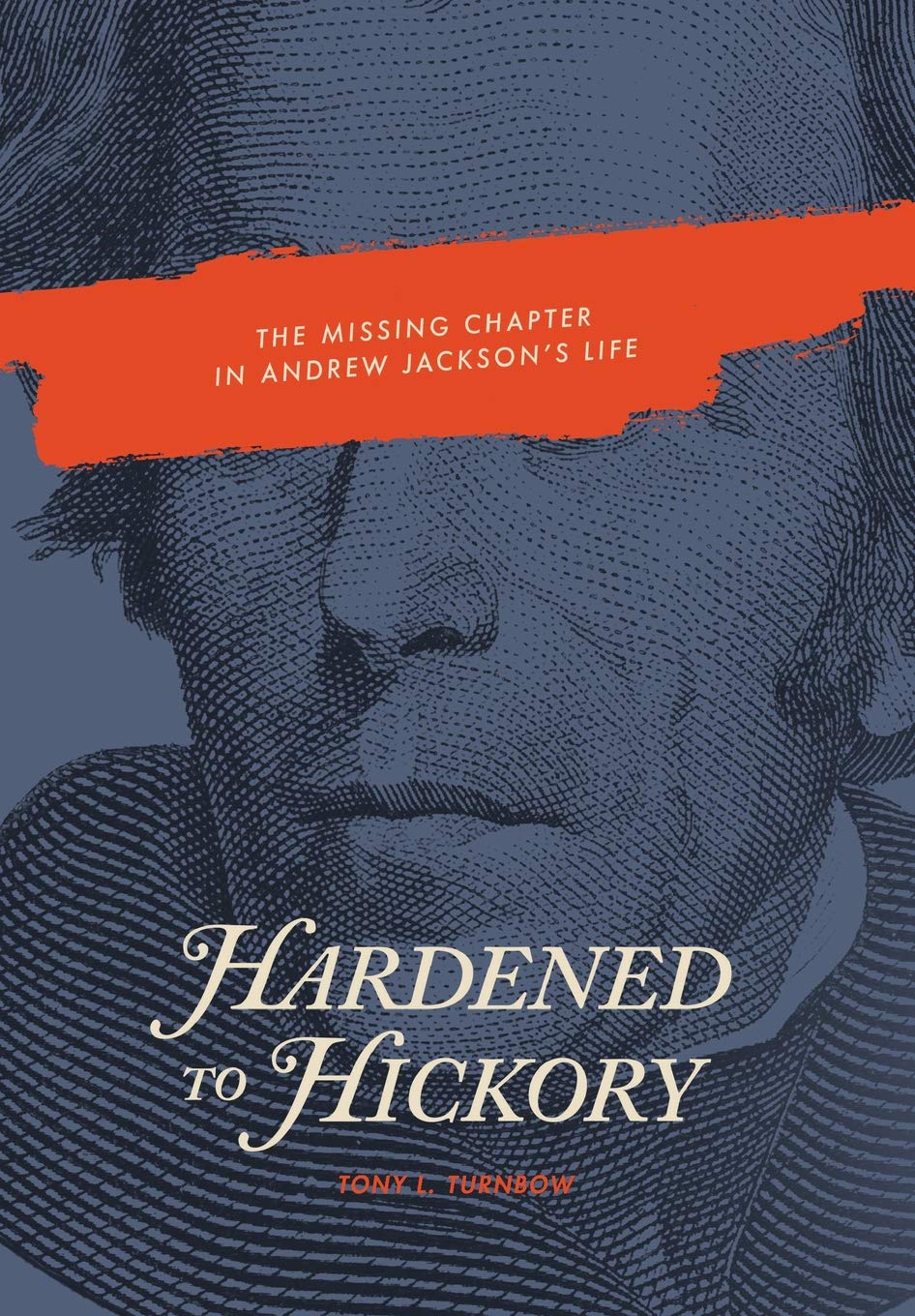



Unpublished documents reveal an Andrew Jackson who committed mutiny and shed tears as he thought his mistakes would lead to the deaths of teenage soldiers under his command. Indians saved him. The backwoods Jackson, who had never commanded a battle, presumed to take on the mantle of General George Washington. Before Jackson became the next general to drive the British Army from American soil, he first had to defeat the commander of the U.S. Army, General James Wilkinson. Wilkinson embodied a privileged and unproductive establishment. Worse, he had sold his loyalty to work as a spy known as "Agent 13" on the payroll of a European enemy. It was a battle of wits and wills between two American titans. The missing piece of Jackson's biography is how he was transformed into "Old Hickory" by challenges that would have crushed almost anyone else, an intense will to succeed, and an ability to recover from his own mistakes. The non-fiction Hardened to Hickory: The Missing Chapter in Andrew Jackson's Life is set in a seemingly apocalyptic time in American history when both settlers and Indians thought the world was coming to an end. For months, massive earthquakes caused the ground to open like jaws and swallow houses whole. The Mississippi River flowed backward. A comet appeared as a second moon. The northern lights turned blood-red. The plight of a poor young mother taken hostage by Indian rebels seemed to signal a wider and final destruction and mobilized Jackson's state to go to war. Political parties had divided themselves into two camps and refused to trust each other. The establishment that had won the Revolution and produced a new nation was no longer producing prosperity. The fledgling country seemed to be tearing itself apart at the same time enemy powers threatened to invade. Out of the turmoil, strong leaders rose on the frontier: Shawnee Tecumseh, Chickasaw Colbert, Choctaw Pushmataha and Andrew Jackson. Most of them had learned to survive as orphans, without relying upon the privileges of the old establishment that seemed to be crumbling around them. The narrative follows Jackson's young Tennessee Volunteers in their expedition down the Natchez Trace and Mississippi River as Jackson attempted to outwit and overpower Wilkinson for control of the Gulf Coast and ultimately the U.S. Army. The new information describes a human side of a more complex Andrew Jackson than has been presented. It also reveals how the attempt to save young soldiers transformed Jackson into the "Old Hickory" whose contemporaries would compare to General George Washington. "Old Hickory" was the Andrew Jackson who became president and led the United States into the "Age of Jackson." The transformation began in a cold tent on the Natchez Trace when it seemed that Andrew Jackson had been defeated. "...original and thrillingly dramatic. An impressive combination of scrupulous scholarship and powerful storytelling." -- Kirkus Reviews " ...fresh take on a familiar figure...This thorough, focused account is perfect for early American history enthusiasts looking for a new twist on the era." -- Publishers Weekly "Jackson's life intersects with the [Natchez] Trace in monumental ways, and Turnbow weaves a deft history of both in his telling of Jackson's 1813 march towards New Orleans in the midst of the War of 1812... The research is quite good, the writing lively, and the overall narrative engaging. Hardened to Hickory successfully fills out an important part of Jackson's life." -- Tennessee Historical Quarterly " ... incredibly readable style and pacing. Turnbow masterfully interweaves a complex narrative that completely immerses you in the period and allows the reader to fully comprehend the dynamic and nuanced issues involved in how Andrew Jackson became 'Old Hickory.'...Turnbow's work is thoroughly researched and well written, and will stand as the key source on this topic for years to come." -- Lt Col. Darrin Haas, Historian, Tennessee National Guard Tony L. Turnbow has studied the history of the Natchez Trace for more than 30 years. He practices law in Franklin, Tennessee. With a Bachelor of Arts and a concentration in southern U.S. history from Vanderbilt University and a Juris Doctorate from the University of Tennessee College of Law, he has continued to use his training to explore unpublished primary sources about the Natchez Trace. He authored "The Natchez Trace in the War of 1812" in The Journal of Mississippi History, and he has published articles in the Tennessee Historical Quarterly and the Lewis and Clark Trail Heritage Foundation journal "We Proceeded On." He also wrote a full-length play "Inquest on the Natchez Trace" about the mysterious death of explorer Meriwether Lewis. In the course of writing a book about Lewis's death, Mr. Turnbow discovered unpublished accounts of Andrew Jackson's 1813 Natchez Expedition.Mr. Turnbow represented the Natchez Trace Parkway Association on the Tennessee War of 1