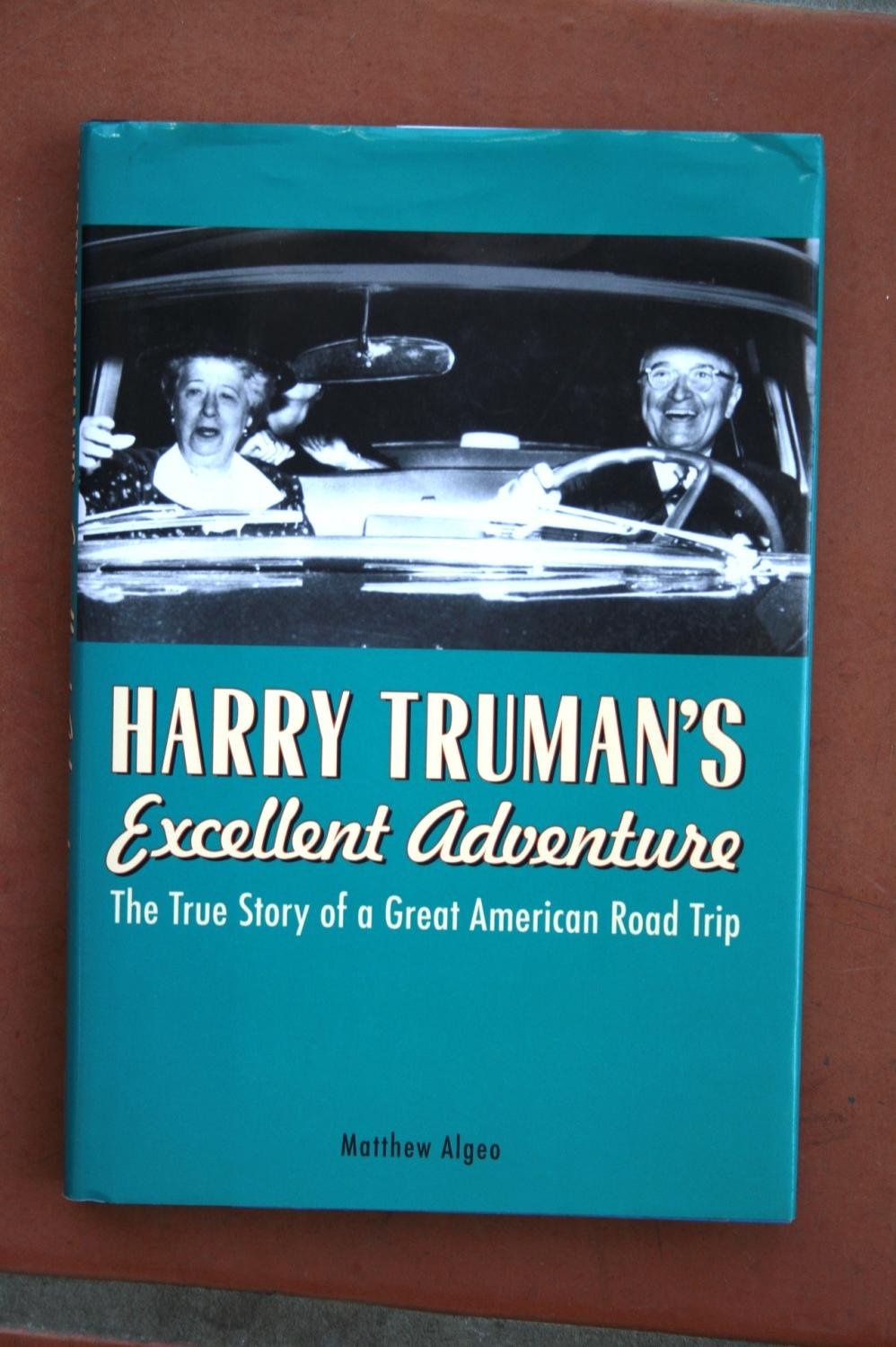
Harry Truman's Excellent Adventure: The True Story of a Great American Road Trip
$29.11
by Matthew Algeo



On June 19, 1953, Harry Truman got up early, packed the trunk of his Chrysler New Yorker, and did something no other former president has done before or since: he hit the road. No Secret Service protection. No traveling press. Just Harry and his childhood sweetheart Bess, off to visit old friends, take in a Broadway play, celebrate their wedding anniversary in the Big Apple, and blow a bit of the money he’d just received to write his memoirs. Hopefully incognito. In this lively history, author Matthew Algeo meticulously details how Truman’s plan to blend in went wonderfully awry. Fellow diners, bellhops, cabbies, squealing teenagers at a Future Homemakers of America convention, and one very by-the-book Pennsylvania state trooper--all unknowingly conspired to blow his cover. Algeo revisits the Trumans’ route, staying at the same hotels and eating at the same diners, and takes readers on brief detours into topics such as the postwar American auto industry, McCarthyism, the nation’s highway system, and the decline of Main Street America. By the end of the 2,500-mile journey, you will have a new and heartfelt appreciation for America’s last citizen-president. "With deliberate detours, this book is a portal into the past with layers of details providing unusual authenticity and a portrait of the president as an ordinary man." Publishers Weekly "Matthew Algeo recalls [my grandparents'] memorable trip beautifully and with the sense of humor it deserves." Clifton Truman Daniel , grandson of Harry S. Truman "Enlivened by Algeo"s endeavors to see the places where Truman stopped, this is an engaging historical sidebar." Booklist Online "An engaging account . . . Well-researched." Wall Street Journal "Combines . . . history with the ever-popular road book, researching, duplicating, and reporting in detail on the last trip the Trumans took, driving their new Chrysler to Washington, and back to Independence." Max J. Skidmore , author, After the White House: Former Presidents as Private Citizens " Harry Truman's Excellent Adventure resonates Aaron Copeland's 'Fanfare for the Common Man'brassy, bright, energetic, brief and declaratively American." Washington Times "Algeo has done a first-rate job of piecing together the trip . . . a fascinating reading experience." Jackson Free Press "Charming and engrossing." Riverfront Times Matthew Algeo is a public radio reporter. His first book, Last Team Standing: How the Steelers and the Eagles—"The Steagles"—Saved Pro Football During World War II , won the 2006 Nelson Ross Award for best pro football historiography. For more information, visit www.trumanroadtrip.com. From The Washington Post's Book World/washingtonpost.com Reviewed by Christopher Buckley The title "Excellent Adventure" probably ought to be retired at this point, but not quite yet, for Matthew Algeo has given us just that: an extremely excellent adventure by ex-President Harry Truman and his wife, Bess, in the form of a road trip they both made -- just the two of them -- in the summer of 1953, not long after Harry had left the White House with a 22 percent approval rating. Twenty-two percent . . . why does that sound familiar? (Confidential memo to George W: Pack up that car with Laura and hit the road!) It's hard not to read this utterly likable if occasionally overwrought book without feeling a tad nostalgic for the days when American automobiles set the gold standard, gas cost 27 cents a gallon, and the best restaurant in town might be found at the airport. It may make you feel a bit ironic, too, inasmuch as the impetus for the Truman escapade was a trip to Philadelphia, where the former president delivered a speech deploring Republican cuts to the defense budget. At times, you feel as though you've wandered into an episode of "The Twilight Zone." Harry Truman, perhaps the most down-to-earth man who ever led this country, returned home to Independence, Mo., in 1953, broke. His only source of income was his $111.96-per-month World War I pension. In those days, ex-presidents didn't get pensions. But they might be offered a free car, and Harry happily accepted a spanking-new 1953 Chrysler (those were the days) New Yorker. The sticker price then was about $4,000, the average yearly salary of an American worker. It was offered gratis, but Truman insisted on paying something -- and probably spent a whole dollar on it. A very presidential compromise. Harry had always been a car man, and now he had the best. And so, broke, out of work, he did what any red-blooded American would do under similar circumstances: He hit the road and took along the missus to make sure he didn't speed (a Truman tendency). And what an adventure they had. He got pulled over on the Pennsylvania Turnpike -- despite Bess's supervision -- stayed in motels, ate in diners. Everyone delighted in seeing the former First Couple, never mind the 22 percent approval rating. The country just loved Harry. When