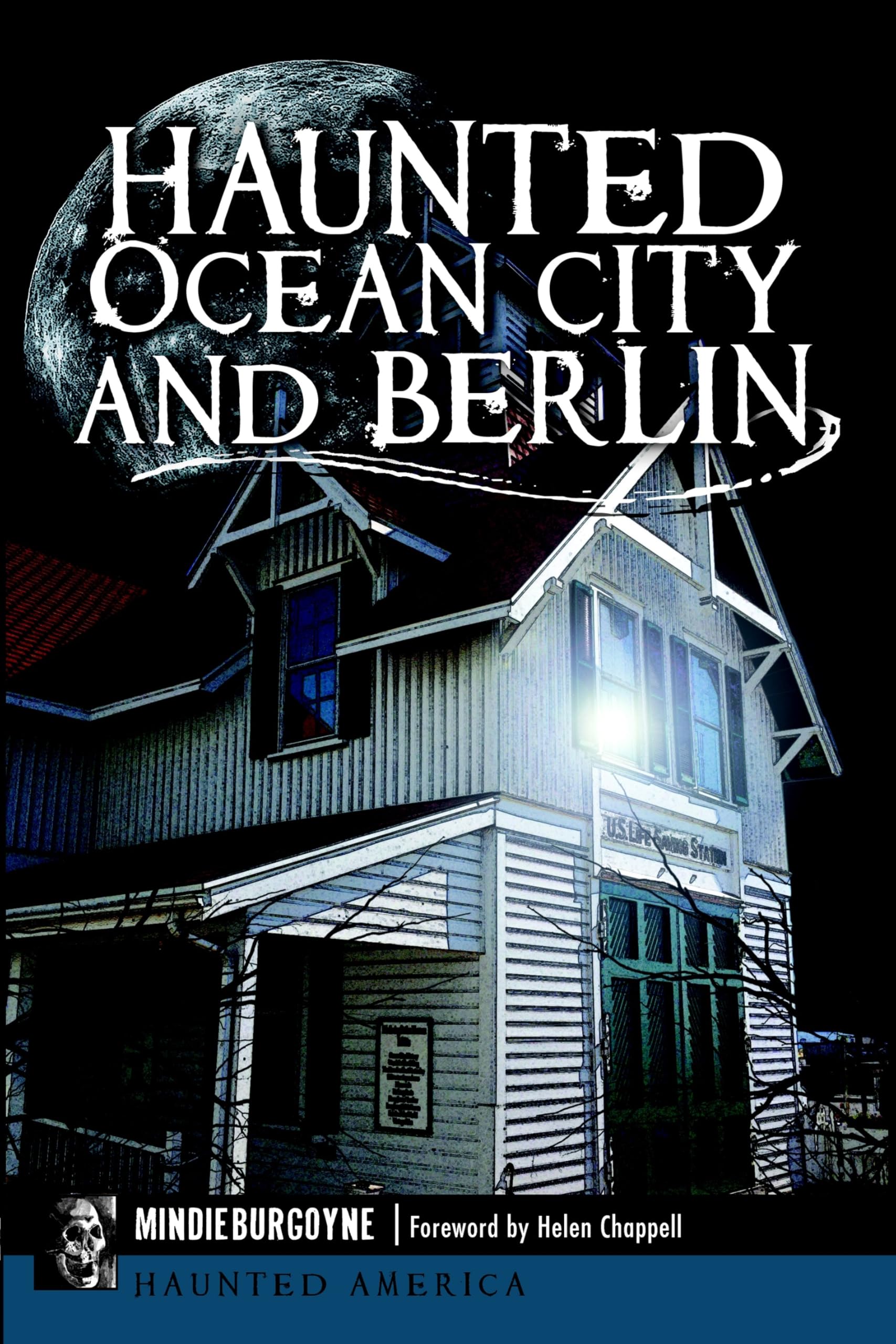



Join Author and guide Mindie Burgoyne as she takes a chilling journey through the haunted history and lore of Ocean City and Berlin. A ghostly sea captain, an ill-fated lover and jazz musicians who go on playing long after their last songs--these are the spirits that make their presence known from Ocean City's Boardwalk to the picturesque town square of Berlin. The phantom scent of a woman's perfume floats from Trimper's carousel while the Ocean City Life-Saving Station is haunted by the ghost of a drowned sailor. In Berlin, some guests never check out of the Atlantic Hotel, and strange happenings have been reported at the Rackliffe House, where legend has it that a cruel plantation owner was murdered by his slaves. Mindie Burgoyne is a travel writer, blogger, author, tour operator and speaker. Her tour company includes Chesapeake Ghost Walks, which features ten regional tours on Maryland's Eastern Shore. She is the author of Haunted Eastern Shore: Ghostly Tales from East of the Chesapeake. Her articles and photographs have been featured in the Baltimore Sun, CBS News, Maryland Life Magazine and What's Up Eastern Shore, among others. Helen Chappell is a writer and columnist based on Maryland's Eastern Shore. She is the author of The Oysterback Tales and Chesapeake Book of the Dead. Haunted Ocean City and Berlin By Mindie Burgoyne The History Press Copyright © 2014 Mindie Burgoyne All rights reserved. ISBN: 978-1-62619-754-1 Contents Foreword, by Helen Chappell, Acknowledgements, Introduction, Part I. Ocean City, The Atlantic Hotel, The Ocean City Life-Saving Station Museum, Trimper's Menagerie Carousel, The Henry Hotel, Tarry-A-While Guest House, The Plim Plaza, Who Is Buried at Captain's Hill?, Dolle's Candyland, The Dunes Manor Hotel, The Shoreham Hotel, Part II. Berlin, The Atlantic Hotel, The International Order of Odd Fellows, Ayers General Store, Adkins Hardware and the Elemental, The Healing Tree, Berlin's Walking Dead, Dairy Queen Building, Windy Brow, Rackliffe House, The Assateague Indian, Afterword, Bibliography, About the Author, CHAPTER 1 Ocean City The Atlantic Hotel On July 4, 1875, the Atlantic Hotel opened in Ocean City. The idea of a grand hotel on the sandy shores of the barrier island east of Sinepuxent Bay was conceived by a group of Lower Eastern Shore businessmen who believed that by creating this seaside resort, they could not only grow their investment but also open a whole new revenue stream for the local economy rooted in tourism. They gathered investors, bought the land, laid out the town and named it Ocean City. Their vision was prophetic, as Ocean City certainly became a thriving tourist town. And their vision for a grand hotel in a seaside resort town paved the way for other visions and entrepreneurial dreams, and all of those dreams came together to shape a culture and a destination that attracts seven million visitors every year. These are visitors who expect to eat Thrasher's French fries and Dolle's candy, stroll the Boardwalk, ride Trimper's Menagerie Carousel and do all things fun that have become part of the Ocean City brand. The Atlantic Hotel marked the beginning of that dream. When it opened, it was the anchor — the axis on which the town would spin. It was built in the Victorian style, four stories high with tall columns across the hotel's oceanfront façade. It could accommodate four hundred guests, and it stretched from Atlantic Avenue (the Boardwalk) to Baltimore Avenue — a full city block. This amazing structure was the only thing on the barrier island except for a few guest cottages and fishing camps. The rooms of the Atlantic Hotel were large and airy with excellent ventilation, according to a reporter from the Salisbury Advertiser. The hotel would meet all the visitors' needs and provide daily entertainment. There was a casino, a billiard room, a huge dining room and a dance hall with a first-class orchestra. Guests would have all three of their daily meals at the hotel, take in the seaside views and perhaps bathe in the ocean, stroll the Boardwalk or relax on the porches. This was at a time when cities were filthy with bulging populations and poor sanitation. Most people living on the west side of the Chesapeake Bay all the way to the Mississippi River would never see an ocean in their lifetimes. The Atlantic Ocean was something people only read about in books or heard about in stories. This new resort opened up opportunity for travel in a post–Civil War era when the American economy was being reshaped and people wanted to start feeling good again — to look to the future. At first, people came by stagecoaches and ferries, but in 1878, the railroad was extended all the way to Sinepuxent Bay. Shortly after that, a bridge was built that allowed the train to stop near the front door of the Atlantic Hotel. Ocean City became a romantic, magical summertime destination that a family could reach in a hal