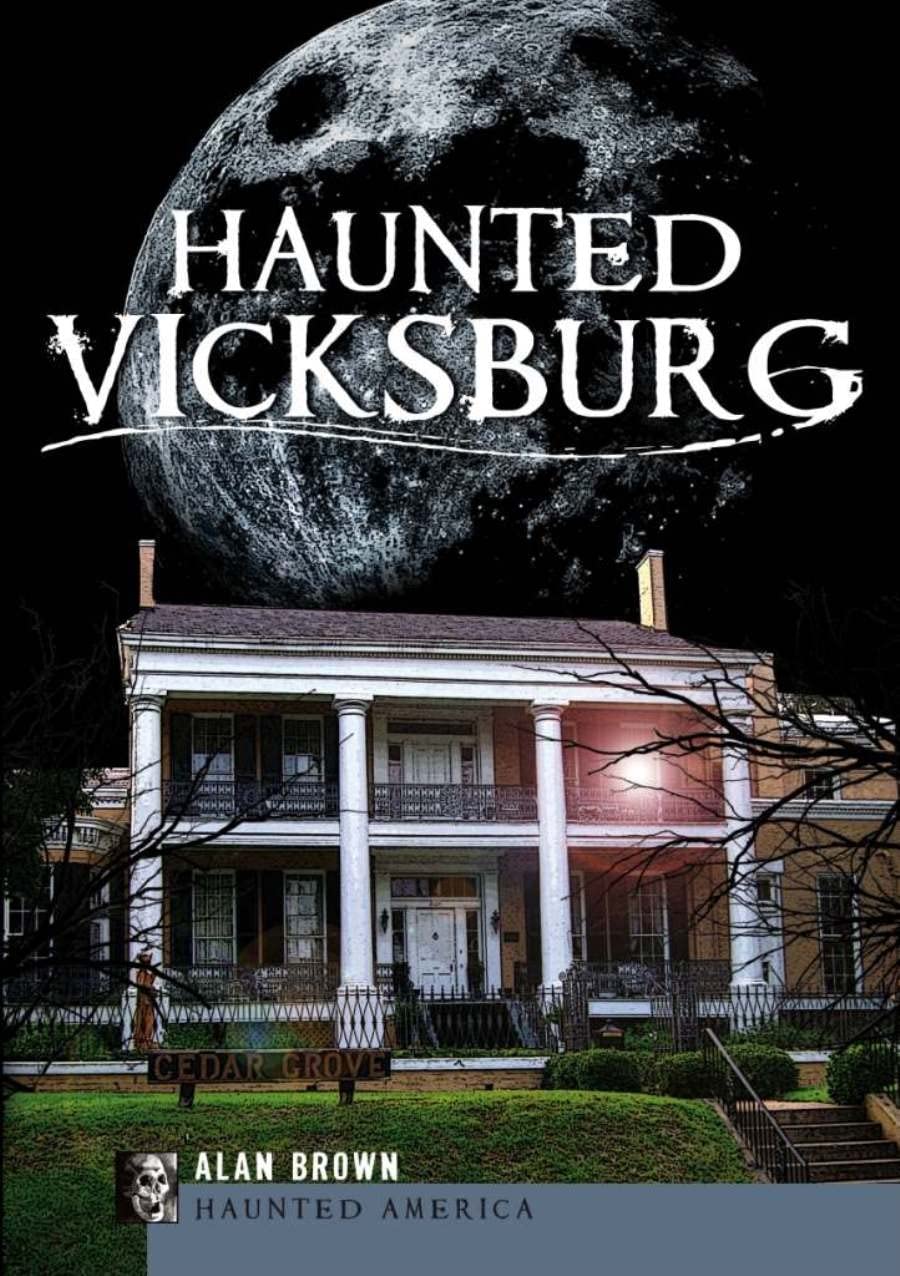



Discover the history of Vicksburg, Mississippi through the voices of a society long past and the land long left scarred by war. Nestled along the mighty Mississippi River, Vicksburg is among Mississippi's most historic towns. The site of one of the most important and brutal battles of the Civil War, it is perhaps ?tting that voices from the past still echo in the humid climes. As the home of beautiful antebellum homesteads, storied wartime quarters and ports essential for the steamers and barges of the river trade, Vicksburg today serves as home to an abundance of spirits from years past. Lurking just beneath Vickburg's scenic beauty, ghostly apparitions from bygone eras continue to haunt this historic community. Join Alan Brown, seasoned Mississippi author and authority on the spirits that haunt the Magnolia State, on a chilling journey through Vicksburg's most historic haunts, uncovering history that refuses to die. Alan Brown was born in Alton, Illinois. After attending Millikin University, Southern Illinois University and the University of Illinois, he taught high school in Springfield, Illinois. In 1986, he began teaching English at the University of West Alabama. After living in the South for a year, Brown became interested in the folklore of the South and began collecting it on his own. People talk in the Midwest, "? Brown said, "but not like they do in the South. I guess this is why southerners are great storytellers."? When he is not teaching freshman composition or American literature, Dr. Brown writes books on his favorite topic: ghost stories. Haunted Birmingham is his tenth collection of southern ghost tales. As much as he loves old stories that send shivers up the spine, Brown's first love is his wife, Marilyn, and his two daughters, Andrea and Vanessa." Haunted Vicksburg By Alan Brown The History Press Copyright © 2010 Alan Brown All rights reserved. ISBN: 978-1-59629-926-9 Contents Acknowledgements, Introduction, Anchuca, The Baldwin House Restaurant, The BB Club, Cedar Grove Mansion, Christ Episcopal Church, Duff Green Mansion, McRaven, The Luckett Group, The Nurses' Station, The Old Courthouse Museum, Pemberton's Headquarters, Sergeant Smith Prentiss Building, Stained-Glass Manor, Vicksburg National Military Park, The Corners Mansion, Lakemont, Bibliography, About the Author, CHAPTER 1 ANCHUCA The beautiful antebellum mansion at 1010 East First Street is located in one of Vicksburg's oldest residential sections. The Greek Revival mansion was built in 1830 by a local politician named J.W. Mauldin. In 1837, a wealthy planter named Richard Planter moved into the mansion from Oaken Grove Plantation in Claiborne County. Archer enlarged the mansion to accommodate his large family, consisting of his wife, Ann, and five daughters. He named the house Anchuca, a Choctaw Indian word for "Happy Home." In 1840, a coal and ice merchant named Victor Wilson purchased Anchuca. Seven years later, he added the columns in the front of the house to reflect the Greek Revival style. Anchuca became the first columned mansion in Vicksburg. People say that Wilson enjoyed watching his barges float down the Mississippi River. During the Siege of Vicksburg, Anchuca was used as a field hospital. In 1868, Joseph Emory Davis, Jefferson Davis's older brother and mentor, moved into Anchuca. While visiting his brother in 1869, following his release from Deeral Prison, Jefferson Davis spoke to friends from Anchuca's balcony. This was his last public speech. Joseph Emory Davis and his granddaughter lived at Anchuca until his death in 1870 at the age of eighty-seven. A number of different families lived in Anchuca in the late nineteenth and the early to mid-twentieth centuries. In 1936, Anchuca was owned by Mrs. William Joseph Vollor when it was surveyed by the American Historic Buildings Survey. Anchuca is now one of Vicksburg's most popular bed-and-breakfasts. Most of the architectural elements, such as the heart pine floors, fireplace mantle and crown moldings, are original. However, none of the original furnishings remains. Period antiques, representing the late 1700s to the mid-1800s, give guests and tourists an idea of how Anchuca would have looked before the Civil War. Some of these antiques include an American Empire secretary of rosewood mahogany from the 1830s, a Victorian mirror from the 1860s, a chandelier of gilded bronze from 1780, a U.S. cavalry sword from 1860 and two rare prints by Audubon from 1832. One of the most interesting features is Wilson's coal-burning fireplace. Anchuca was one of the first homes in Vicksburg to use coal for heat. One holdover from the past that is only occasionally on display is the ghost of Archie Archer. In an interview with author Sheila Turnage, innkeeper Lovetta Byrne said, "The ghost story is that supposedly there was a man that lived here, who had a daughter. And she was dating this guy that he did not want her to date." Acc