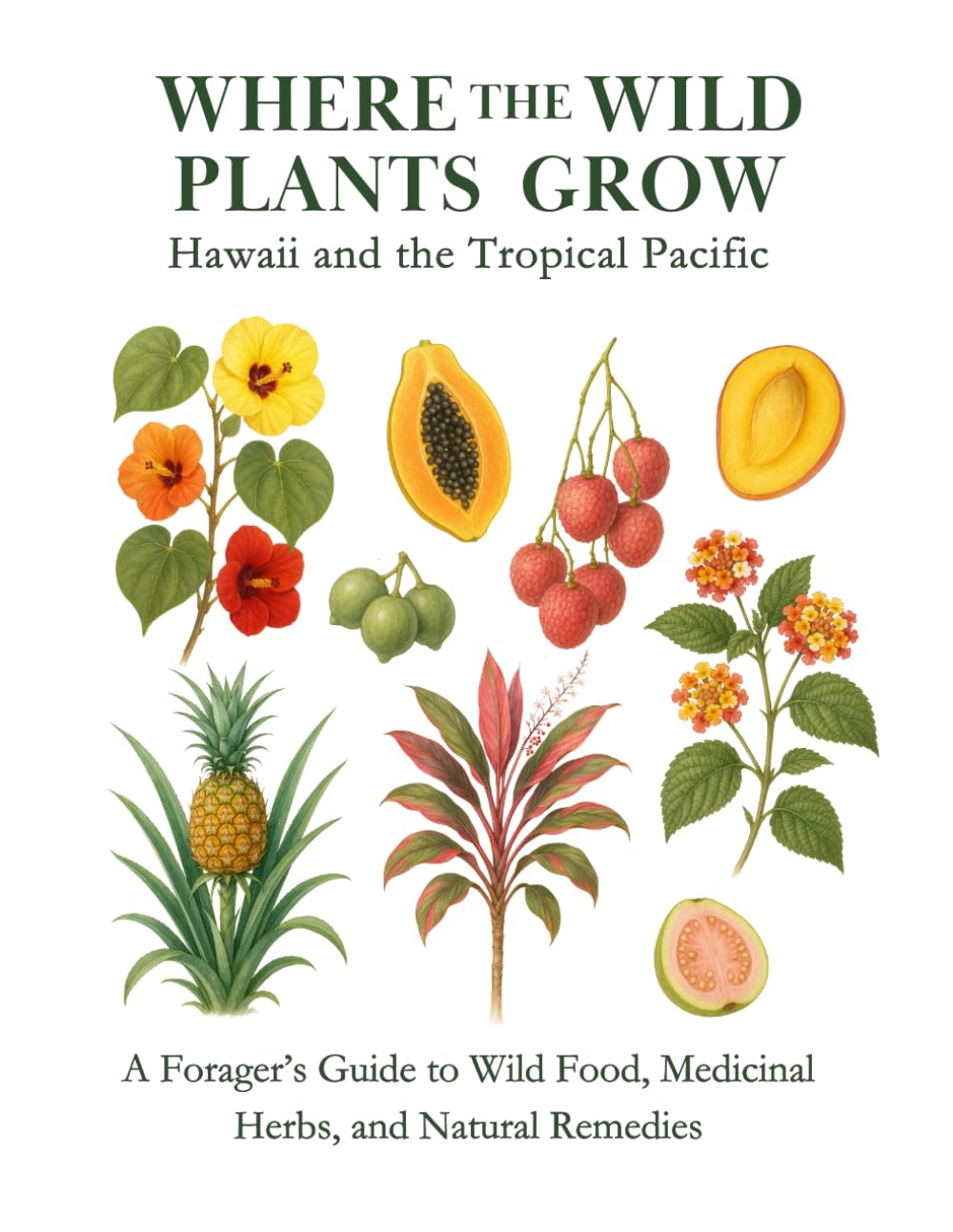
Hawaii and the Tropical Pacific: A Forager’s Guide to Wild Food, Medicinal Herbs, and Natural Remedies (Where the Wild Plants Grow: Illustrated
$17.99
by Samantha Christie



A beginner-friendly foraging guide designed especially for Hawaii and the tropical Pacific! Safely identify and harvest 40+ edible plants, fruits, seaweeds, and tropical roots, plus dangerous look-alikes, with this beautifully illustrated field guide crafted for the unique ecosystems of Hawai‘i, from coastal reefs and brackish estuaries to lush lowland forests and humid upland valleys. Whether you’re a first-time forager, a beach hiker, or someone reconnecting with ancestral food traditions, this book gives you the knowledge you need to respectfully gather the edible abundance of the islands. Inside, you’ll discover: Accurate, full-color botanical illustrations Clear, detailed artwork brings each species to life—from limu kohu, limu ‘ele‘ele, ogo , and pohole ferns to breadfruit (‘ulu) , mountain apple , taro , hala , sea purslane , strawberry guava , and more. Every profile includes concise ID tips, habitat clues, edible parts, and cultural notes drawn directly from the Hawaiian landscape. . Beginner-friendly identification for 30+ edible species Learn to recognize key features, textures, colors, and growth forms of edible seaweeds, coastal shrubs, tropical fruits, roots, and greens—all explained in simple language for new foragers. Poisonous look-alikes & safety warnings Your guide includes toxic or risky plants and seaweeds often confused with edible species, along with clear, practical cautions about water quality, tidal conditions, contaminated runoff, and ornamental tropical plants that may contain irritants or toxins. When, where, and how to forage in Hawaii Understand the best seasons for harvesting limu, mountain fruits, swamp-grown kalo varieties, and dryland crops—plus how tides, rainfall, and elevation influence what you’ll find. Sustainable, culturally respectful harvesting practices Learn ethical gathering rooted in Native Hawaiian stewardship principles—take only what you need, protect fragile reef ecosystems, and avoid damaging slow-growing species like limu kohu. Simple preparation methods (no complex recipes required!) Master the basics of preparing tropical wild foods using approachable techniques such as blanching, drying, fermenting, infusing, roasting, salting seaweed, and making herbal vinegars and tinctures. Includes step-by-step guidance for drying herbs, cleaning limu, processing fruits, and storing tropical harvests in Hawai‘i’s humid climate Nutritional + medicinal benefits of each plant Discover the vitamins, minerals, and traditional herbal uses of Hawaiian plants like mamaki, coconut, wild ginger, guava leaves, hala, sea grapes, and more—perfect for natural remedies, survival skills, or more self-sufficient island living. Perfect for: Beginner and intermediate foragers - Residents and visitors exploring Hawaii’s beaches, forests, and valleys - Seaweed lovers and coastal foragers - Homesteaders, preppers, and off-grid enthusiasts - Anyone interested in wild foods, cultural plant uses, or reconnecting with the ‘āina Reconnect with the land, forage respectfully, and experience Hawaii through its wild foods. Start your Pacific foraging journey today! Hawaii and the Pacific Tropics is part of the Where the Wild Plants Grow series, a collection of region-specific foraging guides designed to make wild plant identification safer, clearer, and more approachable. This volume features 36 edible and useful plants found across Hawaii's coastal, lowland, and upland environments, alongside 10 poisonous or dangerous lookalikes commonly mistaken for edible species. Coverage includes marine foraging traditions, tropical fruits and roots, medicinal plants, and forest species that readers are likely to encounter in real-world settings. Each plant profile emphasizes accurate identification, habitat awareness, seasonal context, and safety considerations, helping readers build confidence without relying on folklore or assumption. With its careful plant selection and safety-first approach, this guide offers a practical foundation for beginners while remaining valuable for experienced foragers navigating tropical environments. Hawaii's landscapes are often described as abundant, but tropical foraging requires careful identification, cultural awareness, and respect for how easily edible and dangerous plants can be confused. This book was written to bring clarity to that complexity. By focusing on plants commonly encountered across Hawaii's coastlines, forests, and everyday landscapes, it aims to make foraging more approachable while emphasizing caution, accuracy, and responsibility. Each chapter encourages readers to slow down, observe carefully, and build confidence through reliable identification rather than assumption. Whether you are new to foraging or expanding your regional knowledge, this guide is intended to support thoughtful learning and respectful engagement with Hawaii's unique ecosystems. From marine shorelines and coastal paths to lowland tropics and upland