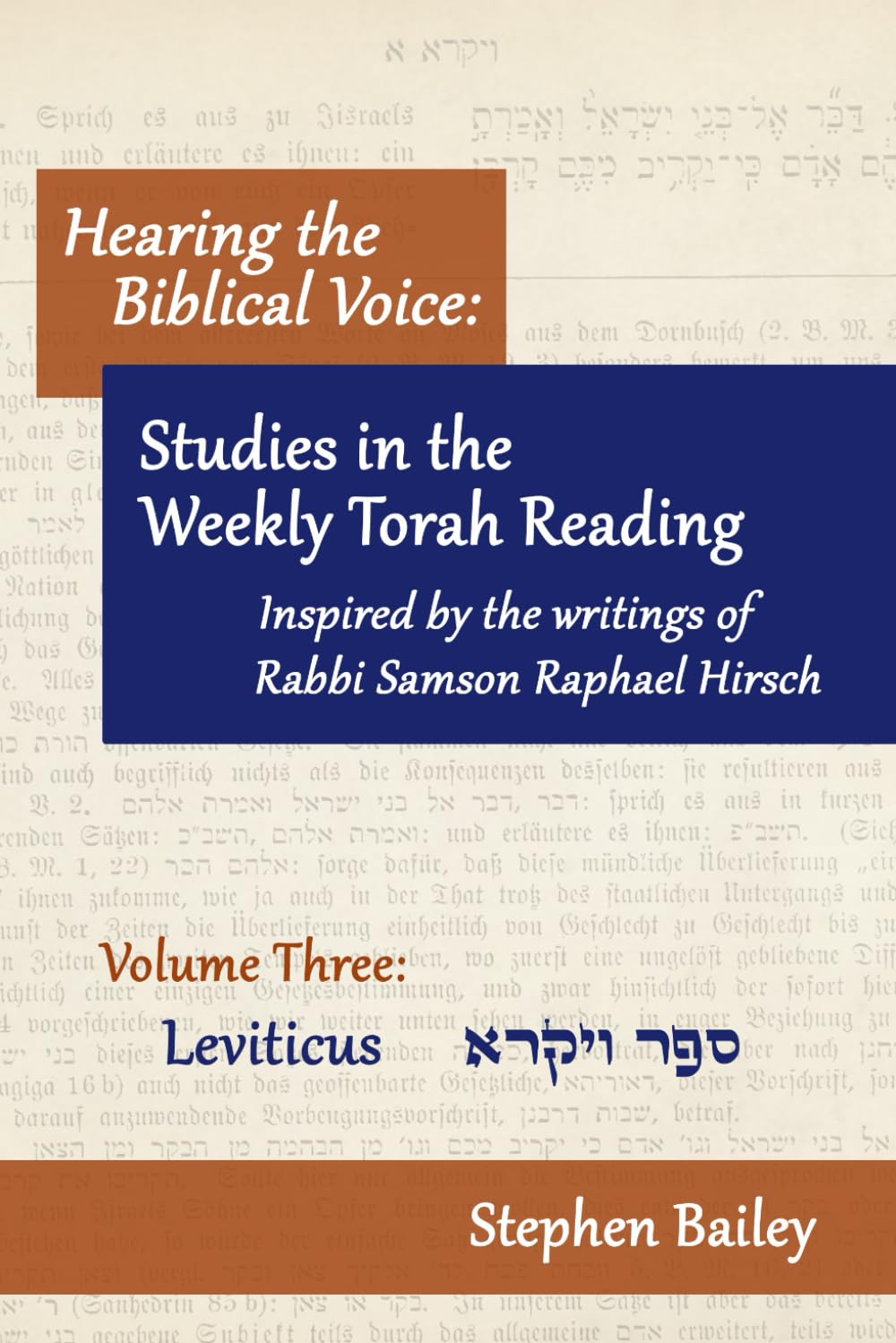
Hearing the Biblical Voice: Studies in the Weekly Torah Reading inspired by the writings of Rabbi Samson Raphael Hirsch:: Volume Three: Leviticus
$15.00
by Stephen Bailey



How does the modern reader of the Bible contend with the initial chapters of Leviticus that describe, in detail, the complex Biblical system of offerings in the Sanctuary? Rabbi Samson Raphael Hirsch treats these ritual texts as integral to the Torah -- as relevant and educational as its narratives and social laws. In these Studies, R. Hirsch addresses the text-based symbolic meaning of the sacrificial offerings to discover essential teachings that remain eternal, even today when the sacrificial system no longer exists. Leviticus also contains a second major motif: rituals such as dietary laws and commandments relating to social relationships. Both of these topics promote “holiness,” aimed at the achievement of a sanctified life. Thus, the entire Book of Leviticus -- sanctuary rituals and social laws -- can be seen as presenting the behavioral means through which the individual and the nation draw nearer to God by striving toward spiritual development – fulfilling their part of the covenant to be a "kingdom of priests and a holy nation."