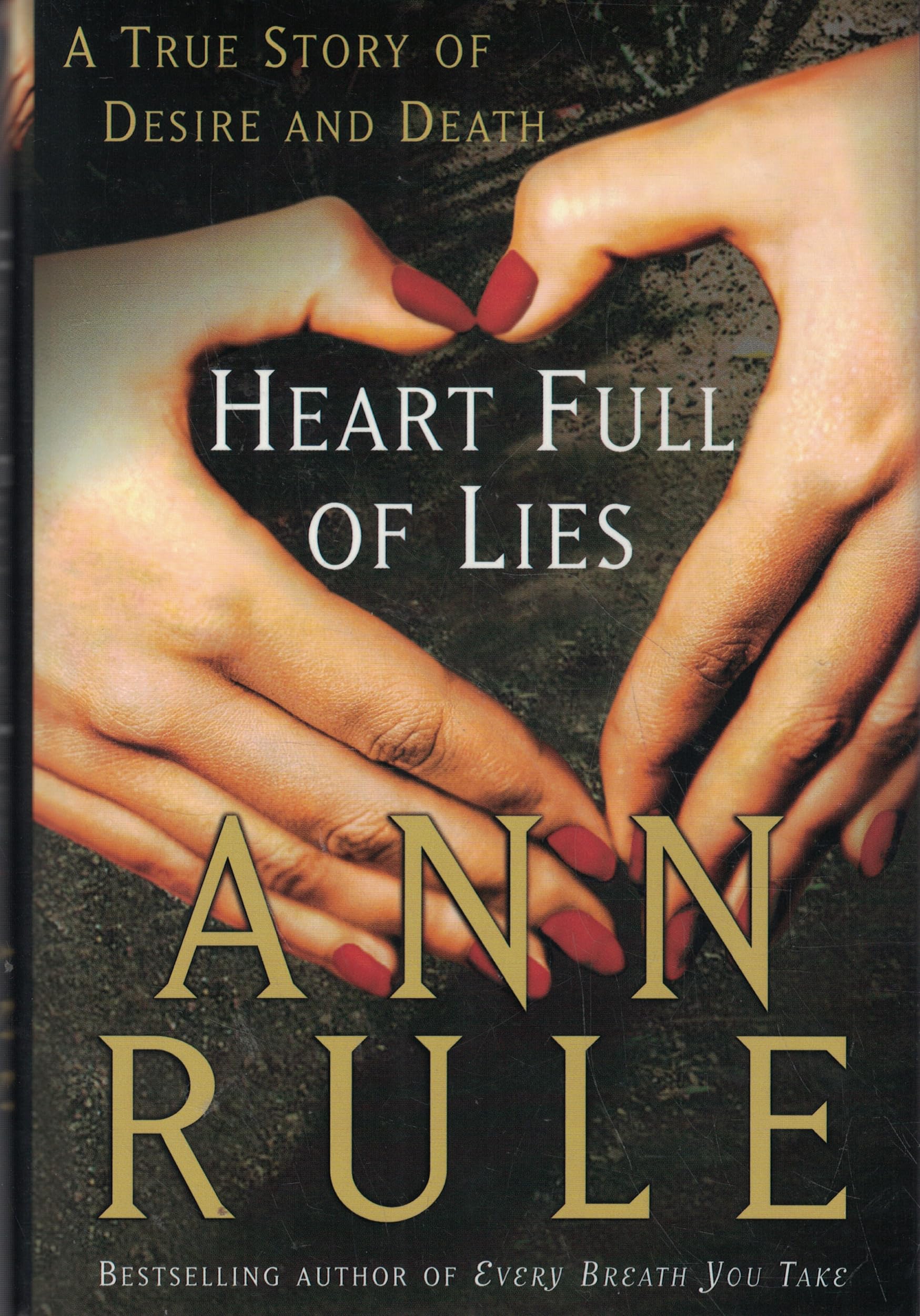



Discusses the investigation and trial of Liysa Northon, who was convicted for killing her her husband in 2000 after setting up a crime scene made to look like she herself escaped, a case that eventually linked her to a series of violent crimes against a series of men. 200,000 first printing. Rule is the former Seattle cop whose next-phone neighbor on a suicide hot line was Ted Bundy; her wrenching account of how she slowly learned that the wonderful guy next to her was an accomplished serial killer became the best-selling Stranger beside Me (1980) and led Rule away from police work and into full-time true-crime writing. You can still see the cop in Rule: she interrogates witnesses, tracks down inconsistencies in stories, slogs through victims' letters and e-mails, analyzes forensic evidence, attends trials. The sheer weight of her investigative technique places her at the forefront of true-crime writers, some of whom substitute sensationalism for evidentiary rigor. In this, Rule's twenty-second book, she examines an Oregon murder in which both the murderer and the murdered were regarded as out-and-out victims by their relatives and friends. In the fall of 2000, an undersheriff's end-of-season check of a remote campground yields the discovery of an abandoned car and a sleeping bag with a shotgunned man inside. His wife, Liysa Northon, claims that she was long a victim of domestic abuse and shot him to protect her and their small child. Rule constructs an examination of character as well as evidence here, because the case hangs on the believability of the beautiful and charming widow. This time Rule's account is marred by too much background on tangential figures in the drama and by a narrative that lacks the tautness of many of her other books, but the case itself remains fascinating and strange. Not her best, but good enough to engage her many fans. Connie Fletcher Copyright © American Library Association. All rights reserved Ann Rule is the author of nineteen New York Times national bestsellers, all of them still in print. A former Seattle police officer, she knows the crime scene firsthand. She is a certified instructor for police training seminars, and lectures frequently to law enforcement, prosecutors, and forensic science organizations, including the FBI. For more than two decades, she has been an active advocate for victims of violent crime. She has also testified before U.S. Senate judiciary subcommittees on victims' rights and on serial murder in America, and was a civilian adviser to the VICAP (Violent Criminal Apprehension Program) task force that set up a computer program to track and trap serial killers. Ann Rule lives near Seattle, Washington. She can be contacted through her web page at www.annrules.com. Chapter One The mountains and high plains of extreme northeastern Oregon are so far from well-traveled freeways that even most Oregonians have never been to this wilderness area where the sky seems close enough to touch. These are the "Oregon Alps." Serious outdoorsmen and those with family ties to Wallowa County follow the thin red lines on the map that promise at most only "paved highways," up and up through the mountains from Pendleton or La Grande. The summits are more than five thousand feet high, and then the roads descend through tiny villages whose buildings are mostly gray shadows of their former incarnations, tumbled with old-fashioned perennials and weeds, fading storefronts and little churches with peeling paint: Adams, Athena, Elgin, Minam, Wallowa, Lostine. Near the end of the road is Enterprise -- the county seat -- and finally the hamlet called Joseph, named for the great chief of the Nez Percé tribe. All these towns, so far-flung from city lives, have a presence and a feeling of serenity that comes only with long history and time without urgency. Enterprise and Joseph blossom in the summer as tourists who have discovered Wallowa County arrive. Sheltered between the Wallowa Mountains to the west and the Hells Canyon National Recreation Area to the east, Enterprise, population 1,900, is a wonderful place to live, but only if one is self-employed, working for the county or the city, or serving the needs of the residents. It is too distant from the larger Oregon cities along the coast or in the center of the state to make commuting feasible. The only industry of any sort is up the road eight miles, in Joseph. Perched on the shore of Wallowa Lake, Joseph has embraced sculpture and bronze foundries as a very successful economic lifeline; every street corner has a statue that seems to burst with life frozen in mid-movement -- maidens and cowboys and eagles in flight -- each statue large enough to require a truck to pack it out. In the summer, Wallowa Lake is a burning hollow in the mountains, with its azure water reflecting the sun and the sky. The water there is cold, but not cold enough to deter boaters and water-skiers, who seem somehow out of place on the waters w