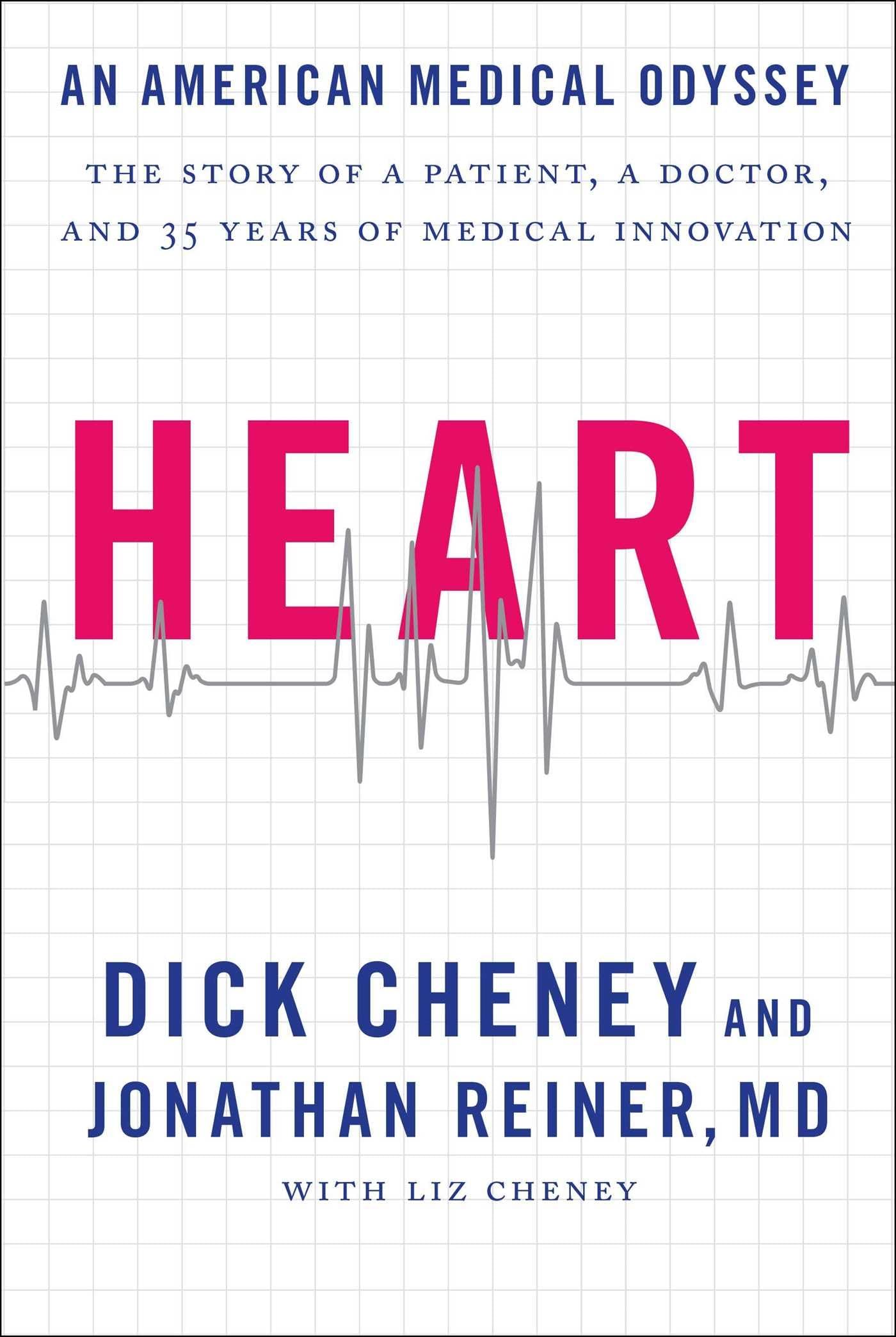



Former Vice President Dick Cheney and his longtime cardiologist, Dr. Jonathan Reiner, share the story of Cheney’s thirty-five-year battle with heart disease—providing insight into the incredible medical breakthroughs that have changed cardiac care over the last four decades. For as long as he has served at the highest levels of business and government, Vice President Dick Cheney has also been one of the world’s most prominent heart patients. Now, for the first time ever, Cheney, together with his longtime cardiologist, Jonathan Reiner, MD, shares the very personal story of his courageous thirty-five-year battle with heart disease, from his first heart attack in 1978 to the heart transplant he received in 2012. In 1978, when Cheney suffered his first heart attack, he received essentially the same treatment President Eisenhower had had in 1955. Since then, cardiac medicine has been revolutionized, and Cheney has benefitted from nearly every medical breakthrough. At each juncture, when Cheney faced a new health challenge, the technology was one step ahead of his disease. Cheney’s story is in many ways the story of the evolution of modern cardiac care. Heart is the riveting, singular memoir of both doctor and patient. Like no US politician has before him, Cheney opens up about his health struggles, sharing harrowing, never-before-told stories about the challenges he faced during a perilous time in our nation’s history. Dr. Reiner provides his perspective on Cheney’s case and also gives readers a fascinating glimpse into his own education as a doctor and the history of our understanding of the human heart. He masterfully chronicles the important discoveries, radical innovations, and cutting-edge science that have changed the face of medicine and saved countless lives. Powerfully braiding science with story and the personal with the political, Heart is a sweeping, inspiring, and ultimately optimistic book that will give hope to the millions of Americans affected by heart disease. Dick Cheney served at the highest levels of government and the private sector for more than forty years. He was White House Chief of Staff under President Gerald Ford and was elected six times to the US House of Representatives from Wyoming, eventually becoming the minority whip. He served as Secretary of Defense under President George H.W. Bush, overseeing America’s military during the 1991 Operation Desert Storm. He served as chairman and CEO of Halliburton, a Fortune 100 company. As the 46th Vice President of the United States during the dawn of the Global War on Terror, he played a key role in events that have shaped history. He is survived by his wife Lynne Cheney, their two daughters, and seven grandchildren. He passed away in 2025. Jonathan Reiner, MD, is the director of the cardiac catheterization laboratory at The George Washington University Hospital and professor of medicine at The George Washington University in Washington, DC. A graduate of the University of Pennsylvania and Georgetown University, Dr. Reiner completed a residency in medicine at North Shore University Hospital and Memorial Sloan-Kettering Cancer Center in New York. He began a fellowship in cardiology at The George Washington University Medical Center in 1990. In 1994, he completed a fellowship in interventional cardiology, which , along with the management of patients with complex coronary artery disease, remains his focus today. Vice President Cheney June 2010 If this is dying, I remember thinking, it’s not all that bad. It had been thirty-two years since my first heart attack. I’d had four additional heart attacks since then and faced numerous other health challenges. Now, in the summer of 2010, seventeen months after I left the White House, I was in end-stage heart failure. On a trip to Jackson Hole, Wyoming, in May, it had become clear my weakened heart could not tolerate the high altitude. I returned to Washington on an emergency flight, and as the plane took off, I realized I might never see my beloved Wyoming again. Since then, my wife, Lynne, and I had been at our house in McLean, Virginia. When I got up in the morning, all I wanted to do was sit down in my big easy chair, watch television, and sleep. What was happening to me was hardly a surprise. I had lived with coronary artery disease for many years, and I had long assumed it would be the cause of my death. Sooner or later, time and medical technology would run out on me. Now my heart was no longer providing an adequate supply of blood to my other vital organs. My kidneys were starting to fail. I believed I was approaching the end of my days, but that didn’t frighten me. I was pain free and at peace, and I had led a remarkable life. I thought about final arrangements. I wanted to be cremated and have my ashes returned to Wyoming. It was a difficult subject to broach with my family. They weren’t eager to discuss it. For them, talking about it made an already difficult