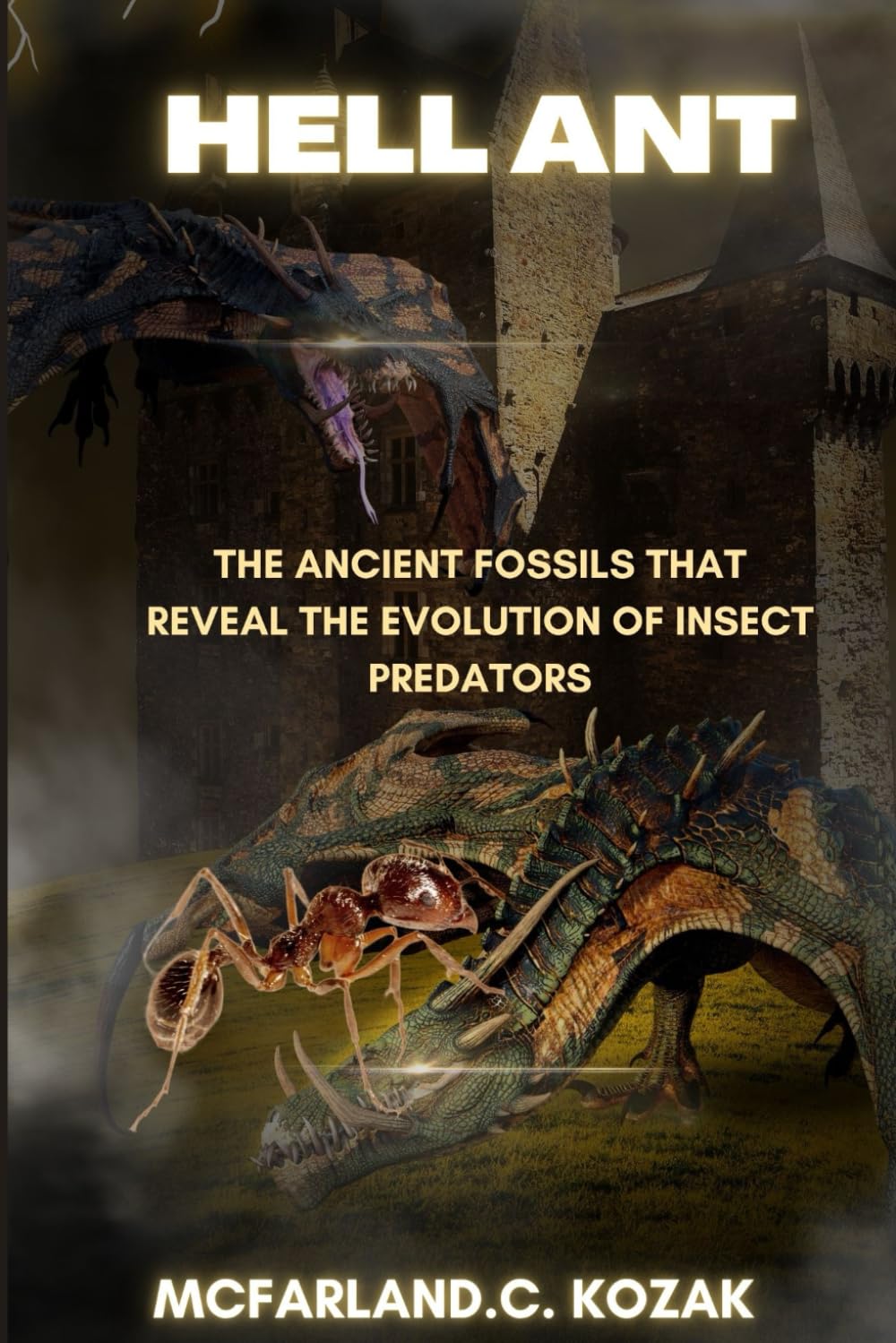
Hell ant: The Ancient Fossils That Reveal the Evolution of Insect Predators
$16.99
by McFarland C. Kozak



Hell Ants: Unearthing the Oldest Ant Fossils and the Evolution of Prehistoric Predators Step back over 113 million years into the heart of the Cretaceous period, where the earliest ants hunted in shadows cast by dinosaurs—and evolution was still experimenting. Hell Ants: Unearthing the Oldest Ant Fossils and the Evolution of Prehistoric Predators invites readers on a thrilling journey into deep time, spotlighting Vulcanidris cratensis, the oldest ant fossil ever discovered, entombed in Brazilian limestone for over a hundred million years. This groundbreaking discovery—extending the known ant fossil record by a full 10 million years—offers more than just a new species. It redefines our understanding of ant evolution, predator-prey dynamics, and how early insects carved out ecological niches in a lush and ancient world. At the center of this story are the extraordinary "hell ants," members of the extinct subfamily Haidomyrmecinae, infamous for their upward-swinging, sickle-like mandibles and horned heads—predatory adaptations unseen in any modern insect. Drawing from cutting-edge fossil analysis, the book reveals how these nightmarish creatures hunted, adapted, and ultimately vanished, leaving behind tantalizing clues preserved in stone and amber. Through vivid storytelling and scientific insight, this book reconstructs the primeval ecosystems of ancient Gondwana, explores how modern imaging technologies—like micro-CT scanning—are unlocking fossil secrets, and explains how such small creatures illuminate enormous truths about evolution, extinction, and survival. Whether you're a science enthusiast, a paleontology buff, or simply curious about the wonders of Earth's past, Hell Ants offers a compelling, richly illustrated account of a lost world—and the tiny predator helping to rewrite the story of life on Earth. Discover how a fossilized ant is reshaping evolutionary history—and why it still matters today.