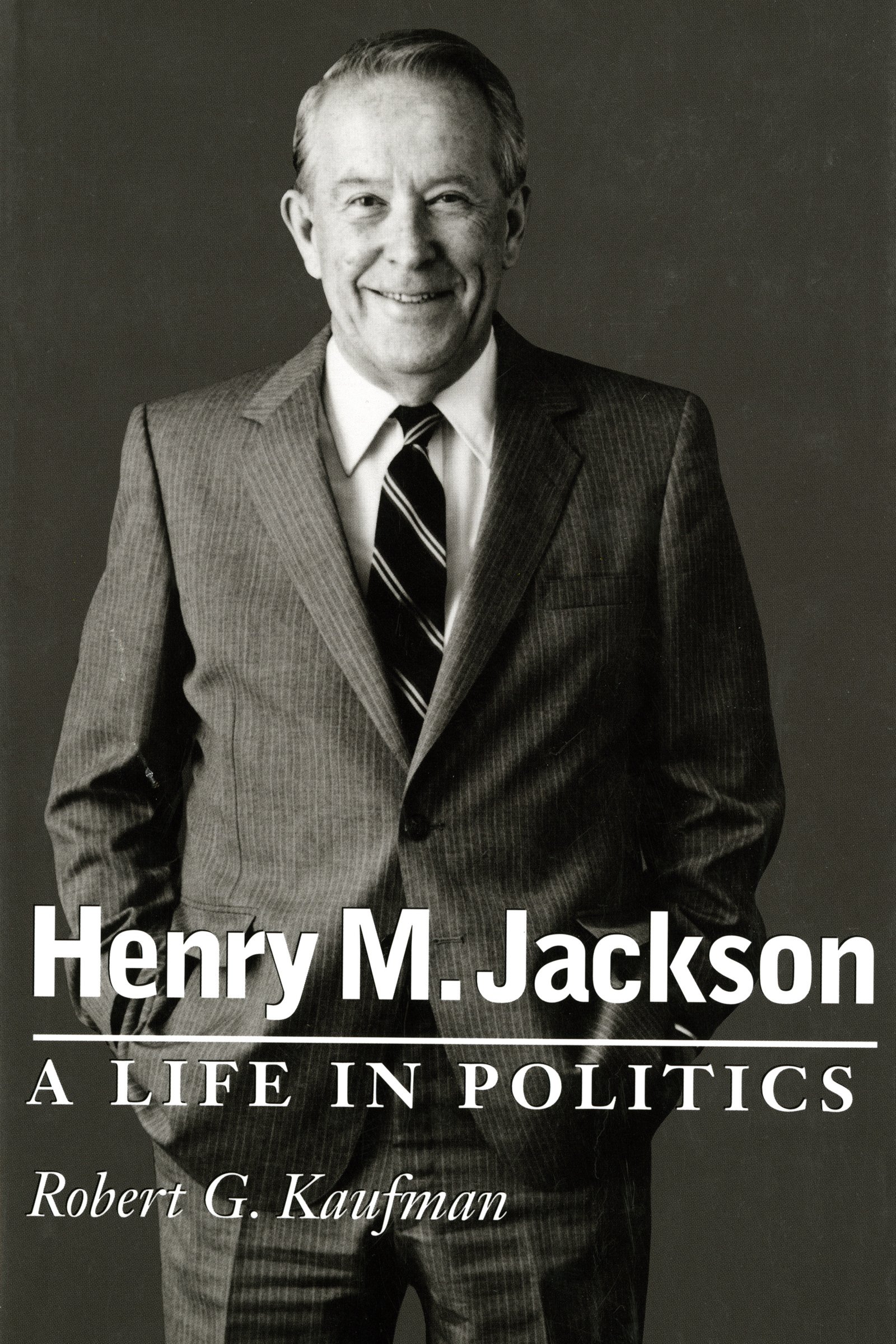



Henry M. Jackson ranks as one of the great legislators in American history. With a Congressional career spanning the tenure of nine Presidents, Jackson had an enormous impact on the most crucial foreign policy and defense issues of the Cold War era, as well as a marked impact on energy policy, civil rights, and other watershed issues in domestic politics. Jackson first arrived in Washington, D.C., in January 1941 as the Democratic representative of the Second District of Washington State, at the age of 28 the youngest member of Congress. “Scoop” Jackson won reelection time and again by wide margins, moving to the Senate in 1953 and serving there until his death in 1983. He became a powerful voice in U.S. foreign policy and a leading influence in major domestic legislation, especially concerning natural resources, energy, and the environment, working effectively with Senator Warren Magnuson to bring considerable federal investment to Washington State. A standard bearer for the New Deal-Fair Deal tradition of Roosevelt and Truman, Jackson advocated a strong role for the federal government in the economy, health care, and civil rights. He was a firm believer in public control of electric and nuclear power, and leveled stern criticism at the oil industry’s “obscene profits” during the energy crisis of the 1970s. He ran for the presidency twice, in 1972 and 1976, but was defeated for the nomination first by George McGovern and then by Jimmy Carter, marking the beginning of a split between dovish and hawkish liberal Democrats that would not be mended until the ascendance of Bill Clinton. Jackson’s vision concerning America’s Cold War objectives owed much to Harry Truman’s approach to world affairs but, ironically, found its best manifestation in the actions taken by the Republican administration of Ronald Reagan. An early and strong supporter of Israel and of Soviet dissidents, he strongly opposed the Nixon/Kissinger policy of detente as well as many of Carter’s methods of dealing with the Soviet Union. Robert Kaufman has immersed himself in the life and times of Jackson, poring over the more than 1,500 boxes of written materials and tapes that make up the Jackson Papers housed at the University of Washington, as well as the collections of every presidential library from Kennedy through Reagan. He interviewed many people who knew Jackson, both friends and rivals, and consulted other archival materials and published sources dealing with Jackson, relevant U.S. political history and commentary, arms negotiation documents, and congressional reports. He uses this wealth of material to present a thoughtful and encompassing picture of the ideas and policies that shaped America’s Cold War philosophy and actions. Henry "Scoop" Jackson may be one of the most underappreciated American politicians of the second half of the 20th century. He was certainly one of the Democrats' greatest cold warriors, and a man who might have saved his party from the doomed politics of McGovernism if he had only won the presidency, an office he sought twice. (He was, in fact, John F. Kennedy's first choice for a running mate in 1960, until Kennedy became convinced he needed a Southerner on the ticket.) The distinguished gentleman from the state of Washington began his congressional career during the Roosevelt administration, and it ended with his death in 1983 during the Reagan years--a tenure spanning nine presidents. Robert G. Kaufman's comprehensive biography sheds some well-deserved light on its neglected subject. Jackson fought against Senator Joseph McCarthy in the 1950s, for civil rights in the 1960s, and against détente with the Communists in the 1970s. He's best known for this last crusade: "Jackson contributed enormously to ensuring that the United States fought and prevailed in this epochal struggle against Soviet totalitarianism." His views prefigured those of the Reagan administration, which was filled with Jackson's neoconservative admirers. Jackson was, in a sense, the very first Reagan Democrat. Kaufman cites Howard Baker, the onetime senator and Reagan's chief of staff: "Jackson made sure we did not lose the Cold War during the 1970s so that Ronald Reagan could win it in the 1980s." If Henry M. Jackson: A Life in Politics is an admiring work, it's because there's so much to admire. Our TV-driven culture tends to lavish its attention on the executive branch and showboating legislators, rather than uncharismatic men of principle like Jackson. That's why serious biographies like this one are so essential--so that history will recognize the role-players who shaped what we have become. --John J. Miller The terms "Jackson Democrat" and "Rockefeller Republican" may not have meaning for many people today, but in the period after the Korean War, they identified important wings of the two major parties. This book details the life and career of Sen. Henry "Scoop" Jackson of Washington. Kaufman, a political scientist at the Unive