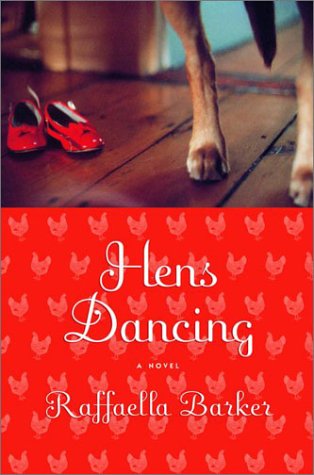



A young divorcee finds herself marooned in the countryside, surrounded by clutter, children, and hens. This charming, wickedly funny, exuberant novel is the talented young author's U.S. debut. Meet Venetia Summers, a charmingly disorganized, thirtysomething single mom who's doing her best to raise her kids and keep her sanity in a rural English cottage amidst a maelstrom of pets, plants, and wacky relatives. Told in diary format over the course of a year, this work represents literary voyeurism at its best. We share in the birth of a daughter (The Beauty) after Venetia's husband, Charles, leaves her for the dreaded Helena; the antics of Venetia's well-meaning, albeit daffy, mother; chaotic seaside holidays; and the home-improvement projects of the increasingly attractive and available David. This wonderfully entertaining and endearing book, Barker's first American publication after much success in England, will doubtless be favorably compared to Helen Fielding's Bridget Jones's Diary (LJ 5/15/98). Her characters are real, the events believable, and the author able to address some all-too-common family problems without losing the story's humor and appeal. Venetia is a woman many readers would like to have as a friend. Essential for libraries with fans of Bridget Jones. - Susan Clifford Braun, Aerospace Corp., El Segundo, CA Copyright 2001 Reed Business Information, Inc. Barker's U.S. debut is in the mold of popular novels about young, sassy women, such as Bridget Jones's Diary (1998) and The Girls' Guide to Hunting and Fishing (1999). As told through the diary of a thirty-something, single mother, Hens Dancing recounts the thoughts, exploits, and struggles of Venetia Simmons over the course of the year following her divorce. Venetia is intelligent, funny, strong, and irreverent. When at her wit's end and surrounded by her three rambunctious children (one known only as The Beauty), a bathroom under construction, a garden in constant need of attention, and an ex-husband who runs a mortuary for pets, nothing puts Venetia back into her right frame of mind better than a facial and a new pair of shoes. Although nothing really earth-shattering happens, Barker humorously explores the everyday trials of one woman trying to raise three children with little money but lots of love. The language, however, includes British slang and cultural references that if not understood, may leave some readers missing the humor. Carolyn Kubisz Copyright © American Library Association. All rights reserved “An entertaining celebration of family life with all its highs, lows and eccentricities. It puts Barker firmly in the camp of interesting female novelists who entertain as much as they inform.” –The Times (London) “Imagine Bridge Jones cooled out, married, the mother of three, living in the British countryside–and suddenly deserted by her husband. The result might be something like this breezy novel.” –Us Weekly “Rafaella Barker endows her narrator with a keen sense of humor. And the author’s disarming portrait of country life almost makes you want to trade places with Venetia.” – The Dallas Morning News rcee finds herself marooned in the countryside, surrounded by clutter, children, and hens. This charming, wickedly funny, exuberant novel is the talented young author's U.S. debut. Raffaella Barker has a monthly column in the British magazine Country Life and is a regular contributer to the Daily Telegraph and the Sunday Telegraph newspapers. She lives in Norfolk, in rural England, with her husband and three children. February 14 - Seven Valentine cards have been delivered to the house this morning by the postman, and not one of them is for me. Three are for Giles, who is eight and therefore at an age where the bolstering effect of a Valentine card goes unnoticed; two are for Felix, six, who is in a big rage that anyone has dared to be so sissy as to send him any; and two are for Charles, forty-one, who had not planned to be at home, but an airport strike prevented his business trip to Paris. "How did they know I'd be here?" he murmurs, a smirk of smug spreading over his face. He drops the one his secretary always sends him without opening it and looks at the other. It is not from me. "The postmark is smudged. Can you read it, darling?" he says to me, and, hating to miss an opportunity for one-upmanship, adds, "Did you really not get any cards? How odd." Scrutinizing his envelope, I drop it in the washing-up water. "Oops, sorry, Charles, it's a bit soggy now." He looks at me with loathing. I smile sweetly. Breakfast is an orgy of martyrdom on my part, as usual unnoticed by spouse and offspring, who according to age and inclination are reading their Valentine cards/the Beano comic/the cereal packet. I clear away, deliberately not asking for help, and return to bed. The telephone clicks a couple of times, and I know better than to pick it up. Charles has a sixth sense for an overheard conversation and will