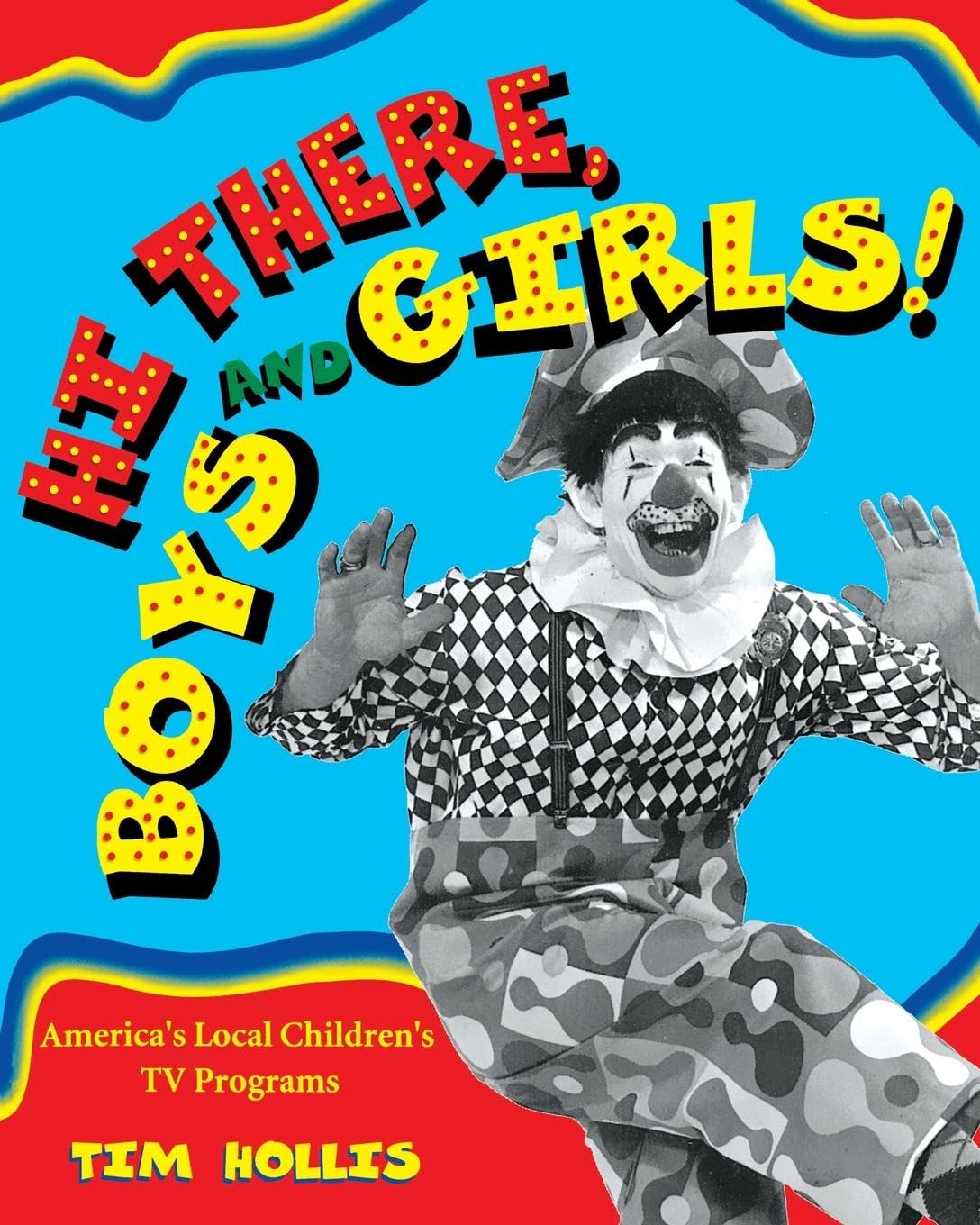



Whatever happened to Bozo the Clown, to Aunt Norma, to Solomon C. Whiskers, those television celebrities who hammed it up between cartoons and contests during local kids' shows? In Hi There, Boys and Girls! America's Local Children's TV Programs , Tim Hollis tracks down the story of every known local children's TV show from markets across the United States. There have been many books about children's television on the networks, and such shows as Captain Kangaroo , Howdy Doody , and Sesame Street are legends in broadcasting. However, the local branch of children's programming has received much less attention. For every performer on the scale of a Captain Kangaroo or a Buffalo Bob, there were five or six local personalities who were just as beloved by their viewers--and sometimes even more so--since these local stars could be counted on for appearances at stores, children's hospitals, and shopping centers, where kids could meet them face-to-face. Anyone over the age of thirty who grew up with a TV set will remember at least one or two of these productions. Whether it was hosted by a cowboy character, a clown such as the one on the many-franchised Bozo shows, a policeman, a sea captain who showed Popeye cartoons, or one of the gentle and lovely ladies who presided over Romper Room , these hometown stars were some of the Baby Boomers' first friends. Although children loved them, these hard-working performers garnered less respect from the rest of the TV industry. Hi There, Boys and Girls! includes a capsule history of this programming from the earliest days of radio to the early 1970s, when a combination of social changes and broadcast regulations sent most of the hosts into retirement. Walt Disney once observed that while there is very little adult in a child, there is a lot of child in every adult. This book will bring back a flood of long-submerged memories for anyone who was a child during this golden era. From the earliest days of television until the mid-1970s, children's programming was a staple of local TV broadcasting in the United States. Here, Hollis (Dixie Before Disney) presents a comprehensive compendium of information about local children's TV shows, organized by state. Capsule descriptions are provided for individual programs and hosts in major TV markets within each state. Hollis cuts off the scope of his book at the 1970s, when, for a variety of reasons, most local children's TV programming in the United States simply ceased to exist. This valuable and unique reference book has only one drawback: some markets either could not or would not cooperate with the author to provide historical information on shows, so some entries are much shorter than others. Hollis's preface summarizes this often ignored area of broadcasting history, and an excellent bibliography concludes the book, offering a list of additional sources of information on children's TV. In addition, numerous vintage photographs of local TV personalities are sprinkled throughout. Highly recommended for broadcasting and media libraries, in addition to public libraries. David M. Lisa, Wayne P.L., NJ Copyright 2001 Reed Business Information, Inc. The first book to give considered focus to children?s television at the local level The first book to give considered focus to children's television at the local level The first book to give considered focus to children's television at the local level Tim Hollis has published twenty-four books on pop culture history. For more than thirty years he has maintained a museum of cartoon-related merchandise in Dora, Alabama. He is the author of Dixie before Disney: 100 Years of Roadside Fun ; Florida's Miracle Strip: From Redneck Riviera to Emerald Coast ; Hi There, Boys and Girls! America's Local Children's TV Programs ; Ain't That a Knee-Slapper: Rural Comedy in the Twentieth Century ; Toons in Toyland: The Story of Cartoon Character Merchandise ; and, with Greg Ehrbar, Mouse Tracks: The Story of Walt Disney Records , all published by University Press of Mississippi. Used Book in Good Condition