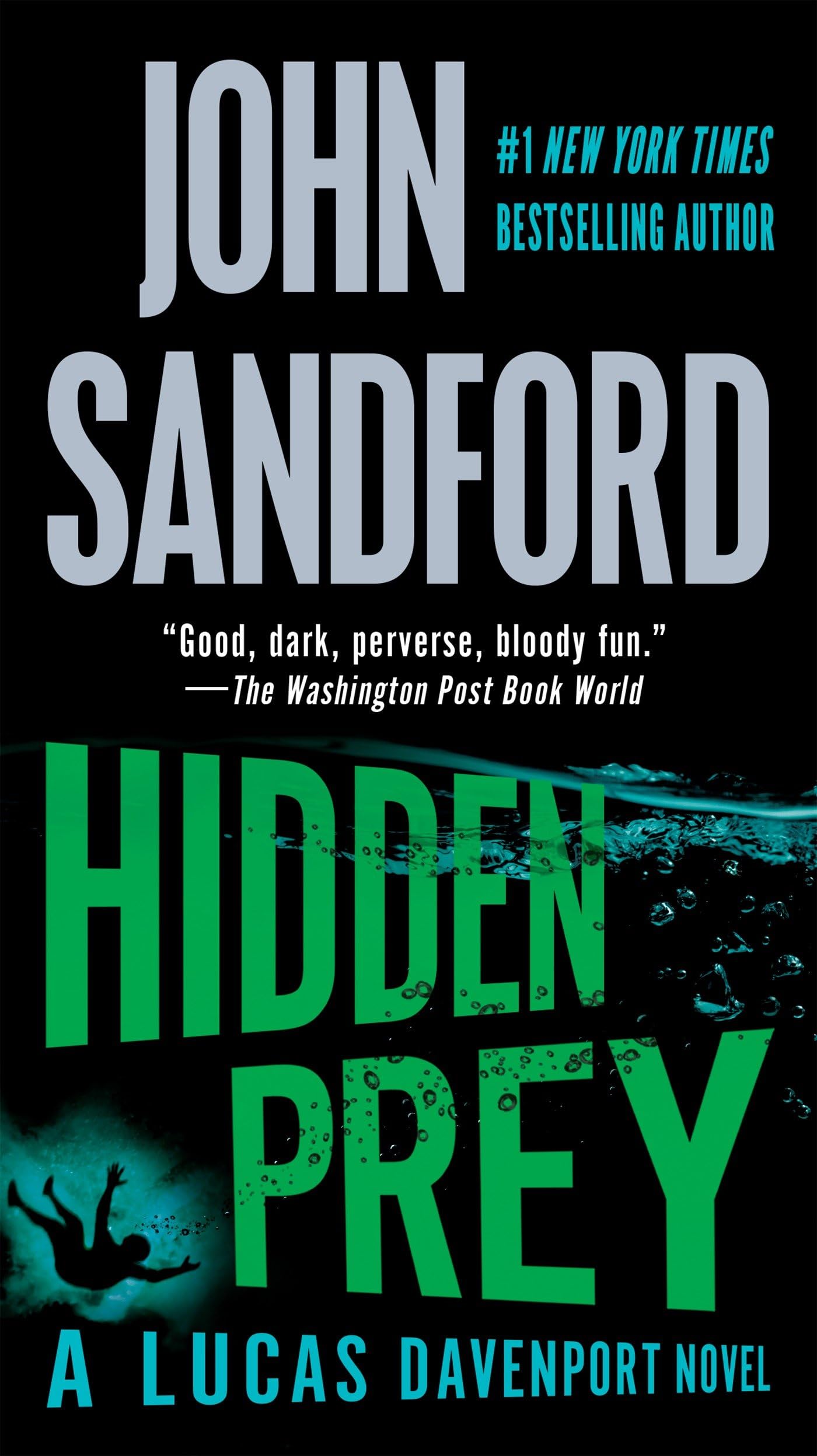



“One of the strongest in Sandford’s Prey series.”— Entertainment Weekly “Good, dark, perverse, bloody fun.”— The Washington Post Book World Theories abound when a Russian gets himself killed on the shore of Lake Superior—shot with fifty-year-old bullets. But when it turns out he had very high government connections, state troubleshooter Lucas Davenport gets the call. Well, Lucas and a mysterious Russian cop with secrets all her own. Together, they’ll follow a trail back to another place and another time, and battle the shadows they discover there—shadows that turn out to be both very real and very deadly. Praise for John Sandford’s Prey Novels “Relentlessly swift...genuinely suspenseful...excellent.”— Los Angeles Times “Sandford is a writer in control of his craft.”— Chicago Sun-Times “Excellent...compelling...everything works.”— USA Today “Grip-you-by-the-throat thrills...a hell of a ride.”— Houston Chronicle “Crackling, page-turning tension...great scary fun.”— The New York Daily News “Enough pulse-pounding, page-turning excitement to keep you up way past bedtime.” —Minneapolis Star Tribune “One of the most engaging characters in contemporary fiction.”— Detroit News “Positively chilling.”— St. Petersburg Times “Just right for fans of The Silence of the Lambs .”— Booklist “One of the most horrible villains this side of Hannibal.” —Richmond Times-Dispatch “Ice-pick chills...excruciatingly tense...a double-pumped roundhouse of a thriller.” —Kirkus Reviews John Sandford is the pseudonym for the Pulitzer Prize–winning journalist John Camp. He is the author of twenty-six Prey novels, most recently Extreme Prey ; four Kidd novels; nine Virgil Flowers novels; three YA novels coauthored with his wife, Michele Cook; and three stand-alones, most recently Saturn Run . 1 THE TAG END of summer, in the very heart of the night. Annabelle Ramford sat on a soggy piece of carpet, in a patch of goldenrod on the southernmost shore of Lake Superior, a huge butterball moon rising to the east. A bottle of New York pinot noir was wedged securely between her thighs. She was warm, comfortable, at peace, and a little drunk, bathed in the odors of dead fish and diesel exhaust, ragweed, and the rancid sweat of her unwashed cotton shirt. Annabelle’s friends, if they were friends, called her Trey. She had shoulder- length reddish- blond hair, which hung straight and close to her skull because of the dirt in it; a deeply weathered face with feral green eyes; a knife- edged nose; and a too- slender, square- shouldered body, with the bones showing through. On her chin she carried what she thought of as her identifying mark—as in “Police said the body carried an identifying mark.” The mark was a backwards- C- shaped scar, the product of a fight at the mission in Albuquerque. A bum named Buddy had bitten her, and when she’d gotten up off the floor, she was dripping blood and missing a piece of chin. Buddy, she believed, had swallowed it. She almost sympathized: when you’re a bum, you get your protein where you can. Like Buddy, Annabelle Ramford was a bum. Or maybe a bummess. A long and exceptionally strange trip, she thought, growing philosophical with the wine. She’d grown up well- to- do and thoroughly educated—had sailed boats on Superior, which was why she returned to Duluth in the summer. After private schools in St. Paul, she’d gone to the University of Minnesota, where she’d majored in sociology, and then on to law school, where she’d majored in marijuana and gin- and- tonic. She’d graduated, though, and her father’s influence had gotten her a job with the Hennepin County public defender’s office, interviewing gang- bangers at the height of the crack plague. Crack. She could close her eyes and feel it lifting her out of herself. She’d loved crack as she’d loved no human being. Crack had cost her first the job, then all her square friends, and finally her parents, who’d given her up for lost. Even at the end, even when she was fucking the crack man, it had seemed like a reasonable trade. When she finally woke up, four years after she went on the pipe, she had no life and three STDs, though she’d somehow avoided HIV. She’d been traveling ever since. A strange trip, growing ever stranger ... *** STRAIGHT NORTH OF her spot on the working harbor shore, she could see the bobbing anchor- light of a sailboat, and beyond it, the street and house lights stretching along Minnesota Point, the narrow spit of land across the mouth of the harbor. Though the boat was five hundred yards away, she could hear the tinkling and clanking of hardware against the aluminum mast, and, every once in a while, a snatch of music, Sinatra or Tony Bennett, and a woman’s laughter. Overhead, a million stars. Off to her right, another million stars, closer, larger, more colorful—the night lights of Duluth, sliding north along the hill. A dying summer, and cool. The breeze off the la