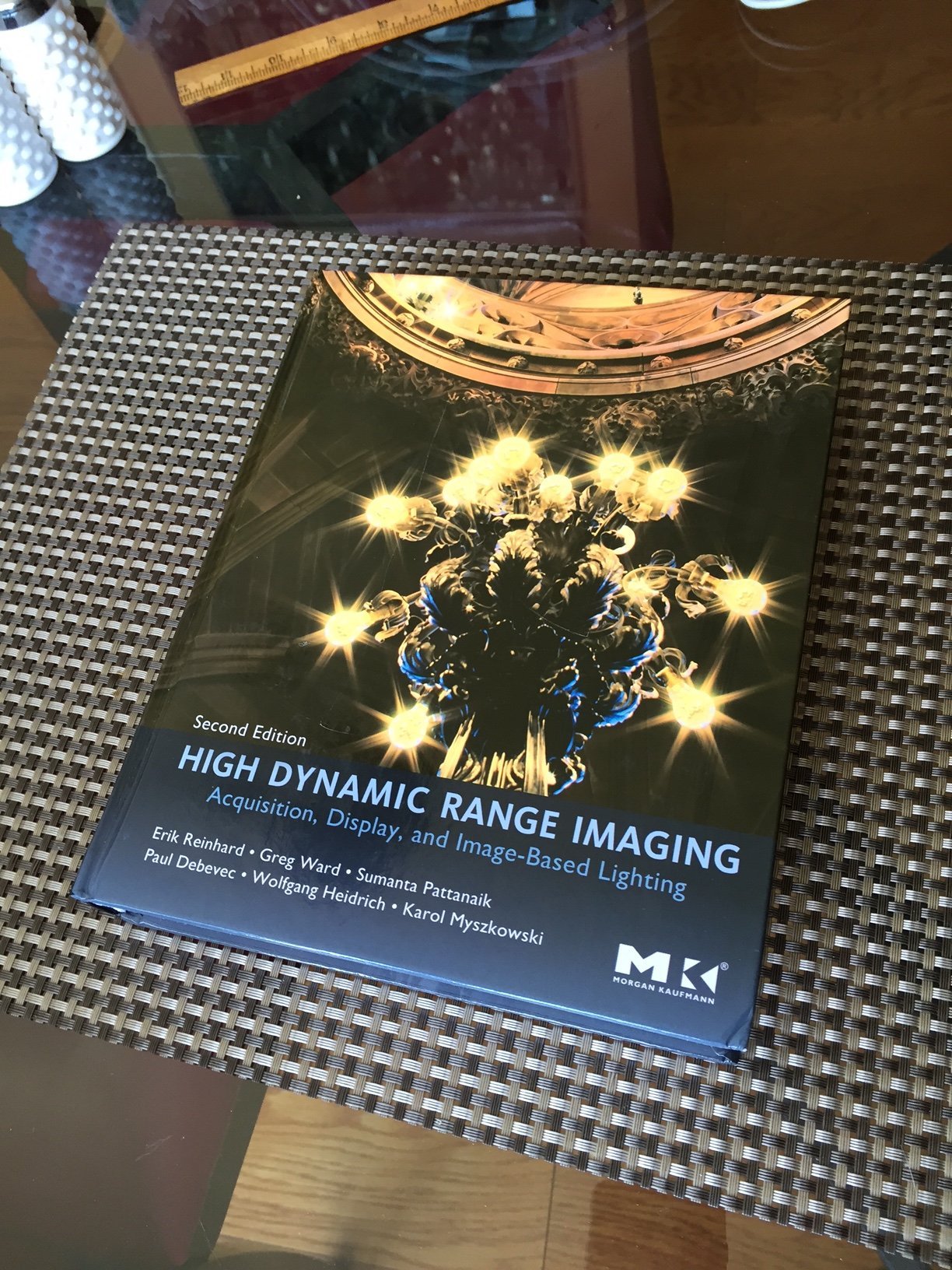
High Dynamic Range Imaging: Acquisition, Display, and Image-Based Lighting
$78.00
by Erik Reinhard



High Dynamic Range Imaging, Second Edition, is an essential resource for anyone working with images, whether it is for computer graphics, film, video, photography, or lighting design. It describes HDRI technology in its entirety and covers a wide-range of topics, from capture devices to tone reproduction and image-based lighting. The techniques described enable students to produce images that have a dynamic range much closer to that found in the real world, leading to an unparalleled visual experience. This revised edition includes new chapters on High Dynamic Range Video Encoding, High Dynamic Range Image Encoding, and High Dynamic Range Display Devices. All existing chapters have been updated to reflect the current state-of-the-art technology. As both an introduction to the field and an authoritative technical reference, this book is essential for anyone working with images, whether in computer graphics, film, video, photography, or lighting design. New material includes chapters on High Dynamic Range Video Encoding, High Dynamic Range Image Encoding, and High Dynammic Range Display Devices - Written by the inventors and initial implementors of High Dynamic Range Imaging - Covers the basic concepts (including just enough about human vision to explain why HDR images are necessary), image capture, image encoding, file formats, display techniques, tone mapping for lower dynamic range display, and the use of HDR images and calculations in 3D rendering - Range and depth of coverage is good for the knowledgeable researcher as well as those who are just starting to learn about High Dynamic Range imaging - The prior edition of this book included a DVD-ROM. Files from the DVD-ROM can be accessed at: http://www.erikreinhard.com/hdr_2nd/index.html "With the mainstream introduction of affordable LED HDTVs and computer monitors, the principles of high dynamic range imaging have gone from an academic research topic to essential knowledge. For anyone involved in software or hardware development for computer games and entertainment video, this second edition of High Dynamic Range Imaging offers everything you need and more. Highly recommended." --Ian Ashdown, President, byHeart Consultants Limited An essential resource for anyone working with images, whether it is for computer graphics, film, video, photography, or lighting design This landmark book is the first to describe HDRI technology in its entirety and covers a wide-range of topics, from capture devices to tone reproduction and image-based lighting. The techniques described enable you to produce images that have a dynamic range much closer to that found in the real world, leading to an unparalleled visual experience. As both an introduction to the field and an authoritative technical reference, it is essential to anyone working with images, whether in computer graphics, film, video, photography, or lighting design. Erik Reinhard is assistant professor at the University of Bristol and founder and editor-in-chief (with Heinrich Bülthoff) of ACM Transactions on Applied Perception . He is interested in the interface between visual perception and computer graphics and also in high dynamic range image editing. His work in HDRI includes the SIGGRAPH 2005 Computer Animation Festival contribution Image-based Material Editing , as well as tone reproduction and color appearance algorithms. He holds a BSc and a TWAIO diploma in computer science from Delft University of Technology and a PhD in computer science from the University of Bristol, and was a post-doctoral researcher at the University of Utah. Wolfgang Heidrich is Associate Professor and Dolby Research Chair at the Department of Computer Science, University of British Columbia. Paul Debevec is a research assistant professor at the University of Southern California and the executive producer of graphics research at USC's Institute for Creative Technologies. Paul's PhD thesis (UC Berkeley, 1996) presented Façade, an image-based modeling and rendering system for creating photoreal architectural models from photographs. Using Façade, he led the creation of virtual cinematography of the Berkeley campus for his 1997 film The Campanile Movie whose techniques were used to create virtual backgrounds in the 1999 film The Matrix . Subsequently he pioneered techniques for illuminating computer-generated scenes with real-world lighting captured through high dynamic range photography, demonstrating new image-based lighting techniques in his films Rendering with Natural Light (1998), Fiat Lux (1999), and The Parthenon (2004). He has also led the design of HDR Shop, the first widely used high dynamic range image editing program. Most recently Paul has led the development of a series of Light Stage devices that allow objects, actors, and performances to be synthetically illuminated with novel lighting. This technique was used to create photoreal digital actors for the film Spider Man 2 . Paul received the first ACM S