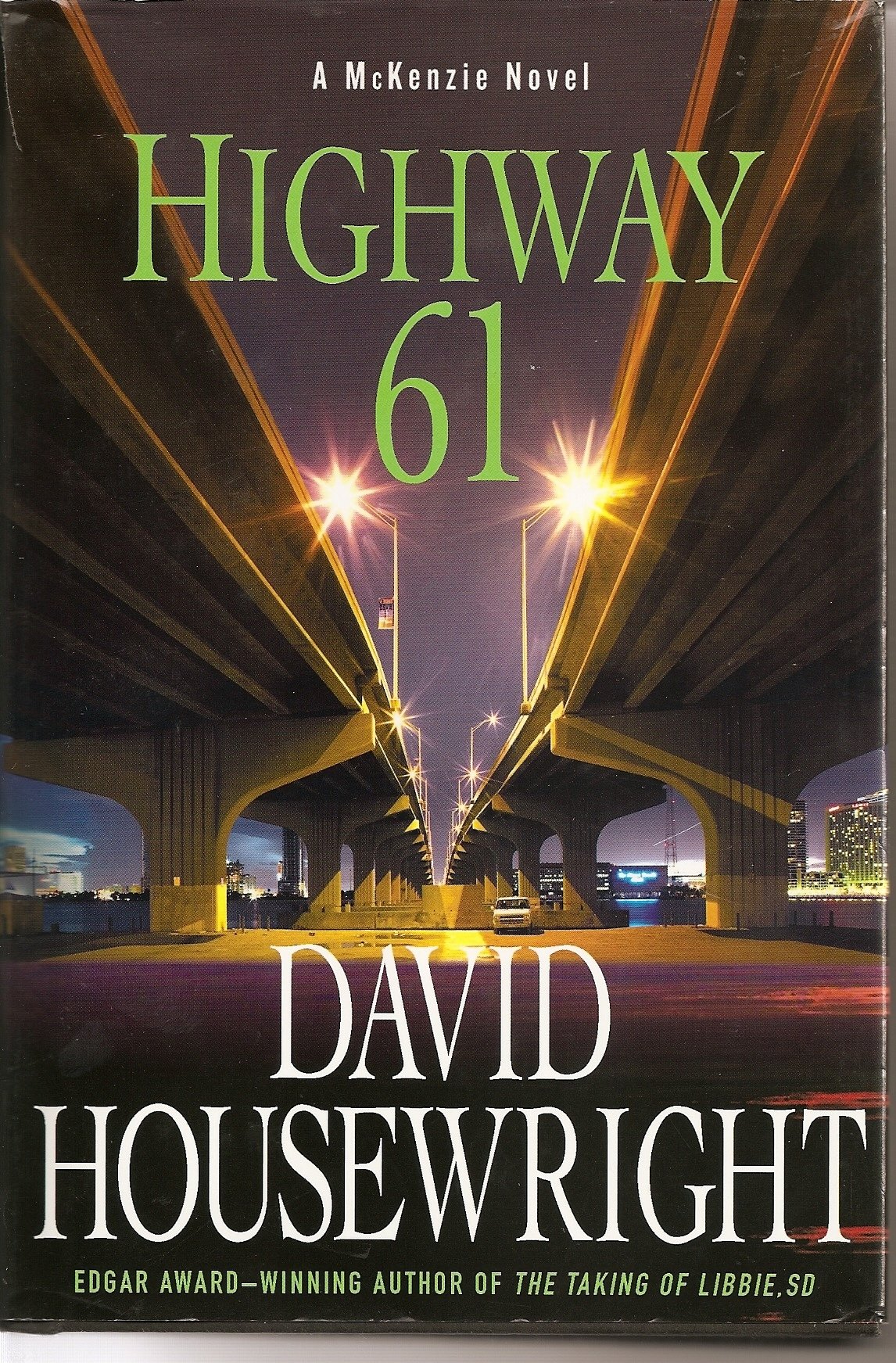
Highway 61: A McKenzie Novel (Twin Cities P.I. Mac McKenzie Novels)
$36.62
by David Housewright



Mac McKenzie returns with a too-personal case that leads him up the legendary Highway 61 in the latest in David Housewright's awardwinning series Rushmore McKenzie is a former cop, current millionaire, and an occasional unlicensed P.I. who does favors for friends. Yet he has reservations when his girlfriend's daughter asks him to help her father Jason Truhler, the ex-husband of McKenzie's girlfriend, and a man in serious trouble. En route from St. Paul to a Canadian blues festival on Highway 61, he met a girl, blacked out, and awoke hours later in a strange motel, with the girl's murdered body on the floor. Slipping away unnoticed and heading home, he thought he'd got away―until he started getting texts with photos of the body and demands for blackmail payments he couldn't pay. McKenzie soon finds that Truhler was set up in a modified honey trap, designed to blackmail him. But Truhler's version wasn't exactly the truth either. And McKenzie now finds himself trapped in the middle of a very dangerous game with some of the most powerful men in the state on one side and some of the deadliest on the other. “Solid ... The tenacious McKenzie bounces between cops, bad guys, and movers and shakers with a tenuous hold on legalities but a good grasp on ethics.” ― Publishers Weekly DAVID HOUSEWRIGHT has won the Edgar® Award once and the Minnesota Book Award twice for his crime fiction. He lives in St. Paul, Minnesota. Highway 61 A McKenzie Novel By David Housewright Minotaur Books Copyright © 2011 David Housewright All right reserved. ISBN: 9780312642303 ONE I watched Erica through my kitchen window while she tossed bread crumbs to the ducks that lived beside the pond in my backyard, and I wondered—when did she become so damn pretty? She was cute when I first met her, but that was when she was nearly fifteen. Now she was twelve days past her eighteenth birthday and nearly as beautiful as her mother. Certainly she was taller—by at least two inches. Erica confided to me once that when she was sure her mother was going to scold her over some offense, she would put on high heels so she would tower over her. “I keep hoping it’ll intimidate her,” she said, “only it never does.” The man sitting at the table behind me sighed dramatically. I ignored him. He pulled a pack of Marlboros from his jacket pocket, shook one out, and placed it between his lips. I waited until he lit it with a silver lighter. “No smoking,” I said. Jason Truhler sighed again, putting more effort into it this time. He moved to the sink, drowned the cigarette with the faucet, and dropped the remains into the garbage disposal. I continued to watch his daughter while he slipped silently back into the chair. Erica knelt on the grass and scattered bread crumbs so close to her that the ducks came near enough to pet. I almost opened the window and shouted, “They bite, you know.” I didn’t because I knew she wouldn’t like it. The ducks had moved in soon after my father and I had built the pond a few years back. Dad liked the ducks; one of the things he told me just before he died was to take care of them. So I did, feeding them corn and grain and whatever they put in those bags of wild birdseed I buy at Petco. Ever since, they would leave in the fall and return in the spring, often more than a dozen birds at a time. I used to name them until it became impossible for me to tell them apart. I glanced at my watch. It told me the day, month, and date—Sunday, November 8. Duck hunting season had been open for nearly a month, and while the ducks were safe within the Twin Cities metropolitan area, I was always worried about how they would fare once they started south. I expected them to take wing at any moment; was surprised that they hadn’t left long ago. A pal at the DNR said they might have lingered past their traditional departure date because I fed them, because I domesticated them. I hoped not. Truhler sighed again. “What exactly do you want from me?” I asked. I continued to look out the window. “Rickie says you help people.” “Favors,” I said. Since quitting the St. Paul cops to take a three-million-dollar reward for capturing a particularly resourceful embezzler, I have, on occasion, assisted people with their more pressing issues. “I sometimes do favors for friends, people I like. I don’t like you.” “You don’t know me.” “I know your ex-wife.” “Not everything Nina says about me is true.” “Of course it is.” “You haven’t heard my side.” I turned my head just enough to look him in the eye. “I don’t want to hear your side.” “But—” “But what? There’s nothing to debate here. I love your ex-wife. I love her enough to say so to complete strangers. Which means I’m more than happy to dislike her ex-husband with as much vehemence as she desires for whatever reasons she deigns to offer. Any questions?” “I knew it was a mistake coming here,” Truhler said. I returned to the window. Marvelous Margot, the woman with whom I shared the pond, emerged from her