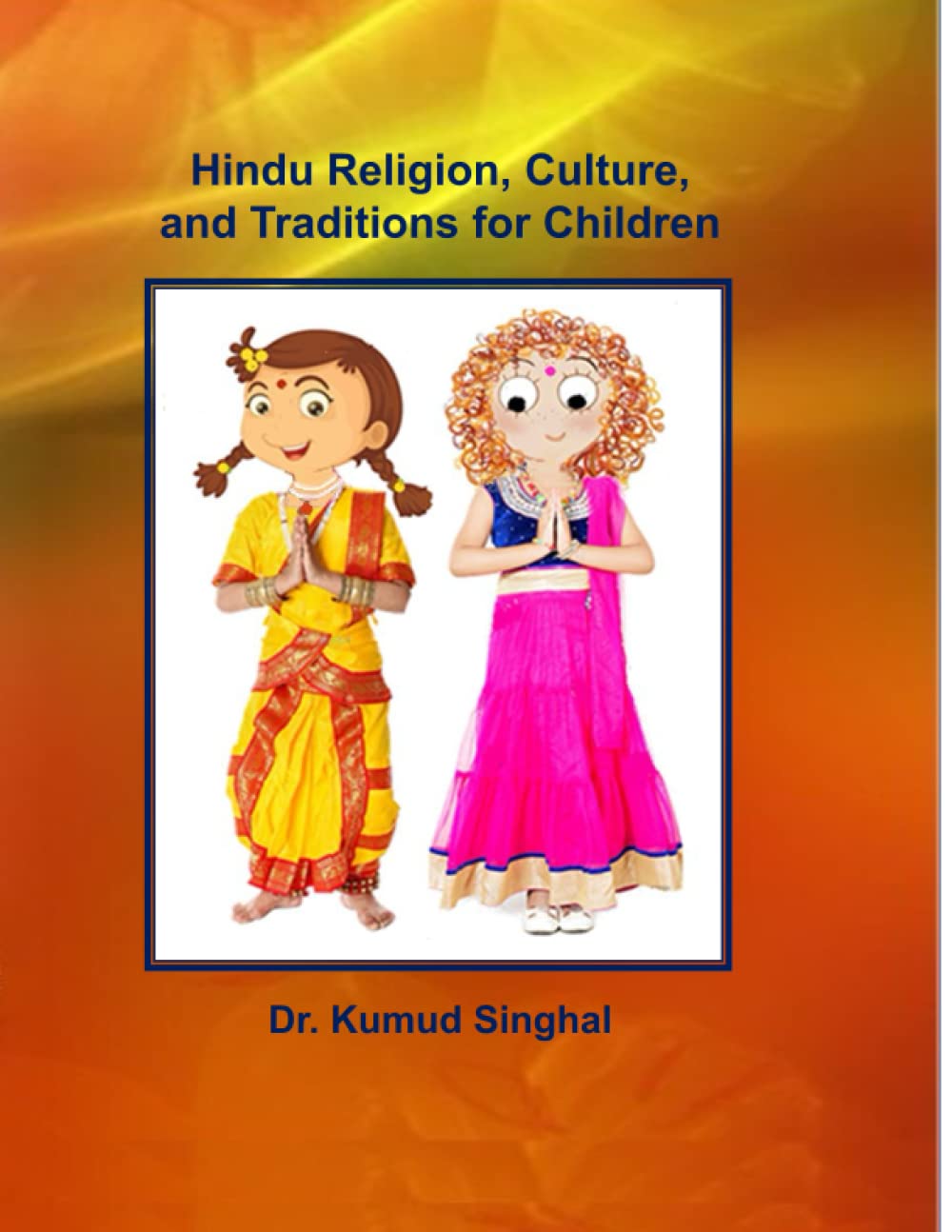



My experience in conducting classes for children of Hindu heritage for over fifteen years in the USA has resulted in this book. It is appropriate for children between the ages of four and twelve though some of the material will be useful to them even when they are teenagers or young adults. The early chapters are suitable for younger children while the later ones are appropriate for older ones. Character-building begins very early in childhood and knowledge of the fundamental tenants of Hindu religion and culture is essential for children to understand their roots. It helps them in having a sense of identity and in their development into happy adults leading meaningful and productive lives. The book helps children understand their cultural heritage through stories of various Gods and Goddesses from religious texts like the Puranas, Ramayana, and Mahabharata. The morals that these stories teach are still relevant today. I also cover our major festivals and their significance. An understanding of factors like habits, values, and attitude enhances the ability to deal with difficult situations. This book will help children understand values like non-injury, speaking the truth, compassion, sharing, humility, and the absence of deception, jealousy, anger, and hatred. In the last two Chapters, I give some of the teachings of the Bhagavad Gita and Vedanta that are suitable for older children. Examples illustrate the interactions between the sense organs, the mind, and the intellect. The law of Karma, including the different forms of results and how one deals with them, is discussed. The relationship between the individual, the universe, and God is discussed in an easy-to-grasp style. Hindu or Vedic culture is distinct from others in that religion is a way of life with all human pursuits related to it. This is so because there is only God appearing in many forms, like all things, as all beings, and as the entire universe in the Vedic worldview.