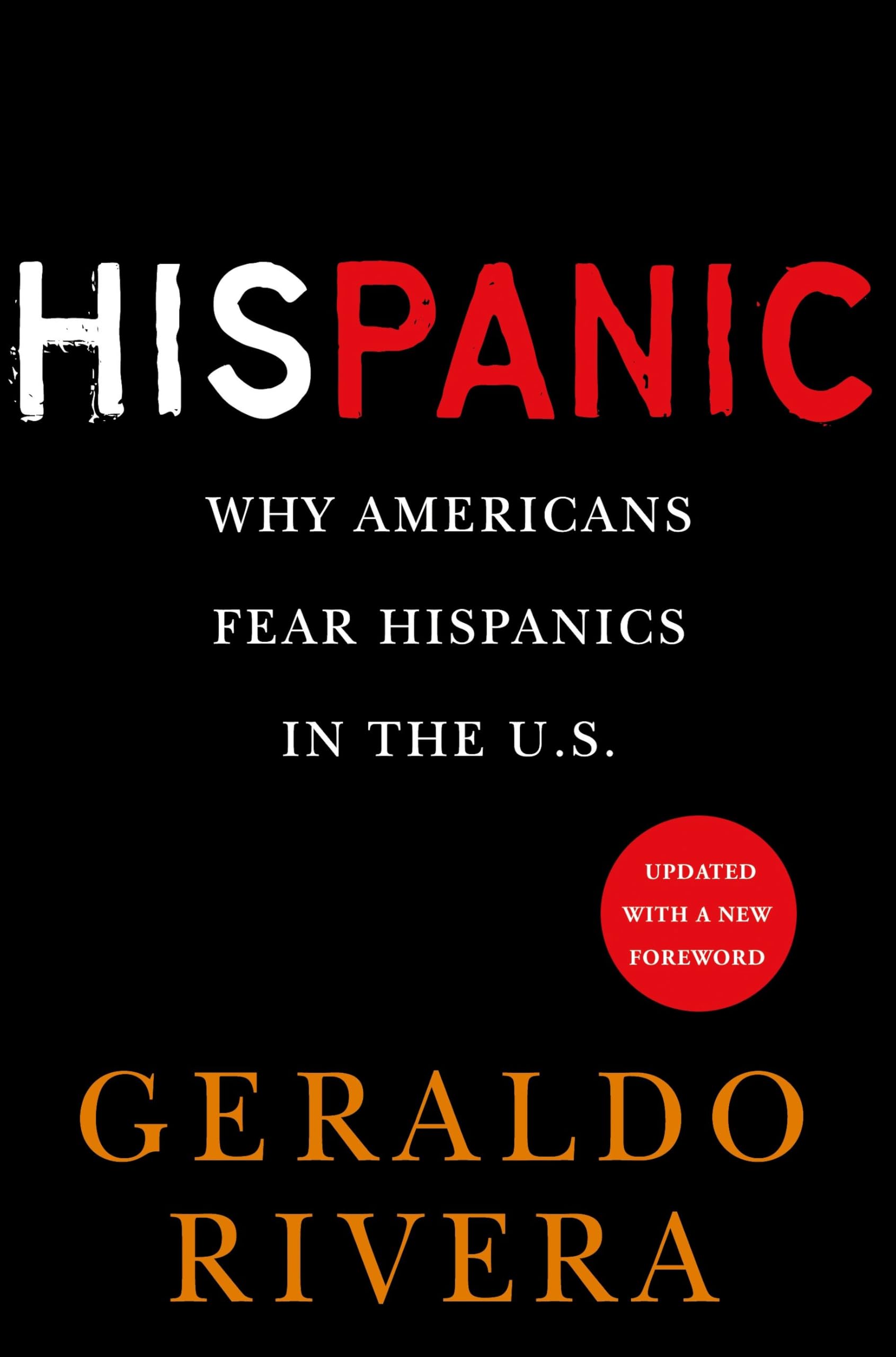



An account of the Hispanic population’s growth and the changing face of America from world-renowned journalist Geraldo Rivera—now updated with a new Foreword. Since his infamous confrontation with Bill O’Reilly on The O’Reilly Factor , Emmy® award winner Geraldo Rivera has examined what makes the issue of illegal Hispanic immigration so complex. With widespread fury and frustration directed at Hispanics, the nation’s largest minority, this may be the single most divisive issue in America today—with some citizens blaming illegal immigrants for everything from terrorism to the spread of disease and the loss of jobs. With unbiased analysis, Rivera exposes the hypocrisy, racism, and ignorance behind anti-immigration sentiments, from both extremists and otherwise ordinary Americans. An unflinching look at one of today’s biggest issues—and a vital contribution to the ongoing debate— His Panic is destined to reshape the way Americans view the future of this country. ?Poignant and fresh...Astute observations.? ?"Publishers Weekly" aPoignant and fresh...Astute observations.a a"Publishers Weekly" Geraldo Rivera , host of Geraldo at Large , is a veteran foreign correspondent. He has been a host on Good Morning America , Good Night America , Rivera Live , and The Geraldo Rivera Show , and a reporter on 20/20 and NBC. Proud to Be an American First, let me tell you my family's story, just one Hispanic family among millions. Like the overwhelming majority of immigrants, Hispanic or otherwise, the Riveras of Puerto Rico worked hard, served our country in many different ways, and made enormous efforts to assimilate, despite the obstacle of prejudice. My dad always wanted to fit into America, his “new” country. Well, technically the country wasn't new, because U.S. citizenship had been bestowed on him and all current and future Puerto Ricans by legislation called the Jones Act of 1917. The United States had been in possession of the lovely tropical island it had conquered and won from Spain for only twenty years, and Cruz Rivera was just two years old, the sixth of seventeen children born to Juan and Tomasa Rivera of Bayamon, Puerto Rico. “How could you have so many children?” I remember asking my grandmother, a woman of enormous patience and good humor who wore her snow-white hair pulled back, contrasting dramatically with her angular, chocolate-colored face made leathery by the sun. “Times were different then,” she replied in fabulous understatement, referring to their modest agrarian lifestyle in the sugarcane and coffee economy that dominated the island in the days before the commonwealth. My grandfather helped manage one small operation, and each child became another income earner, cutting and stacking cane, watched over by a slightly older sibling. With citizenship bestowed, the new Americans were free to roam and the Puerto Rican diaspora began, with island residents leaving their then largely rural society for the far-flung corners of the industrialized mainland United States. Most, like my dad, came to New York City. When the now twenty-one-year-old Cruz arrived on board one of the New York and Porto Rico Steamship Company's “banana boats” in 1937, more than fifty thousand of his fellow islanders arrived here. The number had been higher, nearly double in the earlier decade, but the Great Depression had unleashed a torrent of bitter racism toward the newcomers, who, like the immigrants of today, were thought to be stealing jobs from “real” Americans. So thousands had gone home to the island. My dad and several of his siblings were determined to stay. He met my mom, Lilly Friedman, at Stewart's Cafeteria on Sixth Avenue and 42nd Street. He was a counterman there; she was a pretty brunette from Jersey City who cleared dishes and waited tables. She is Jewish, he was Catholic, but he spoke English fluently, having learned as the valedictorian of his Bayamon high school. He proposed marriage, promised to convert to Judaism (which as a lay deacon of the church he never got around to doing). He had been on the mainland for only three years and was keen on assimilating, becoming even more American. To that end, and to ease the angst of my mom's parents over their daughter marrying a man whose name, Cruz, translates into “Cross,” he adopted the name of Allen, becoming Allen C. Rivera when he married. “Why Allen?” I asked my mother. “When he came here he was ridiculed and put down. He was called Chico or Pancho and it really upset him. He just wanted to be an American. And he spoke English perfectly, with no accent at all, except when he was on the phone. So he never wanted to speak on the phone.” My parents went so far as to give my older sister, Irene, and me the last name Riviera, as in the French or Buick Riviera, to further disguise our roots. It was the only thing they ever did that I'm still mad at. No one was fooled. All it did was confuse our school records, and by the time my brother Wilfredo a