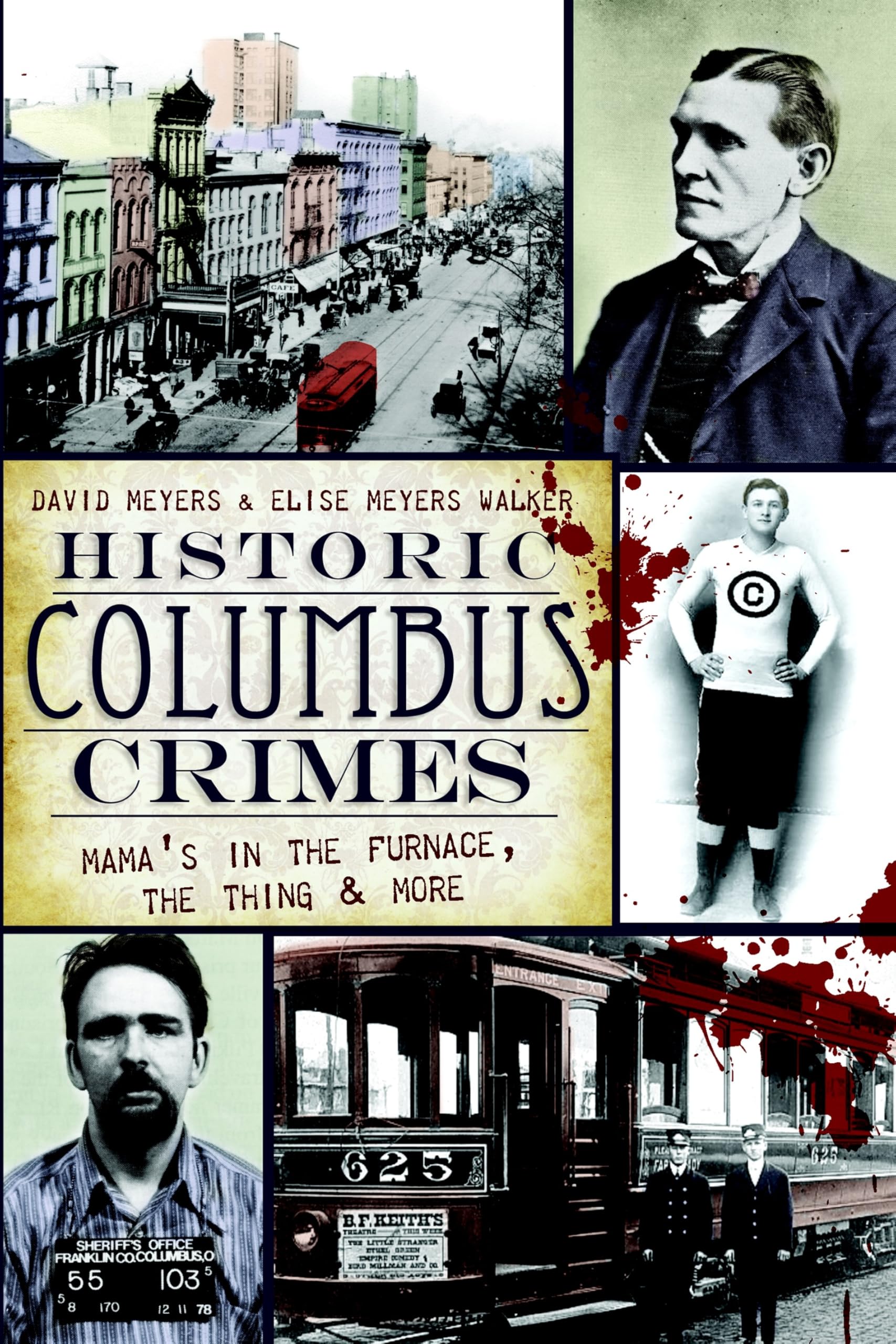
Historic Columbus Crimes: Mama's in the Furnace, the Thing & More (Murder & Mayhem)
$10.29
by David Meyers



In Historic Columbus Crimes, the father-daughter team of David Meyers and Elise Meyers Walker looks back at sixteen tales of murder, mystery and mayhem culled from city history. Take the rock star slain by a troubled fan or the drag queen slashed to death by a would-be ninja. Then there's the writer who died acting out the plot of his next book, the minister's wife incinerated in the parsonage furnace and a couple of serial killers who outdid the Son of Sam. Not to mention a gunfight at Broad and High, grave-robbing medical students, the bloodiest day in FBI history and other fascinating stories of crime and tragedy. They're all here, and they're all true! David Meyers is a lifelong resident of Columbus, Ohio. David has authored or coauthored a half dozen previous works, including Columbus Unforgettables; Listen for the Jazz; Columbus: The Musical Crossroads and The Last Christmas Carol. Elise Meyers Walker is a freelance writer and photographer and lifelong resident of Columbus, Ohio. Elise was also a performer at Disney World and a member of a professional theatre company in New York. She previously collaborated on Central Ohio's Historic Prisons with her father, David Meyers. Historic Columbus Crimes Mama's in the Furnace, the Thing, and More By David Meyers, Elise Meyers Walker The History Press Copyright © 2010 David Meyers and Elise Meyers Walker All rights reserved. ISBN: 978-1-59629-215-4 Contents Acknowledgements, Introduction, 1. The Resurrection War, 2. Fightin' Words, 3. Flytown Frenchy's Finale, 4. Death Rides the Rails, 5. Murder in Sellsville, 6. In a Lonely Place, 7. Insanity Comes Quietly to the Structured Mind, 8. The Thing, 9. Mama's in the Furnace, 10. Beauty and the Brain, 11. Blood Brothers, 12. How Not to Write a Crime Novel, 13. Think of Laura, 14. The Buddy System, 15. The Ninja Drag Queen Killer, 16. The Day the Music Died-Again, Notes, Bibliography, About the Authors, CHAPTER 1 THE RESURRECTION WAR On November 18, 1839, Patient No. 22 passed away at the Ohio Lunatic Asylum in Columbus. The record states that she was "much improved" since being admitted forty-eight weeks earlier — except, of course, she was now dead. Word was sent to the deceased's family in Marietta, Ohio, some 125 miles away, but the primitive roads, little more than muddy scars through the forest, were nearly impassable owing to the early winter rains. So the grim task of coming to claim the body was unavoidably delayed. Meanwhile, Patient 22 — Sally Dodge Cram by name — was interred in a pauper's grave in the Old North Graveyard, just beyond the Columbus city limits. Born December 26, 1783, Sally Dodge married Jonathan Cram at the age of twenty. Thirteen years later, the family moved from Hampton Falls, New Hampshire, to Marietta, Ohio, where Sally's father was a prominent member of the pioneer community. Jonathan became a merchant, and his store on the east side of the Muskingum River ferry landing prospered. However, when he died suddenly in 1820 at the age of forty-two, he left behind a thirty-six-year-old widow and four children, the youngest only five months old. Over the next eighteen years, Sally's mind became increasingly unhinged. Rebecca, her eldest child and only surviving daughter, was largely responsible for raising her siblings. When she married at twenty-three, Rebecca took the youngest, Jacob, nine, to live with her. By the time Sally was committed to the newly opened Ohio Lunatic Asylum on December 21, 1838, she had been suffering from "moral insanity" for three years. As the asylum directors later noted, the cholera epidemic of 1832–34 had given "a great impulse to whiskey and brandy drinking, of which the fruits were fully developed in 1839." Whether alcohol was a factor in Sally's mental instability, however, is speculative. When Sally's family finally reached Columbus, they found her grave had been defiled and her body was missing. Two other graves had also been opened. Almost immediately, fingers were pointed at the Worthington Medical College by the school's enemies, of which there were many. During the pre–Civil War era, Columbus was a hotbed of competing medical systems. There were, basically, two camps: the "regulars," or mainstream practitioners; and the "irregulars" — those who refused to go along with the accepted practices of the day. Although the regulars would ultimately prevail as the American Medical Association, it was often the irregulars who spearheaded needed reforms. For example, the regulars advocated such later discredited procedures as bloodletting, blistering and medicinal doses of mercury and other poisons. The irregulars rejected such practices and introduced their own, which were sometimes just as silly or deadly but, occasionally, proved to be right. The Worthington Medical College was modeled after the Reformed Medical College founded in New York by Dr. Wooster Beach. His Reformed System, which was strictly bota