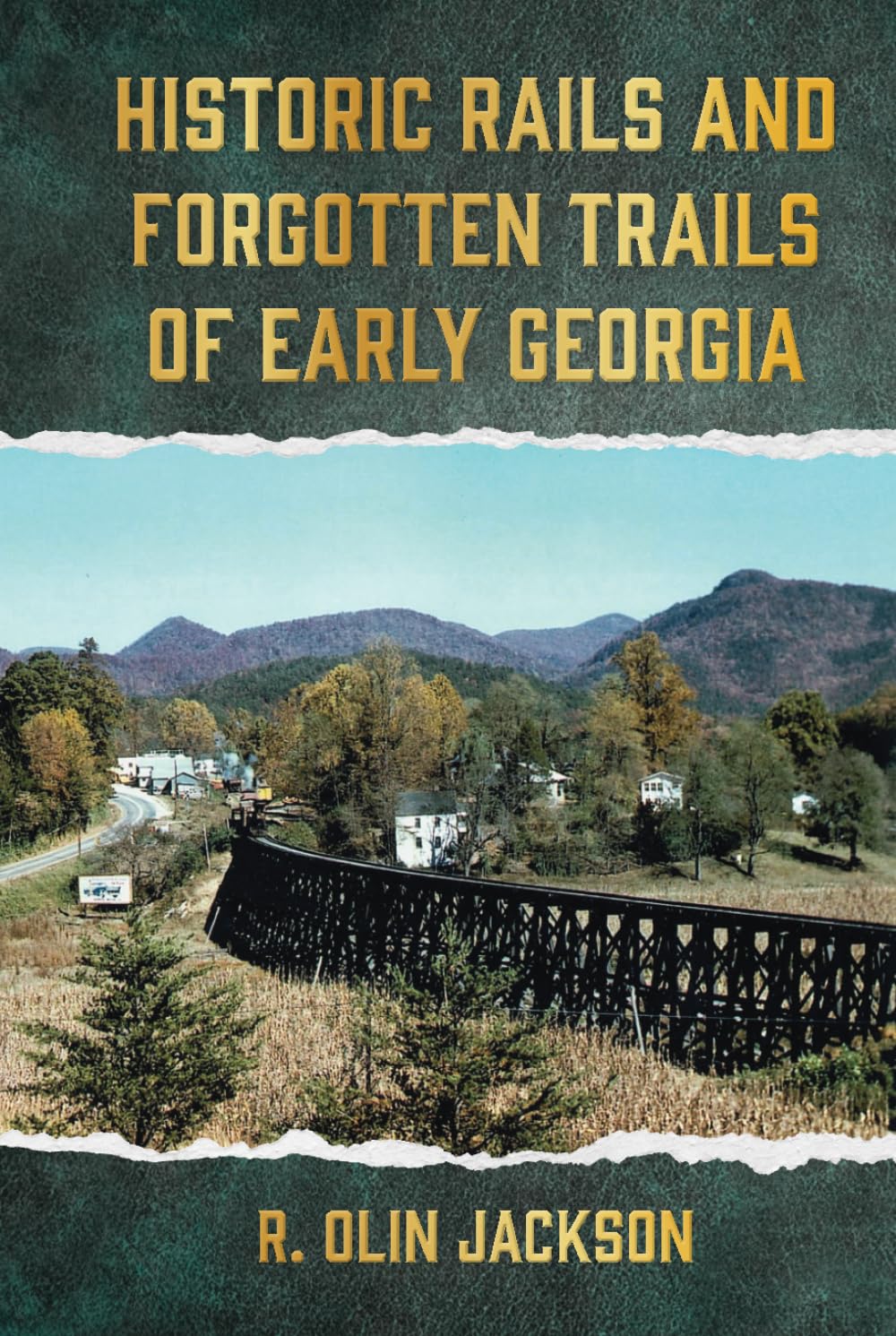



Modern travelers moving across the state of Georgia today often encounter street and road signage for an avenue called “Old Alabama Road” in Gwinnett, Fulton, Bartow and numerous other counties. Other travelers in the White, Union and adjacent counties occasionally pass by signage for historic routes called “the Unicoi Turnpike” and “the Logan Turnpike.” Still others passing across Hall, Forsyth, Cherokee and other counties in that realm often come across a pike called “Old Federal Road.” Unbeknownst to most of these “modern” travelers, these “turnpikes” and “old roads” were the original routes used by pioneer settlers as they moved across the virgin forests and untamed wilderness which were fast becoming the state of Georgia. Remnants of these original westward trails can still be witnessed and experienced in numerous localities if one wishes to seek them out. There likewise are numerous forgotten and abandoned early rail lines throughout the state of Georgia, some dating as far back as pioneer days as well. Remnants of these historic holdovers can also still be seen, as can portions of their rolling stock and aged forgotten depots. A few examples include the Western & Atlantic Railroad , which dates to Civil War days and still exists from Atlanta to Chattanooga, owned today by the state of Georgia; the Western & Macon Railroad , remnants of which also still exist and on which such famed individuals as Georgia native and old West gunman John Henry “Doc” Holliday and others once traveled; the very scenic and historic Tallulah Falls Railroad, and the list goes on and on. History abounds for those willing to do just a bit of research and take the time to ferret out these historic vestiges of yesteryear. In the earliest days, hardy pioneer adventurers many times simply followed Native American or wild game trails in their westward migrations. Cloven-hoofed animals in prehistory such as elk, bison, deer, antelope and the like traveled seasonally to new forage opportunities, and in their migrations, they invariably followed the routes of least resistance around the endless hills and through passes in the mountainsides, and across the countless streams, creeks and rivers they encountered. Native Americans later adopted many of these game trails for their own use and improved upon them directionally, traveling more horizontally or vertically across great distances to trade with and wage war against other aboriginals. In turn, many of these trails were adopted by pioneer American settlers and improved still further. The earliest pioneers congregated originally on the continent’s east coast where they were confronted with the great barrier of the Appalachian Mountain Range. They subsequently were forced to migrate southward down the eastern seaboard of what later became the states of Pennsylvania, Maryland, Virginia, North Carolina and South Carolina before reaching Georgia, where they were finally able to turn westward and travel inland – having circumvented the huge Appalachian obstacle. These early inland routes eventually gained identities such as “the Alabama Roads,” or “the Unicoi Turnpike,” or “the Logan Turnpike,” or “the Federal Road,” and numerous other names. The accounts within the pages of this book take the reader down these early travel routes – from the easternmost portions of Georgia to eastern Alabama, describing the life which existed along the way. These byways ultimately were used for everything from the death and destruction of the U.S. Civil War to the joy and happiness of wonderful getaway resorts in the Appalachian highlands. The 37 captivating articles with over 215 maps, diagrams and period photographs on the 340 pages of this volume provide a vivid description of these trails and rails and the people who experienced them. This then is the story of the Historic Rails and Forgotten Trails of Early Georgia . R. Olin Jackson founded Legacy Communications, Inc., in 1985, where he became the award-winning executive editor and publisher of his flagship creations - North Georgia Journal and Georgia Backroads magazines. He ultimately built these endeavors into the premier travel and history publications of Georgia.During his tenure at Legacy Communications, Olin was the recipient of a number of awards from the Magazine Association of Georgia (MAG) for excellence in publishing. He parlayed this business endeavor into a long and fruitful career before selling it in 2005. Georgia Backroads is now in its 39th year (as of 2025) of publication and is one of the longest-running magazines in the state.In the interim of his work at Legacy Communications, Olin also wrote/co-wrote a selection of books, including Moonshine, Murder and Mayhem in Georgia (2003); Tales of the Rails in Georgia (2004); and Georgia Backroads Traveler (2005) among others.In 2021, Olin founded Whippoorwill Publications, LLC. His literary creations there include Mystery & History in Georgia, Volume I (2022) (honored wit