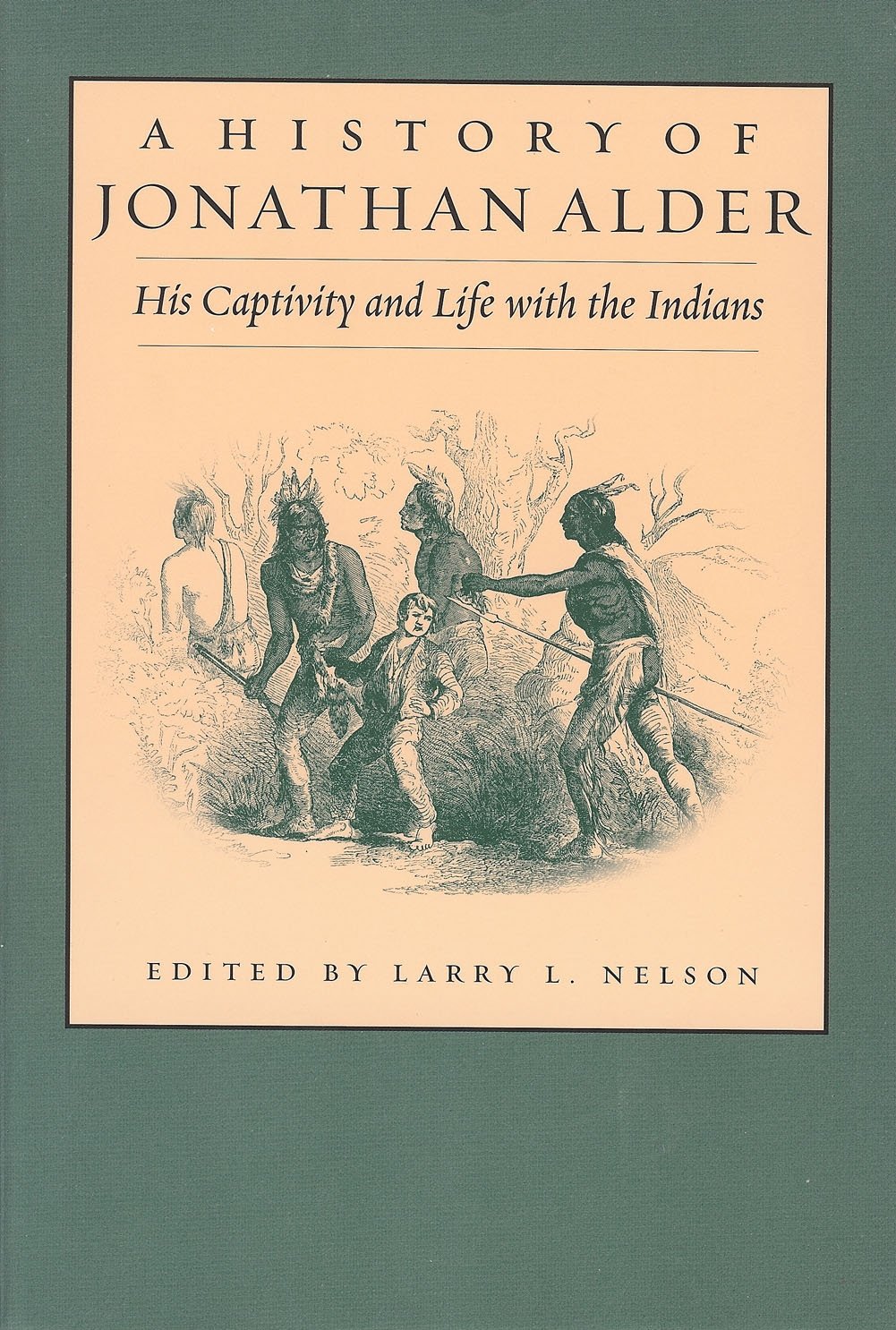
History of Jonathan Alder: His Captivity and Life with the Indians (Ohio History and Culture Ser)
$14.95
by Larry Nelson



A History of Jonathan Alder: His Captivity and Life with the Indians is one of the most extensive first person accounts to survive from Ohio's pioneer and early settlement eras. Nine year-old Alder was captured and taken to Ohio by Indians in 1782. Adopted by a Mingo warrior and his Shawnee wife, Alder lived as an Indian until 1805. After he left the Indians, Alder became one of the first European settlers to live in central Ohio. Alder composed his memoirs in the 1840s. His account chronicles his life for fifty years, from the time of his capture to 1832. The narrative, therfore, provides a unique perspective on fronteir Ohio and its transformation from wilderness to statehood and the continuing evolution in the relationship between Ohio's Indians and whites from the Revolutionary War-era to a time when many of the state's Native peoples had been removed. Alder's recollection provides an exceptional look at early Ohio. His portrait of his captors is revealing, complex, and sympathetic. The latter part of his narrative in which he describes his experiences in central Ohio is an extraordinary rich account of early pioneer life. Further, Alder was fortunate in that he encountered many of the persons and took part in many of the events that have become touchstones in Ohio's pioneer history, including Simon Kenton, Simon Girty, and Col. William Crawford. He participated in the Battles of Fort Recovery and Fallen Timbers, and his recollection of these actions are among the few extant accounts that describe these events from a Native American perspective. Larry L. Nelson is site manager of Fort Meigs State Memorial and adjunct assistant professor of history at Firelands College. He received his Ph.D. in American history from Bowling Green State University. His previous books include The Sixty Years War for the Great Lakes, 1754-1814 (editor, with David C. Skaggs), A Man of Distinction Among Them: Alexander McKee and the Ohio Frontier, and Men of Patriotism, Courage & Enterprise: Fort Meigs in the War of 1812. History of Jonathan Alder By Larry L. Nelson University of Akron Press Copyright © 2003 Larry L. Nelson All right reserved. ISBN: 9781884836985 Chapter One A history of the life and captivity by the Indians ofJonathan Alder, who was born the son of Bartholomewand Hanna Alder on September 17, 1775, in thestate of Maryland, not far from Philadelphia ( in NewJersey, about eight miles from Philadelphia, September 17, 1773 . Howe,Beers). When I was two years old, my family removed from thereto Wythe County in Virginia. About four years afterwards, my fatherdied, leaving a wife and five children. John, he was only a half-brother(my father had been married before then) and was the oldest. Mybrother David, and myself, and Mark, and Paul constituted the restof the family. My father had bought a piece of land and had madesome improvements before he died, and had some horses and cattleand other stock. ([His father] purchased a small tract of land, erected a plainlog cabin and began to make improvements.... He was possessed of several headof horses, cattle and swine, which fed upon the wild grass, herbage, and nuts of theforest and frequently strayed along the mountain valleys. Hill) We lived near alead mine. I can still recollect going to the mine and watching theminers dig out the ore. There was also a pure stream of water closeby. I used to go there with my brother John to see him swim. Another incident that I can still recollect is that the Negroes usedto pass our house on Saturday evenings going to see their wives andwould return Sunday evenings. I recollect several instances in the fallof the year when they would bring pumpkins with them and wouldget my mother to bake them for them to eat on their way home.There were a great many other things that I could also remember, allof which I related to my mother when I returned home after an absenceof twenty-four years. A great many of these things she had entirelyforgotten, but after her mind was a little refreshed, she couldrecollect and tell me of some that I had forgotten. It was now in the month of May 1781 ( March 1782; Howe, Beers)when the leaves were all out and the woods were very thick. Onepleasant and sunshiny morning, everything looked gay and beautifuland my mother called to my brother David and myself and told usthat we must go and hunt a mare and colt that had been missing forseveral days. My brother did not eat but little breakfast and when themeal was over, he seemed to be very much downcast. All the necessaryarrangements were made and we started, but little did we thinkwhat our sad fate was to be or who would tell the story. We struck out into the woods and after wandering around forsome time and not finding the horses, we came to a little brook thatwas full of willows. David gave me his knife and told me to cut someof them around the bank and he would make a basket when we wenthome, and while I was busy, he would look for