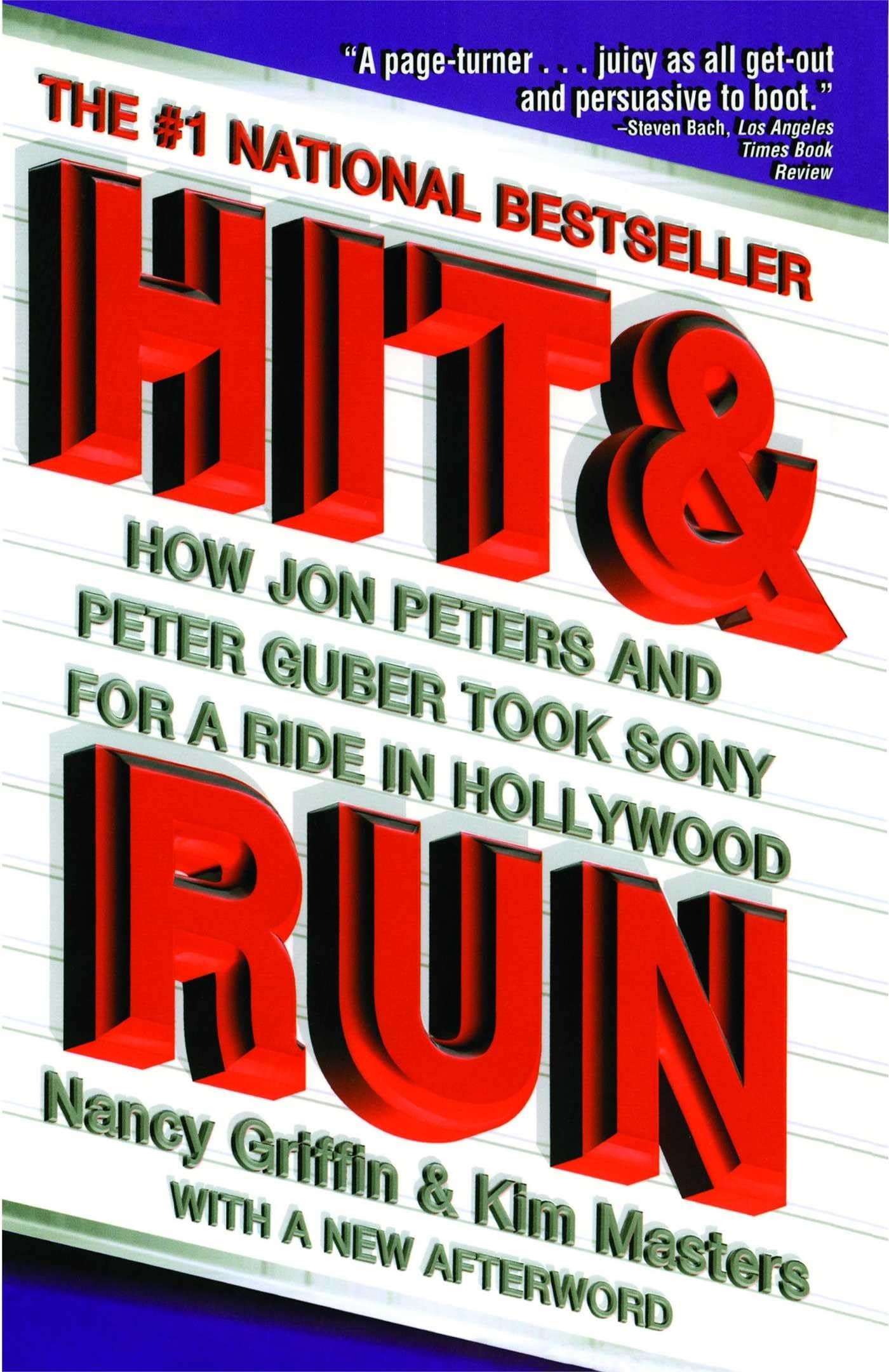



Hit and Run tells the improbable and often hilarious story of how two Hollywood film packagers went on a campaign to reinvent themselves as studio executives -- at Sony's expense. Veteran reporters Nancy Griffin and Kim Masters chronicle the rise of Jon Peters, a former hairdresser, seventh-grade dropout, and juvenile delinquent, and his soulless soul mate, Peter Guber -- and all the sex, drugs, and fistfights along the way. It is the story of the ultimate Hollywood con job and the standard by which every subsequent business blunder has been measured. Hit and Run delivers rock-solid business reporting liberally laced with inside gossip and outrageous scandal -- plus a new afterword bringing us up to date on the latest fallout from the Guber-Peters legacy. Hit and Run tells the improbable and often hilarious story of how two Hollywood film packagers went on a campaign to reinvent themselves as studio executives -- at Sony's expense. Veteran reporters Nancy Griffin and Kim Masters chronicle the rise of Jon Peters, a former hairdresser, seventh-grade dropout, and juvenile delinquent, and his soulless soul mate, Peter Guber -- and all the sex, drugs, and fistfights along the way. It is the story of the ultimate Hollywood con job and the standard by which every subsequent business blunder has been measured. Hit and Run delivers rock-solid business reporting liberally laced with inside gossip and outrageous scandal -- plus a new afterword bringing us up to date on the latest fallout from the Guber-Peters legacy. Nancy Griffin is the West Coast Editor of Esquire magazine and the former Deputy Editor of Premiere . She lives in Los Angeles. Hit and Run By Nancy Griffin Simon & Schuster Copyright ©1997 Nancy Griffin All right reserved. ISBN: 0684832666 Prologue "If God didn't want them sheared, He would not have made them sheep." The Magnificent Seven Walter Yetnikoff freshly out of drug rehab, found himself at the epicenter of a multi-billion-dollar deal. It was September 1989, and the head of the Sony Corporation's successful music division was playing a pivotal role in the Japanese electronics giant's acquisition of a major Hollywood studio. For Yetnikoff, who expected to run the combined entertainment empire, the purchase would represent the realization of a long-cherished dream. But there was a hangup. If the deal were to "make," in the industry parlance, Sony needed managers to put in charge of the new studio. Under pressure to fill the vacancy, Yetnikoff had an idea: He would call his old friends, film producers Peter Guber and Jon Peters. A few days after Yetnikoff contacted Guber and Peters, Sony confirmed a swirl of rumors that it was buying Columbia Pictures Entertainment. The cost, $3.4 billion plus $1.6 billion in debt, was considered high for an entertainment company that had been faltering. The news of the acquisition was not welcomed in the United States. There was an outcry over the sale of a venerated and uniquely American institution to a foreign acquirer. Sony, seen as something of a brash upstart at home, was viewed by many in the United States as part of a rich and invincible army of invaders snapping up American properties, from Rockefeller Center in the East to the rolling resorts of Hawaii. The fact that Sony was willing to meet a rich price only inflamed American anxiety. Sony expressed its regret over American reaction to the deal. But it wasn't concerned about the criticism that it had paid too much. The company had been mocked for overspending when it bought CBS Records in 1987, and the music division had flourished under Yetnikoff's leadership despite his substance abuse problems. Having made one successful foray into the entertainment world, Sony had every reason to think it could win again in the movie business. Sony was hardly the first to fall into the Hollywood trap. The movie business has long attracted an array of hopeful outsiders, from insurance companies to purveyors of soft drinks. Many have learned the hard way that Hollywood is a world apart -- a risky business where the uninitated are routinely shorn. It is a fantasy factory where the insiders are often more skilled at creating illusions about themselves than they are at spinning magic for the big screen. On paper, Guber and Peters looked like genuine movie moguls. They were high-profile producers who had just made Batman, the largest-grossing film of all time, for Warner Bros. Their names were on such hits as Rain Man and The Color Purple . But the real players knew that Guber and Peters were hardly hands-on filmmakers. When Steven Spielberg made The Color Purple , he had a provision in his contract explicitly barring them from the set. Guber and Peters had visited the set of Rain Man only once, while the production chores were handled by director Barry Levinson's associate, Mark Johnson. When the picture won the Academy Award, Guber and Peters got to neither collect nor keep the Oscar. T