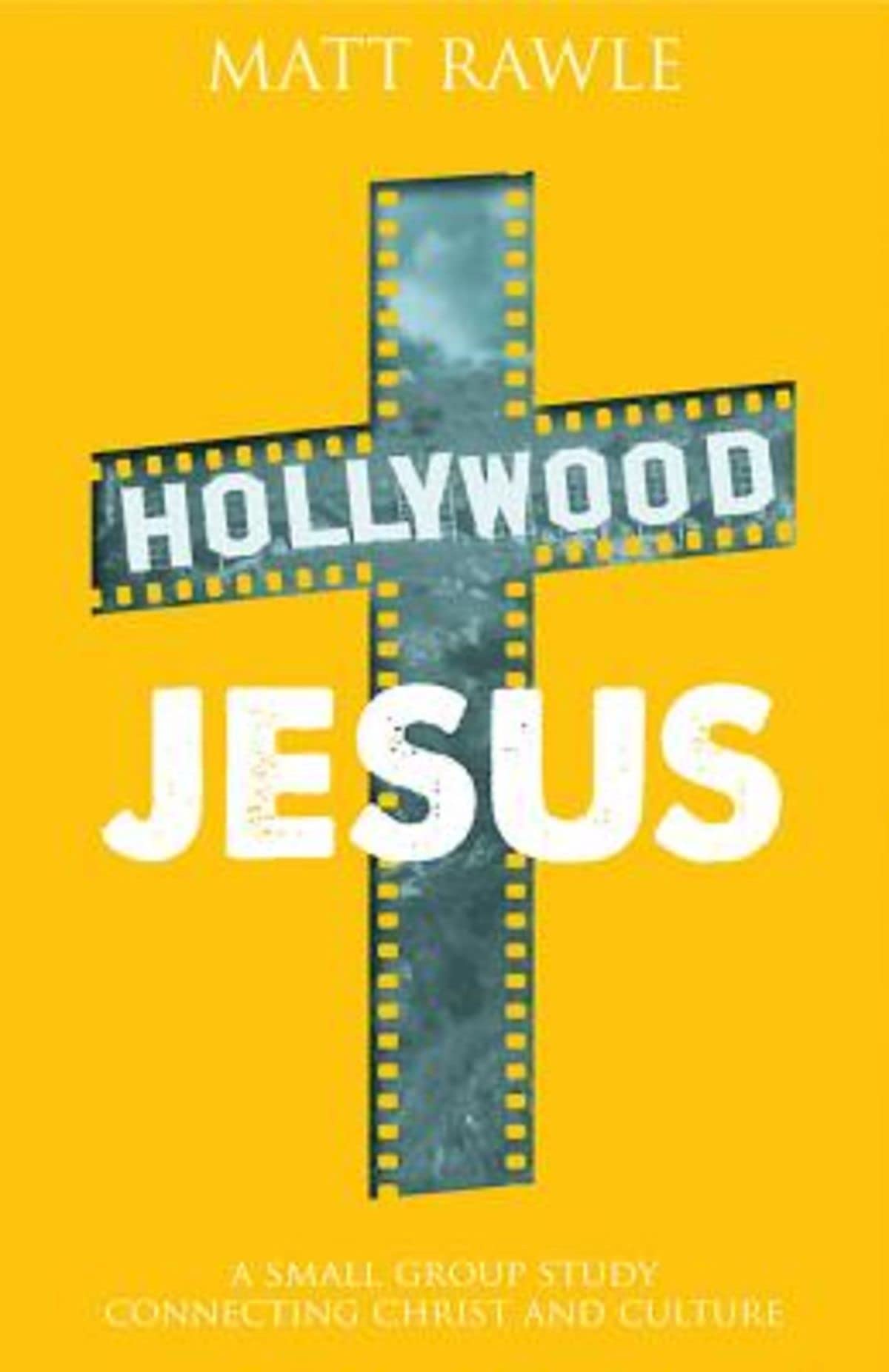
Hollywood Jesus: A Small Group Study Connecting Christ and Culture (The Pop in Culture Series)
$14.99
by Matt Rawle



Pastor and author Matt Rawle is on a mission. He sees Christ all around him—in books, movies, TV shows, rock music—and he wants to share what he sees. As Matt says, "God offers the raw ingredients, and 'culture' is whatever we cook up." Hollywood Jesus is pastor and author Matt Rawle's study of Jesus and Christ figures in films including Cool Hand Luke, The Lion King, The Truman Show, and One Flew Over the Cuckoo’s Nest. Explore what happens when script meets Scripture, when pop culture encounters the King of kings and Lord of lords. Hollywood Jesus is part of The Pop in Culture Series of Bible studies in which Matt Rawle stirs up a tasty gumbo of insight, humor, and inspiration based on some of your favorite pop culture classics. A DVD featuring four sessions with the author, a full Leader Guide, and a Worship Resources Flash Drive also are available for group study. Matt Rawle is Lead Pastor at Asbury United Methodist Church in Bossier City, Louisiana. Matt is an international speaker who loves to tell an old story in a new way, especially at the intersection of pop culture and the church. He is the author of a new series of books titled The Pop in Culture Series. The series includes The Faith of a Mockingbird , Hollywood Jesus , The Salvation of Doctor Who, The Redemption of Scrooge, What Makes a Hero?, and The Gift of the Nutcracker. Hollywood Jesus A Small Group Study Connecting Christ and Culture By Matt Rawle Abingdon Press Copyright © 2015 Abingdon Press All rights reserved. ISBN: 978-1-5018-0391-8 Contents Introduction, Hollywood Jesus: The Big Picture from Story to Screen, 1. From Scripture to Script, 2. The Jesus of Now ... Whenever "Now" Is, 3. The Gospel According to ..., 4. Everyone Has a Story, Notes, Acknowledgments, CHAPTER 1 From Scripture to Script If you'd come today You could have reached the whole nation Israel in 4 B.C. had no mass communication. Picture this. You're at a reception for your parents' fiftieth wedding anniversary. All the family are gathered to celebrate, and it comes time for you to share a few words about how much your parents mean to you. Would you simply grab the nearest microphone and start talking, sharing stories and fun memories? Or maybe you'd choose a poignant poem to express your love. Maybe you would put together a slideshow of pictures that speak for themselves. Or perhaps you'd play a special song because words alone couldn't capture your emotions. Or maybe you wouldn't speak publicly at all, but would Instagram a play-by-play of the night for those who couldn't attend the party. God created humanity in God's image, and part of that image is the ability to share stories, and in doing so, share with the world what means so much to us. Looking back through history — through ancient texts of epic adventures, battle stories, records of families, and tales about love — humans have always seemingly had a deep hunger to share what matters most to us in our day-to-day lives. Even though the medium has changed over the years, from campfire stories to the printing press, from telephone calls to texting, from actors on the stage to actors on the screen, we continue to have a deep hunger to share with each other what matters most. Today, movies have become a huge part of our story-telling language, with movie ticket sales eclipsing the revenue of even the most popular books. Sometimes we even think a book really hasn't "made it" until it is adapted for the screen. One of my wife's pet peeves is when she hears someone walk out of a movie theater saying, "Eh. The book was better." She always wants to say, "Of course the book was better because it was your own imagination making the visuals!" So how do we react when a movie is drastically different than what our imaginations have created? It may be simple enough to say that a movie is good or bad or funny or rotten, but what if the film's subject really matters? What about when the Bible is adapted for the screen? Sometimes it feels inappropriate to say that a movie about Jesus was simply "good" or "bad" or even "mediocre." What does it mean if you thought Son of God was a bad movie? Does that mean you don't really believe that Jesus was God's Son? What if you thought The Last Temptation of Christ was a great movie? Does that mean you think Jesus was really tempted to have a family of his own? Is there a difference between the art of filmmaking and the meaning the film offers? In other words, can good art offer a bad truth, or bad art offer a good truth? When Scripture becomes script, it can change the experience we have with God's Word, so let's explore how the medium of film affects the way we see the person of Jesus. How to Tell a Great Story This is the disciple who is testifying to these things and has written them, and we know that his testimony is true. But there are also many other things that Jesus did; if every one of them were written down, I suppose