Home Front Lives: Civilian Britain In Wartime (WW2: Voices from the Front)
$37.18
by Robin Wickens



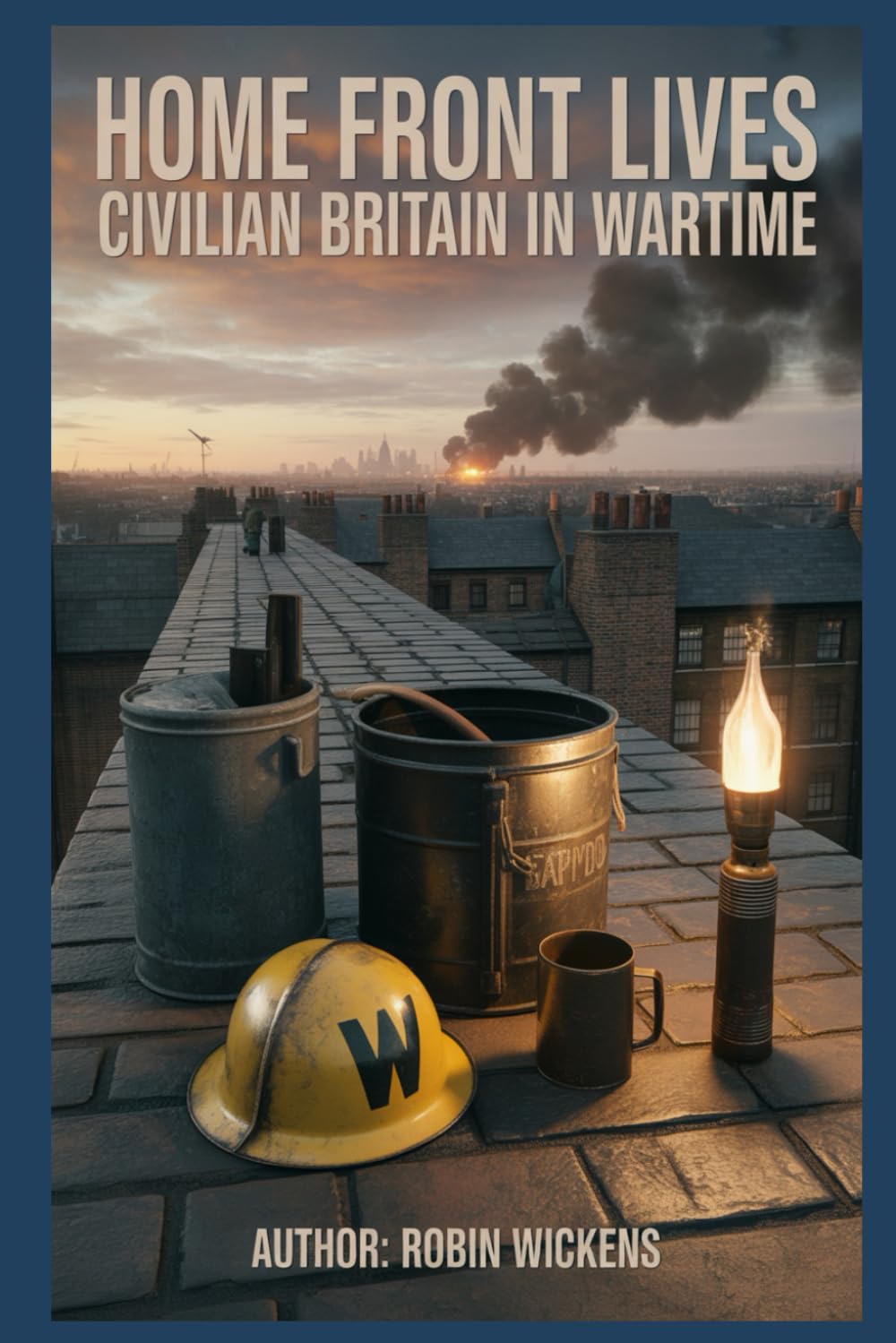
Step into wartime Britain , where the real battle is often fought in ordinary places: the ration queue at dawn, the tram platform under blackout, the factory floor humming through exhaustion, the church crypt where voices lower and secrets pass hand to hand. Home Front Lives: Civilian Britain In Wartime is a single-author collection of fifty complete, richly atmospheric stories set across the UK, including London, Liverpool, Glasgow, Cardiff, Belfast, rural villages, and coastal towns. Each chapter delivers a full narrative arc with vivid period detail, human warmth, and wit where it belongs, while staying respectful of wartime realities. Inside this WWII civilian stories collection, you’ll meet the home front heroes history rarely spotlights: the ration clerk who spots forged books before families go hungry, the Portsmouth tea seller who exposes a cruel dockside scam, the Glasgow tram conductor who notices a coded ticket pattern, the Edinburgh librarian who realises “only books” can still become weapons, and the firewatchers on rooftops who learn that reliability can be more heroic than drama. These are stories of civilian resilience in World War Two Britain, shaped by the daily pressures of rationing, blackout restrictions, air raids, evacuation, factory work, and the complicated ethics of survival. They explore community solidarity, quiet resistance, and the thin line between compromise and corruption. If you love British historical fiction set in WWII, Blitz-era home front tales, and short story anthologies that feel grounded, emotionally true, and intensely readable, Home Front Lives belongs on your Kindle. Perfect For Readers Who Enjoy British WWII historical fiction Home front women and civilian wartime roles Blitz-era stories, blackout nights, and rationing realities Anthology-style short stories with complete endings Human-scale stories of courage, community, and moral complexity Robin Wickens writes British historical fiction with a focus on civilian life, community resilience, and the quiet heroism of ordinary people. Known for an evocative, detail-rich style that balances warmth with moral complexity, Robin’s stories illuminate the lived texture of wartime Britain: queues and ration books, blackout streets and shelter nights, factory shifts and firewatch posts, and the unspoken rules that helped communities survive. Robin’s work is driven by a fascination with social history and the human stories behind it, bringing authenticity, atmosphere, and wit to narratives that honour endurance without romanticising hardship.