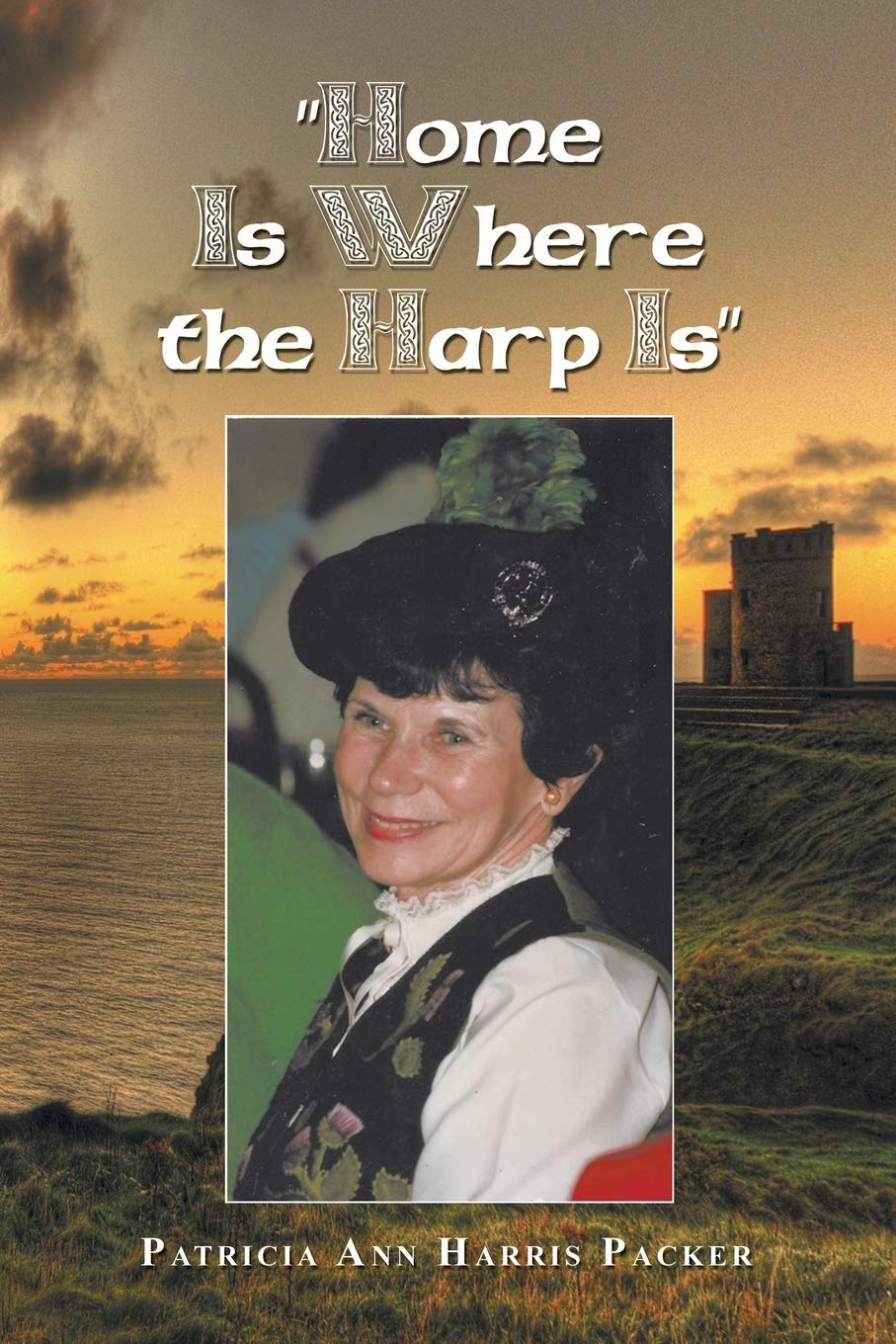



From humble beginnings, as a child of the Great Depression and World War II, Pat Packer has lived through the good times and the bad, as have many others. She was married at a young age, raised five children, and managed to live through the unexpected loss of one of those children to a tragedy. She was a successful business owner, building two authentic Irish pubs from scratch: McCarthy's Party in Detroit, Michigan, and The Harp and Thistle in St. Pete Beach, Florida. Through tears and laughter, ups and downs, and her unwavering faith in God, she is telling her story from her home in St. Pete Beach, Florida. "Just for today, I will adjust myself to what is and not try to adjust everything to my own desires. I will take my luck as it comes and fit myself to it." -Miss Pat "Home is Where the Harp Is" By Patricia Ann Harris Packer AuthorHouse Copyright © 2015 Patricia Ann Harris Packer All rights reserved. ISBN: 978-1-5049-3407-7 Contents DEDICATION, vii, MY EARLY CHILDHOOD, 1, YOUNG WOMAN, 8, MARRIED LIFE, 16, OUR GROWING FAMILY, 28, McCARTHY'S PARTY, 48, THE HARP AND THISTLE PUB, 71, NEW BEGINNINGS, 99, CHAPTER 1 MY EARLY CHILDHOOD Having love of family surrounding me was a very early memory. My mother was the rock. The great depression was a difficult time for America, and I was born during that period, in Lansing, Michigan, in 1931. It was told to me by family how excited they were to have a beautiful baby sister. My brother suggested Rose as my name because my mouth was shaped like a rosebud. My father quickly responded saying Patricia, being Irish, would be my name (as in St. Patrick). Patsy would become my nickname for many people. Mother, Olive Blanche Dressel, was born April 9, 1890, in Ganges, Michigan. Her family moved to North Dakota when she was eight years old and later to Pueblo, Colorado. She entered St. Mary's Hospital to study nursing, graduating in 1910. She was an avid photographer, developing her own prints, and a skilled horseback rider. She owned her own car at age twenty-five. She enlisted in the Red Cross becoming nurse 13,325 and returned to Three Rivers, Michigan as a public health nurse, working thru the flu epidemic of 1918. She and Willis Wahl were married in 1921, settling in Lansing, Michigan where they became the parents of a son and four daughters. Mr. Wahl died unexpectedly in 1927. At this time, she was a visiting Red Cross nurse for the Lansing Welfare Department, keeping her family together as a single mother. The Wahl's children were Marjorie Jean (b.1922), Robert (b. 1924), Mary Olive (b.1925), Phyllis (b.1926) and Nancy (b.1927). Upon Mr. Wahl's sudden death, the property title was transferred to Robert, then three years old; because women could not have property rights. Francis E. Harris was a traveling insurance agent and called on the widow to help with the insurance settlement. I guess they fell in love, because they were married October 1st, 1930. From my earliest memories, I felt love from my mother, father, four sisters and brother. Our mother was working and father constantly traveling. This was the height of the great depression, and times were not good. But like so many others, we worked through it. My sisters would take me wherever they went. Mother liked to shop in a store called Second Hand Rose, picking out the very best clothes for all of us. It was a day-to-day struggle to dress and care for six children. Our Grandma Harris and Grandma Dressel also lived with us in this three-bedroom home with one bathroom. Imagine Irish and German grandmothers in the same household? We were on welfare, going with my mother, waiting in line for our turn to receive a check for living expenses. It was determined that for a short time, my sisters and I were placed in a children's home. The exception was Marge who was working and self-reliant. Robert stayed at home to help mother with expenses delivering newspapers and working odd jobs. In the late 1930's, he went to work in a CC Camp, a conservation program under the Roosevelt administration. It helped the nation build roads, bridges, railroads, farms, and the park system. It was a joy to return home a year later and, once again, our family was together. It was convenient for our living arrangements, because mother was now working for St. Laurence Hospital, directly across the street from our home. Mother enrolled me in Holy Cross Elementary School, and my sisters and brother were enrolled and graduated from St. Mary's High School, next door to the State Capitol. They were all thrilled when I brought home a good report card. We were now enjoying what I would call a normal family life. A typical Sunday evening would be the family gathering around the Philco floor model radio (no television yet) listening to our favorites such as Jack Benny, The Great Gildersleeve, starring Hal Perry, Fibber McGee and Molly, and the funniest of all – Edgar Bergen and Charlie McCarthy along with their fr