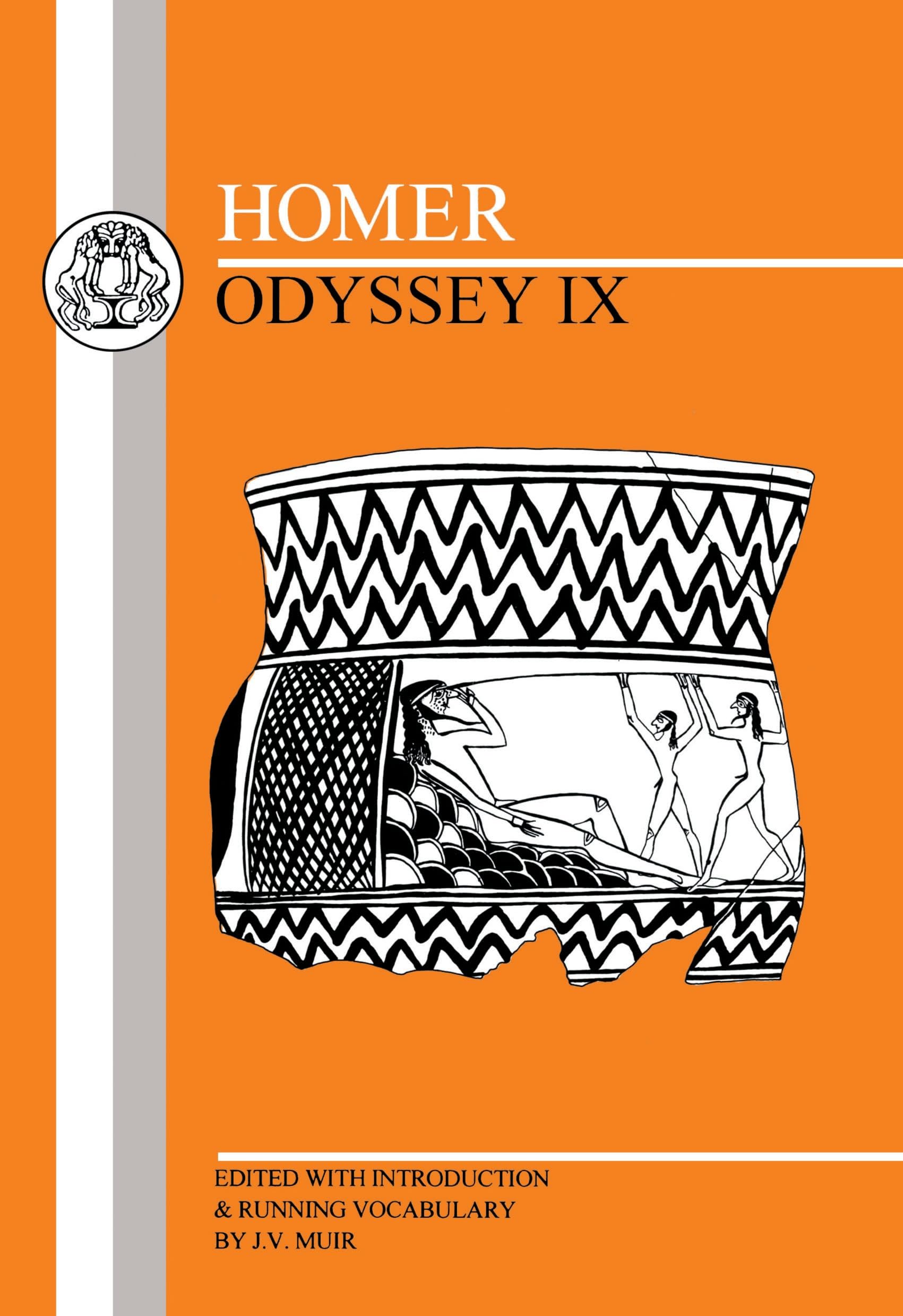



This edition of one of the most enduringly popular and familiar books of the Odyssey - the encounter of Odysseus and his men with the cannibal Cyclops Polyphemos - grew out of the classes taken at the Joint Association of Classics Greek Summer School, where students who had completed a beginners' course were making their first acquaintance with Homeric verse. The complete text of the book, with generous narrative headings, and illustrations from Greek art, is complemented by a running vocabulary and translation assistance on facing pages. The brief introduction deals with the composition of the Homeric poems, with the story of the Odyssey as a whole and this book in particular. It considers the peculiarities of Homeric dialect forms and the scansion of hexameter verse. The book is ideal for all those tackling Homer for the first time, and is suitable for use in schools and upwards. J.V. Muir is the translator and editor of Alcidamas: The works and fragments (in the Greek Texts series, also published by Bloomsbury), and co-author of Greek Religion and Society . Homer Odyssey IX By Homer Duckworth Publishing Copyright © 1980 Homer All right reserved. ISBN: 9780906515617 Chapter One Book I To the Muse. * The anger of Poseidon. * In Poseidon's absence, a gathering of the gods in Zeus' halls on Olympus. Athena's plea for help for the stranded Odysseus; Zeus' consent. * Athena in the guise of Méntës visits Ithaca. Her advice to Telémachus: he is to confront the Ithacan elders with the problem of the suitors and to leave Ithaca to search for news of his father. * Penelope's appearance among the suitors. Her silencing of Phémius the singer. Telémachus and the suitors: their sharp exchange. * Nightfall: Telémachus and his old nurse, Eurycle*¯¯a. Muse, tell me of the man of many wiles,* the man who wandered many paths of exile* after he sacked Troy's sacred citadel.* He saw the cities-mapped the minds-of many;* and on the sea, his spirit suffered every* adversity-to keep his life intact;* to bring his comrades back. In that last task,* his will was firm and fast, and yet he failed:* he could not save his comrades. Fools, they foiled* themselves: they ate the oxen of the Sun,* the herd of Hélios Hypérion;* the lord of light requited their transgression-* he took away the day of their return.* Muse, tell us of these matters. Daughter of Zeus,* my starting point is any point you choose.* All other Greeks who had been spared the steep* descent to death had reached their homes-released* from war and waves. One man alone was left,* still longing for his home, his wife, his rest.* For the commanding nymph, the brightest goddess,* Calypso, held him in her hollow grottoes:* she wanted him as husband. Even when* the wheel of years drew near his destined time-* the time the gods designed for his return* to Ithaca-he still could not depend* upon fair fortune or unfailing friends.* While other gods took pity on him, one-* Poseidon-still pursued: he preyed upon* divine Odysseus until the end,* until the exile found his own dear land.* But now Poseidon was away-his hosts,* the Ethiopians, the most remote* of men (they live in two divided parts-* half, where the sun-god sets; half, where he starts).* Poseidon, visiting the east, received* the roasted thighs of bulls and sheep. The feast* delighted him. And there he sat. But all* his fellow gods were gathered in the halls* of Zeus upon Olympus; there the father* of men and gods spoke first. His mind upon* the versatile Aegísthus-whom the son* of Agamemnon, famed Oréstes, killed-* he shared this musing with the deathless ones:* "Men are so quick to blame the gods: they say* that we devise their misery. But they* themselves-in their depravity-design* grief greater than the griefs that fate assigns.* So did Aegísthus act when he transgressed* the boundaries that fate and reason set.* He took the lawful wife of Agamemnon;* and when the son of Átreus had come back,* Aegísthus murdered him-although he knew* how steep was that descent. For we'd sent Hermes,* our swiftest, our most keen-eyed emissary,* to warn against that murder and adultery:* 'Oréstes will avenge his father when,* his manhood come, he claims his rightful land.'* Hermes had warned him as one warns a friend.* And yet Aegísthus' will could not be swayed.* Now, in one stroke, all that he owes is paid."* Athena, gray-eyed goddess, answered Zeus:* "Our father, Cronos' son, you, lord of lords,* Aegísthus died the death that he deserved.* May death like his strike all who ape his sins.* But brave Odysseus' fate does break my heart:* long since, in misery he suffers, far* from friends, upon an island in the deep-* a site just at the navel of the sea.* And there, upon that island rich in trees,* a goddess has her home: the fair-haired daughter* of Atlas the malevolent (who knows* the depths of every sea, for he