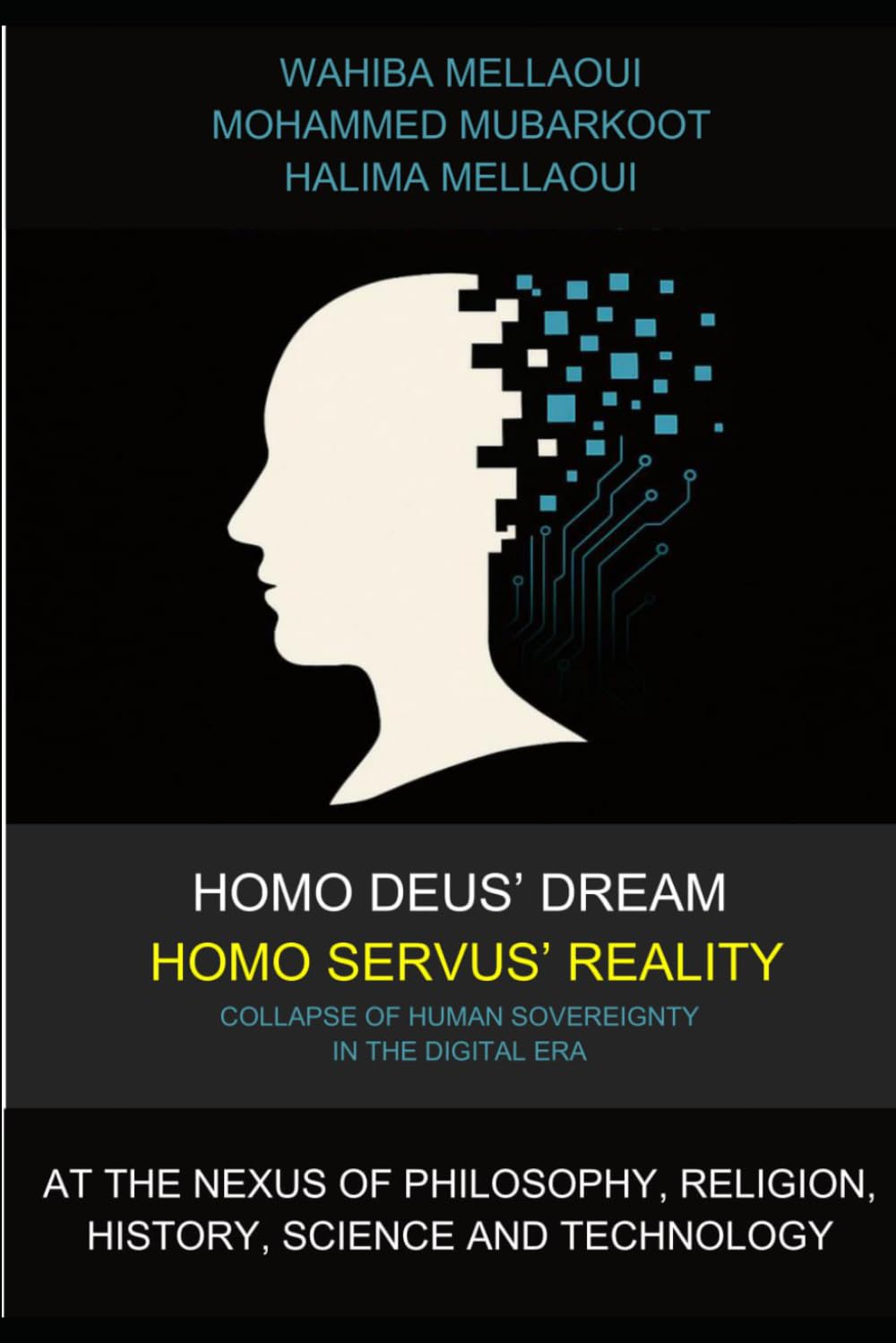
Homo Deus Dream, Homo Servus Reality: The Collapse of Human Sovereignty in the Digital Era: At the Nexus of Philosophy, Religion, History, Science and
$29.00
by Dr Wahiba Mellaoui



In recent decades, humanity has undergone a digital revolution more radical than any before. Technology, once hailed as a tool of human progress, now threatens to erode sovereignty at both personal and state levels. This book, Homo-Servus , critically examines this paradox, asking: what does it mean to be sovereign in a world where algorithms filter reality, corporations rival states, and AI evolves beyond human understanding? Part I traces the rise of the digital world, from Turing’s machine to smartphones. These advances brought empowerment but also new vulnerabilities: mass surveillance, loss of privacy, and deep digital divides. Sovereignty, once tied to borders and governments, now fractures as multinational tech empires transcend geography, while individuals surrender autonomy to systems of data extraction and control. Part II explores why, despite diminished agency, humanity pursues superintelligence. Motivations include fear of extinction, dreams of transcendence, and quests for immortality. Yet these ambitions are shaped by unequal power structures. As AI becomes more complex, a new elite—fluent in code—emerges, resembling a priesthood guarding opaque algorithmic “texts.” Even religion is unsettled as AI offers novel spiritual channels while undermining traditional hierarchies. Part III examines whether AI is slipping beyond human control. Through an evolutionary lens, AI resembles an adaptive organism with unpredictable trajectories. Humanity may master biology yet lose command over machines it created. AI’s dual character is clear: breakthroughs in medicine, climate, and finance coexist with bias, disinformation, and autonomous weapons. Behind progress lies a steady transfer of authority to systems humans no longer fully oversee. Part IV argues that these forces converge to create Homo-Servus —the human transformed from sovereign subject into technological servant. This servitude is not imposed violently but through rational delegation, as with space exploration, where survival may depend on autonomous systems. Yet the book resists fatalism: it proposes strategies to preserve agency, including AI containment, resource constraints, and global governance structures designed to keep technology under human oversight. The conclusion stresses urgency. Decisions in the coming decade may define whether AI ushers in flourishing or accelerates the loss of sovereignty. Unlike utopian or dystopian accounts, Homo-Servus offers a balanced path, equipping scholars, policymakers, technologists, and citizens alike with tools to navigate between blind optimism and fearful paralysis. The core message is clear: technology must remain humanity’s servant, not its master.