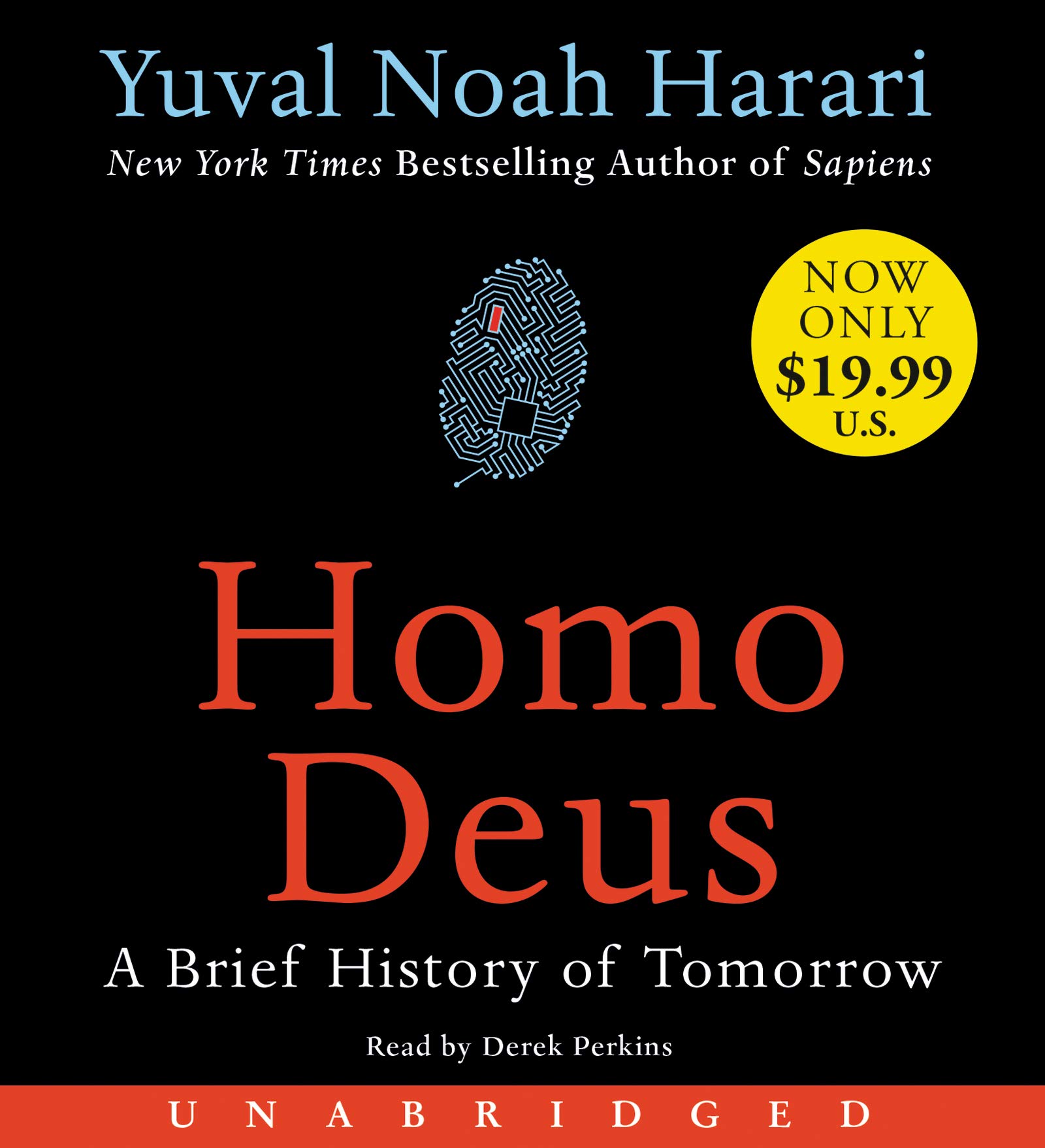



Yuval Noah Harari, author of the critically-acclaimed New York Times bestseller and international phenomenon Sapiens , returns with an equally original, compelling, and provocative book, turning his focus toward humanitys future, and our quest to upgrade humans into gods. Over the past century humankind has managed to do the impossible and rein in famine, plague, and war. This may seem hard to accept, but, as Harari explains in his trademark stylethorough, yet rivetingfamine, plague and war have been transformed from incomprehensible and uncontrollable forces of nature into manageable challenges. For the first time ever, more people die from eating too much than from eating too little; more people die from old age than from infectious diseases; and more people commit suicide than are killed by soldiers, terrorists and criminals put together. The average American is a thousand times more likely to die from binging at McDonalds than from being blown up by Al Qaeda. What then will replace famine, plague, and war at the top of the human agenda? As the self-made gods of planet earth, what destinies will we set ourselves, and which quests will we undertake? Homo Deus explores the projects, dreams and nightmares that will shape the twenty-first centuryfrom overcoming death to creating artificial life. It asks the fundamental questions: Where do we go from here? And how will we protect this fragile world from our own destructive powers? This is the next stage of evolution. This is Homo Deus. With the same insight and clarity that made Sapiens an international hit and a New York Times bestseller, Harari maps out our future. In Homo Deus , Yuval Noah Harari examines humanity’s future, offering a vision of tomorrow that at first seems incomprehensible but soon looks undeniable: humanity will soon lose not only its dominance, but its very meaning. Over the past century, humankind has managed to turn the uncontrollable forces of nature—namely, famine, plague, and war—into manageable challenges. Homo Deus explores the projects, dreams, and nightmares that will shape the twenty-first century, from overcoming death to creating artificial life. But the pursuit of these very goals may ultimately render most human beings superfluous. We cannot stop the march of history, but we can influence its direction. Future-casting typically assumes that tomorrow will look much like today: we will possess amazing new technologies, but old humanist values like liberty and equality will still guide us. Homo Deus dismantles these assumptions and opens our eyes to a vast range of alternative possibilities, with provocative arguments: • The main products of the twenty-first-century economy will be bodies, brains, and minds. • The way humans have treated animals is a good indicator for how upgraded humans will treat us. • Democracy and the free market will both collapse and authority will shift from individual humans to networked algorithms. • Humans won’t fight machines; they will merge with them. We are heading toward marriage rather than war. This is the next stage of evolution. This is Homo Deus . Yuval Noah Harari, bestselling historian and philosopher, is considered one of the world’s most influential intellectuals today. His popular books―including Sapiens: A Brief History of Humankind, Homo Deus: A Brief History of Tomorrow, 21 Lessons for the 21st Century, and the series Sapiens: A Graphic History and Unstoppable Us ―have sold more than fifty million copies in sixty-five languages. Harari, with his husband, Itzik Yahav, cofounded Sapienship, a social impact company with projects in the fields of education and storytelling, whose main goal is to focus the public conversation on the most important global challenges facing the world today. Harari has a PhD in history from the University of Oxford. He has been a lecturer at the Department of History in the Hebrew University of Jerusalem, and a Distinguished Research Fellow at the University of Cambridge’s Centre for the Study of Existential Risk.