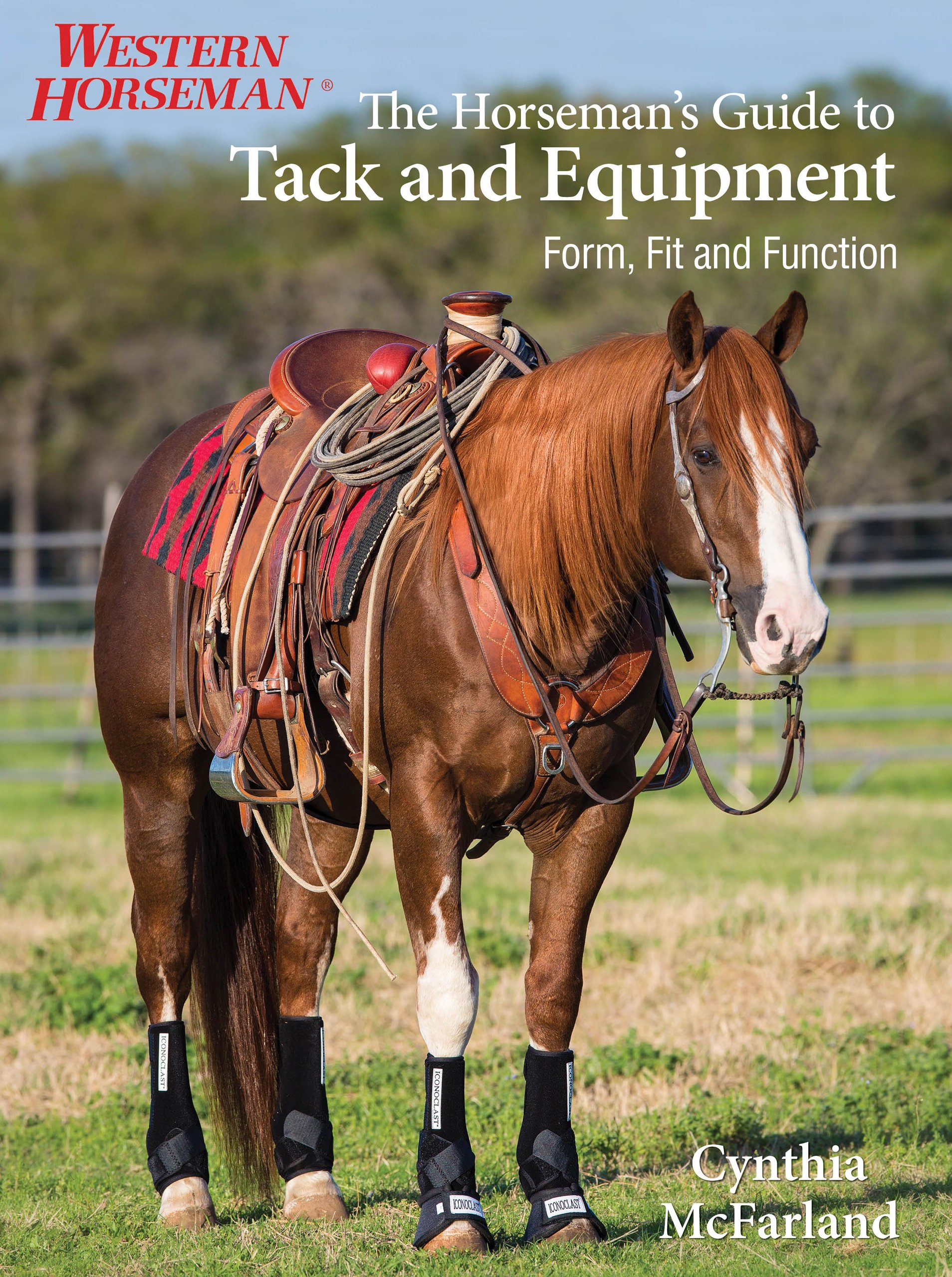



Horseman's Guide to Tack and Equipment details available options for individual pieces of equipment but isn't a buying guide but a usage guide that explains how to attain the best riding results with various items of gear. Each chapter addresses a piece of equipment, such as a saddle, or family of items, such as ground-working equipment; provides an expert opinion on how best to adjust the equipment for a horse's build and range of motion; and provides, if applicable, event-specific considerations when using that equipment. Equipment care and common equipment-fitting mistakes are addressed in sidebars. Cynthia McFarland spent her horse-crazy childhood in Tucson, Arizona, exploring desert and mountain trails with her sorrel Quarter Horse gelding, Yuma, who was small in stature but huge in heart. Today, McFarland lives in Fairfield, Florida, where she writes regularly for equine publications, including Western Horseman, Thoroughbred Times, Horse Illustrated, and PONY Magazine. Her writing has earned numerous awards, including a Steel Dust Award from the American Quarter Horse Association. When she isn’t writing, she can be found trail riding on her Paint gelding, Ben, or enjoying her cats and cows and an amazing donkey named Butler. [Chapter 3: Types of Saddles, subhead excerpt] If the Saddle Fits, Ride It Saddles are sold with a published seat size measured in half-inch increments, starting at 12 inches for a child’s saddle and ranging up to 18 inches. Seat size is the distance from the base of the horn to the top center position of the cantle. Anything larger than 18 inches typically is a special order since most saddle companies don’t keep extra-large sizes in stock. Finding a saddle that fits isn’t as simple as one-plus-one-equals-two. You can’t assume a small adult needs a 14-inch seat, while a large adult must have a 16 ½-inch seat. There’s a lot of personal preference involved. Buying a saddle is a bit like shopping for boots; some people want them snug, while others prefer a roomier fit. “There’s no way to say a certain size person is going to fit a certain size saddle. Two people might weigh the same, but need different sizes, depending on their builds and what they’re using the saddle for,” notes Webb Fortenberry, quality control manager at Cactus Saddlery in Greenville, Texas. “If you have a 210-pound man who stands 6 feet, 4 inches, he’s probably going to be lanky, and might need a 14 ½-inch seat, whereas a 210-pound man who is only 5 feet, 7 inches will have bigger legs and probably needs a 15 ½-inch seat. Saddle fit has a lot to do with a person’s size and lower body build, in particular, the legs.” Of course, when it comes to fit, personal preference is most important. Not all team ropers want a snug seat, and not all trail riders want a low, rolled-back cantle. Here are some general rules of thumb regarding saddle fit: · There should be 4 inches from the front of your body to the horn. · For a snug seat fit, there should be at least one finger’s width between your thigh and the swell of the saddle. · There should be at least two fingers’ width between the thigh and the swell for a roomy fit. · Your behind should rest against the bottom of the cantle without pressing against it. Keep in mind: Seat size is just one aspect of how a saddle fits the rider. Other factors that affect fit are fork angle and style, cantle slope and “dish,” and seat slope and depth. Here are some things to consider. · A saddle with wide swells (originally known as “bucking rolls” because they were designed to help a cowboy maintain his seat on a bucking horse), or undercut swells, which angle back slightly, can help a rider stay in the saddle. However, the “slick” A fork has virtually no swell and is basically made straight up, so there’s a smaller front end to the saddle. · A deep pocket with a fairly steep slope to the ground seat helps keep a rider in one position, while a shallow, flatter seat allows more movement. · A tall cantle with a steep, upright angle offers more security and back support than a low cantle that angles back. Although a barrel racer might want a tall, steep cantle, a roper or reiner typically wants a shorter cantle with a mild angle. · A cantle with significant “dish,” the recessed portion that is carved out of the lower face of the front of the cantle, offers more comfort and security than a cantle with little or no dish. The dish might be as deep as 1 ½ to 2 inches, or much less. [Chapter 2: Saddle Construction, sidebar excerpt] Expert Tip Ken Tipton of Tip’s Saddlery in Winnemucca, Nev., shares valuable insights on what to look for when shopping, whether you’re buying new or hunting for a quality used saddle. Check with other riders doing the same type of riding and ask what brands of saddle they use and how well