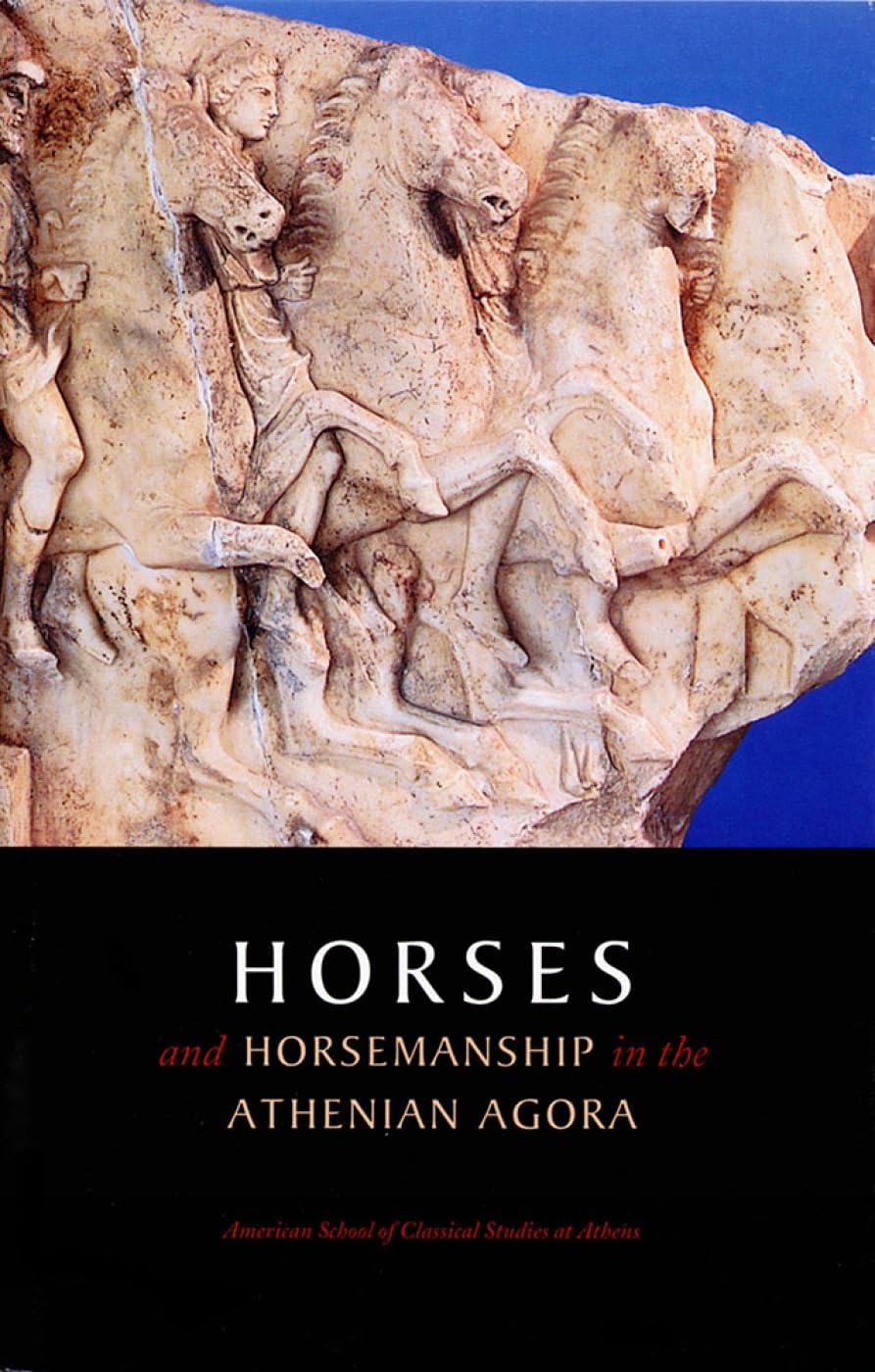



This concise and beautifully illustrated book demonstrates the many roles played by the horse in the lives of the Greeks, from its place in myth and early history to its significance as a marker of social status and its use in warfare, transportation, games, and festivals. From their arrival in Greece, at the start of the Middle Bronze Age (ca. 2000 B.C.), horses were a powerful symbol of rank. Bridles and other horse trappings are often found in graves, alongside vases depicting horses grazing, racing, and parading. Sculpture is also full of horse imagery, from monumental equestrian statues (a bronze leg and gilded sword are all that remain from one of these) to tiny terracotta figurines, perhaps the toys of a child. As well as presenting many examples of horse imagery found in the Agora, the author reports on recent finds near the ancient hipparcheion, the stables of the Athenian cavalry. The series of small books to which this book belongs, Athenian Agora Picture Books , explores many aspects of life in and around the Agora of Athens - the centerpiece of ancient Athenian civic life. Liberally and beautifully illustrated, with text by leaders in the fields of Greek archaeology and classical studies, the books encapsulate over a hundred years of excavation work and scholarly analysis in a lively and engaging fashion. John McK. Camp II is Director of Excavations at the Athenian Agora and Professor of Classics at Randolph-Macon College.