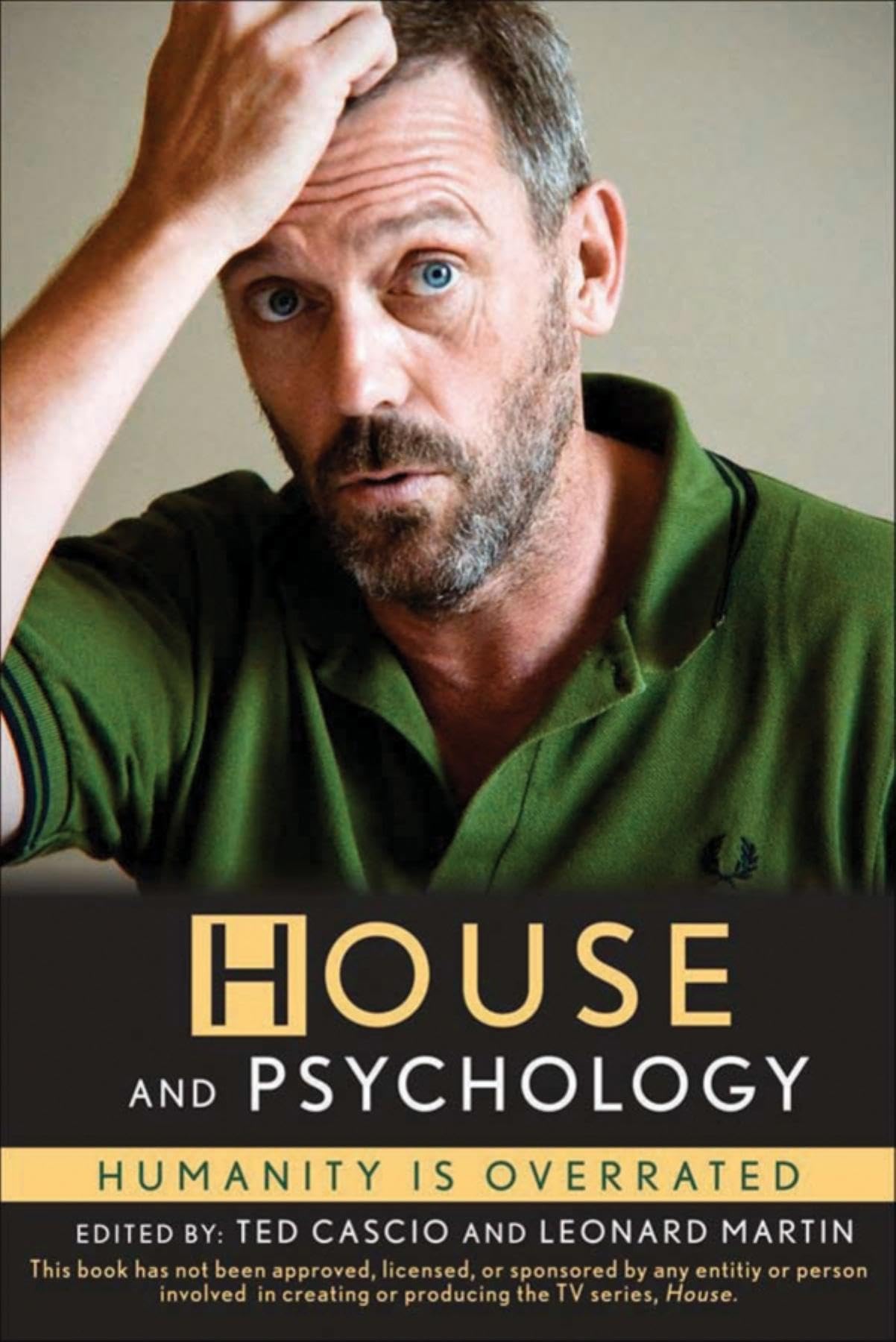



An irresistible look within the mind and behind the hit TV drama, House While House is a smart medical drama and Gregory House faces countless ethical quandaries as a doctor, what makes the show unique is that it's much more deeply rooted in psychology than in medicine. At its core, House is a show about the mind and human behavior. Gregory House is a medical genius and a Sherlock Holmesian figure, but he's also a deeply troubled misanthrope. What's going on inside the brain of this beloved, arrogant, cane-waving curmudgeon that is so appealing? House and Psychology tackles this question and explores the latest findings in brain science research, defines addiction in its many forms, and diagnoses dysfunctional relationships, all using test cases at Princeton-Plainsboro Hospital. Offers a revealing psychological profile of Gregory House and his team - Uses the latest psychological theory and research to answer questions ranging from "How does House handle addiction?" to"Why does he act like such a jerk?" - Features contributions from a group of world-renowned psychological experts who also happen to love House Essential reading for every House fan, House and Psychology will help you discover the extraordinary mental universe of your favorite brilliant, bombastic, bile-belching doctor of medicine. "...mixes solid research with entertaining fiction. I was already a House fan before reading this book, but I'd venture to say that readers unfamiliar with the series would also enjoy these essays, the same way they would enjoy a collection of juicy case studies." --Elissa Malcohn, PsychCentral.com "It entertains as it enlightens." --Barnes & Noble review "This book should be read by all 'House' fans... People who just enjoy a good read will find this an enjoyable book -- sometimes annoying, sometimes funny -- but never dull. Kinda like House himself." --New Journal of Books "The bottom line is that if you like the TV show, you will probably love this book. If you don't like the show -- or have never watched it -- be forewarned, you probably will after reading 'House and Psychology.'" -- studentaffairsenews.com "The latest psychological research (including the most up-to-date studies on addiction) is combined with psychological theory. Liberally peppered with scenes and quotes from episodes, it is great fun to read." -- diaryofamadfashionista.blogspot.com Does House use humor to mask his true self? At what point does an indulgence become an addiction? Can anything make Taub happy? How does Cameron's past affect all of her future relationships? Why does everyone lie? Gregory House is a medical genius and a Sherlock Holmesian figure, but he's also a self-destructive, deeply troubled misanthrope. What is it about this angry, arrogant curmudgeon that is so appealing to us? House and Psychology offers a fascinating psychological profile of Gregory House and his team at Princeton-Plainsboro Hospital. Is House a hero or an antihero? Does Wilson need House's emotional support? Are all of the relationships on this show doomed to fail? The answers to these questions allow us to appreciate our favorite characters more deeply but also serve as a crystal-clear window into our own behavior. Why do we deceive people? How do we define addiction? Can we help others without expecting anything in return? Combining psychological theory with the latest in psychological research, House and Psychology lets us understand what makes this show tick. Ted Cascio writes for the Hollywood PhD blog in Psychology Today. He teaches psychology at Universidad de Deusto in the Basque region of northern Spain. Leonard L. Martin is a professor of social psychology at the University of Georgia. House and Psychology Humanity Is Overrated By Ted Cascio Leonard L. Martin John Wiley & Sons Copyright © 2011 John Wiley & Sons, Ltd All right reserved. ISBN: 978-0-470-94555-1 Chapter One In the Patient's Best Interests? Perspectives on Why We Help Others TED CASCIO Feeling sick? I recommend Princeton-Plainsboro Teaching Hospital. The doctors and the nurses there are exceptionally skilled. They don't save everyone, but they do have a very high success rate—even for extremely rare and difficult cases. The staff can be summarized in two words: they help. As Cameron puts it in the pilot episode, "Isn't treating patients why we became doctors?" I have to admit that there is at least one doctor on the staff who may seem a little rude and obnoxious—even cruel—but does that matter if you get better? Actually, it does seem to matter. Although the sort of beneficence practiced by doctors is surely valuable, maybe even virtuous, helping's ultimate moral status is seldom clear-cut. We wonder. And even when we feel pretty sure, we tend to be critical. Cameron, in particular, has frequently been forced to bear criticism for her seemingly reflexive self-sacrificial tendencies. She's even been accused by House and others of havi