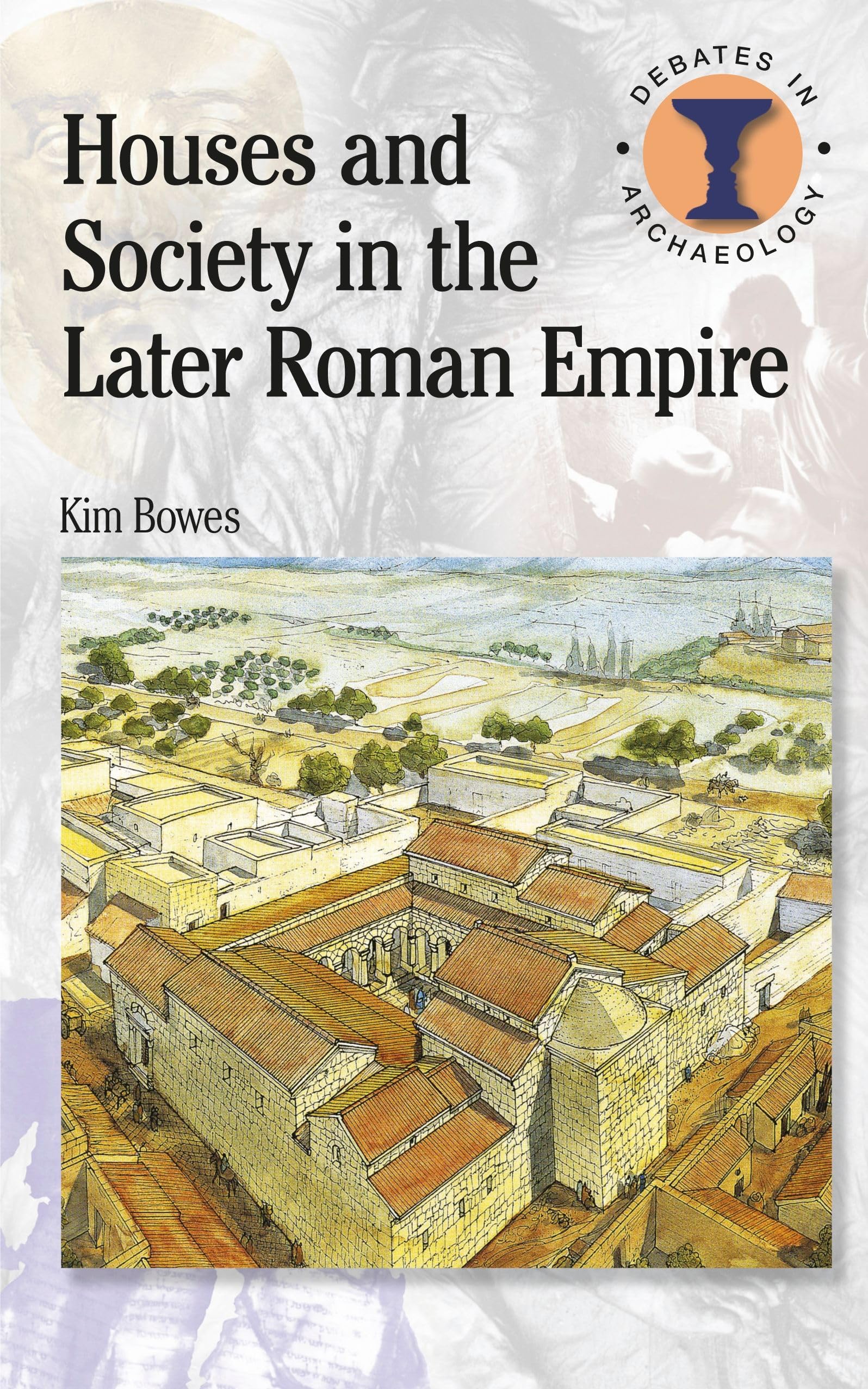



Houses are often assumed to be reliable mirrors of society, fossils of family structures, social hierarchies and mental maps of worlds now vanished. This is particularly true of the elite houses of the third to sixth centuries AD, which have been read as material symptoms of Rome's decline. The great dining and reception halls of urban houses sound the death-knell of participatory government and the rise of patronage politics, while in their sheer size and splendour later Roman houses seem to encapsulate a fin-de-siecle world of have and have-nots, separated by unbridgeable social chasms. Kim Bowes debates this image of later Roman houses as reflections of decadence and despotism, suggesting that the principal interpretive model, which reads such houses as reflective of a newly hierarchical, ritualized society, finds little support either from the archaeological evidence or from new readings of historical sources. Drawing on the most recent archaeological data and new theoretical models, she offers instead a less sharply periodized view of later houses, stressing their continuity with houses of the early empire. Kim Bowes is Assistant Professor of Classics at Cornell University. Her recent books include 'Private Worship, Public Values and Religious Change in Late Antiquity' (2008); and 'Hispania in Late Antiquity: Current Perspectives' (2005). Richard Hodges OBE is Emeritus President of The American University of Rome, Italy. He is the editor of the Debates in Archaeology series; and his publications include Dark Age Economics (2012), The Anglo-Saxon Achievement (1991), Towns and Trade in the Age of Charlemagne (2000), Goodbye to the Vikings (2006) and (as co-author) Villa to Village (2003), all published by Bloomsbury Academic. He has previously been Director of Archaeology for the Butrint Foundation, Albania, and Director of the Pennsylvania Museum of Archaeology and Anthropology, USA.