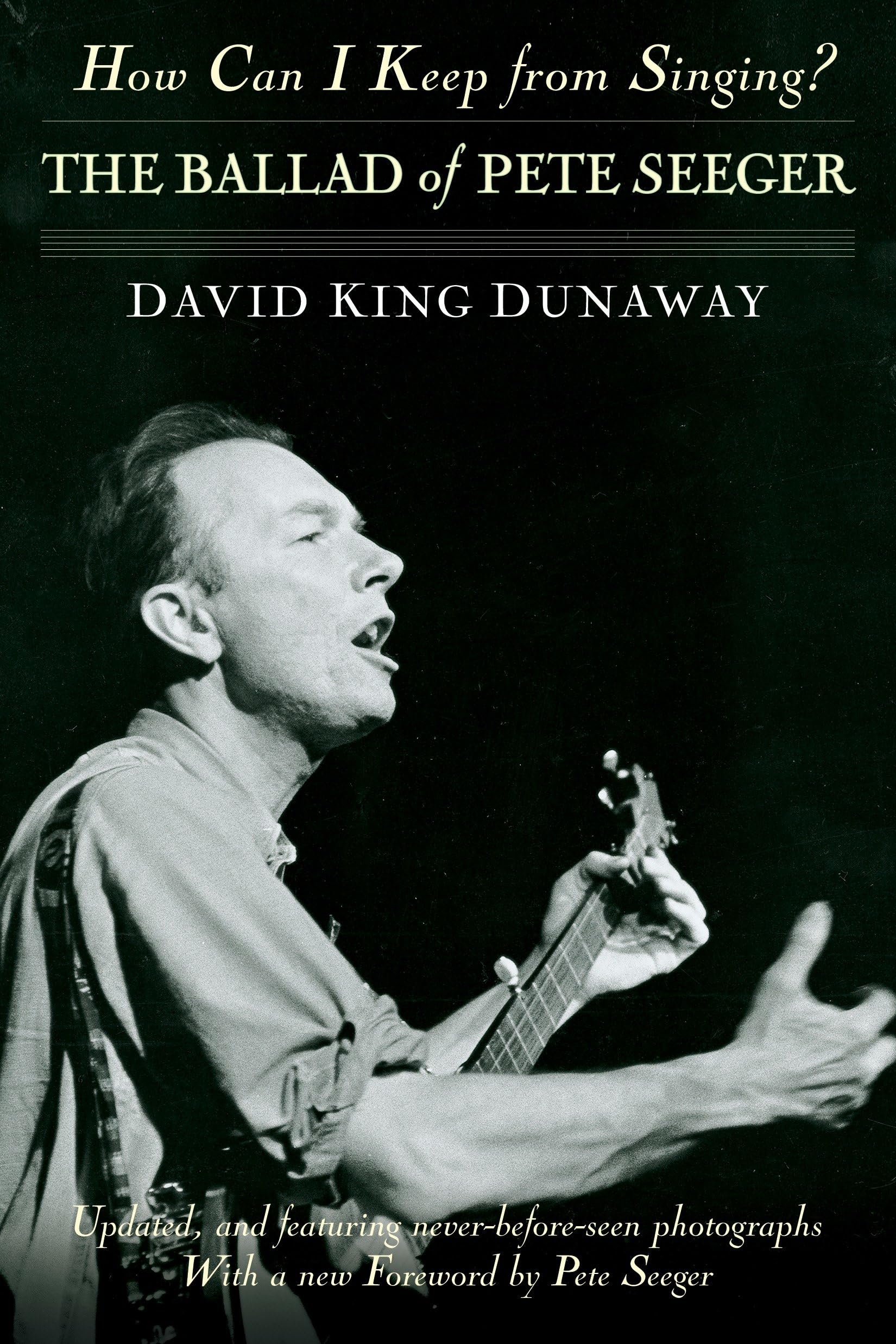



How Can I Keep from Singing? is the compelling story of how the son of a respectable Puritan family became a consummate performer and American rebel. Updated with new research and interviews, unpublished photographs, and thoughtful comments from Pete Seeger himself, this is an inside history of the man Carl Sandburg called “America’s Tuning Fork.” In the only biography on Seeger, David Dunaway parts the curtains on his life. Who is this rail-thin, eighty-eight-year-old with the five-string banjo, whose performances have touched millions of people for more than seven decades? Bob Dylan called him a saint. Joan Baez said, “We all owe our careers to him.” But Seeger’s considerable musical achievements were overshadowed by political controversy when he became perhaps the most blacklisted performer in American history. He was investigated for sedition, harassed by the FBI and the CIA, picketed, and literally stoned by conservative groups. Still, he sang. Today, Seeger remains an icon of conscience and culture, and his classic antiwar songs, sung by Bruce Springsteen and millions of others, live again in the movement against foreign wars. His life holds lessons for surviving repressive times and for turning to music to change the world. “This biography is a beauty. It captures not only the life of the bard but the world of which he sings.” –Studs Terkel “A fine and meticulous biography . . . Dunaway has taken [Seeger’s] materials and woven them into a detailed, interesting, and well-written narrative of a most fascinating life.” –American Music “An extraordinary tale of an extraordinary man [that] will intrigue not only his legions of followers but everyone interested in one man’s battles and victories.” –Chicago Sun-Times David King Dunaway was born in Greenwich Village in New York City. He attended the universities of Aix-en-Provence, France, Wisconsin, and California, where he received Berkeley's first PhD in American studies. At the University of New Mexico, Dr. Dunaway taught biography and broadcasting, and he has been a Fulbright senior lecturer at the University of Nairobi, University of Copenhagen, and the National University of Colombia. Author and editor of a half-dozen volumes of history and biography, he consults on and produces national radio series for public radio. Pete Seeger (1919–2014), legendary folk singer and peace advocate, issued approximately one hundred records and wrote or worked on dozens of books. He also collaborated on numerous radical songbooks and articles. Chapter 1 Hold the Line At dawn on Sunday morning, September 4, 1949, the first convoys of cars headed north from New York City for Peekskill, a summer resort town where Seeger, Paul Robeson, and others were to sing. By 9 a.m. the roads were blocked with veterans' groups and local anti-Communists who had vowed to stop the concert. New York labor unions sent a security force of two thousand to keep the concert grounds open. Outside the gates, a thousand armed police lined up in formation. Across town in the woods, down by the riverside, a half-dozen men piled rocks the size of tennis balls into a car trunk. The concert had been advertised two weeks earlier with a notice in the Daily Worker. Readers were invited for a pleasant evening in the country at the Lakeland Picnic Grounds. The name hinted at a quiet affair: beer and sandwiches, with a blanket to keep out the cool night air. The FBI clipped the notice for their files. The Peekskill Evening Star called Robeson "violently and loudly pro-Russian"; their editorial was unusually bitter: "The time for tolerant silence that signifies approval is running out." A few residents wrote the editor, calling this an invitation to violence. That, for a time, was that. If the local citizens agreed with the Star, they weren't vocal about it. On his newly purchased country land, Seeger didn't always see the morning papers. When he did, the news was scary. Communist Party leaders faced jail for teaching and writing about Marxism. Radio commentators called for a war to stop Communism. Anti-Communists beat up left-wing actors outside a theater in New York. Half the cast of They Shall Not Pass, a play about the trial of the Scottsboro boys, ended up in the hospital. There were no arrests. Nineteen-forty-nine had not been a good year for Seeger's causes either. That spring, right after he'd turned thirty, People's Songs--an organization he had built from scratch and had run for three years--went bankrupt. He felt responsible for its debts. His new singing group, an unknown quartet called the Weavers, was falling apart from lack of work. Neighbors in Upstate New York distrusted the Seegers as "city folks." And then in August, Seeger's prim mother arrived for a visit, but the only accommodation he could offer was a tiny trailer lacking water or electricity. He and Toshi took the tent. They had spent the summer clearing their land by the Hudson. The work could be toilsom