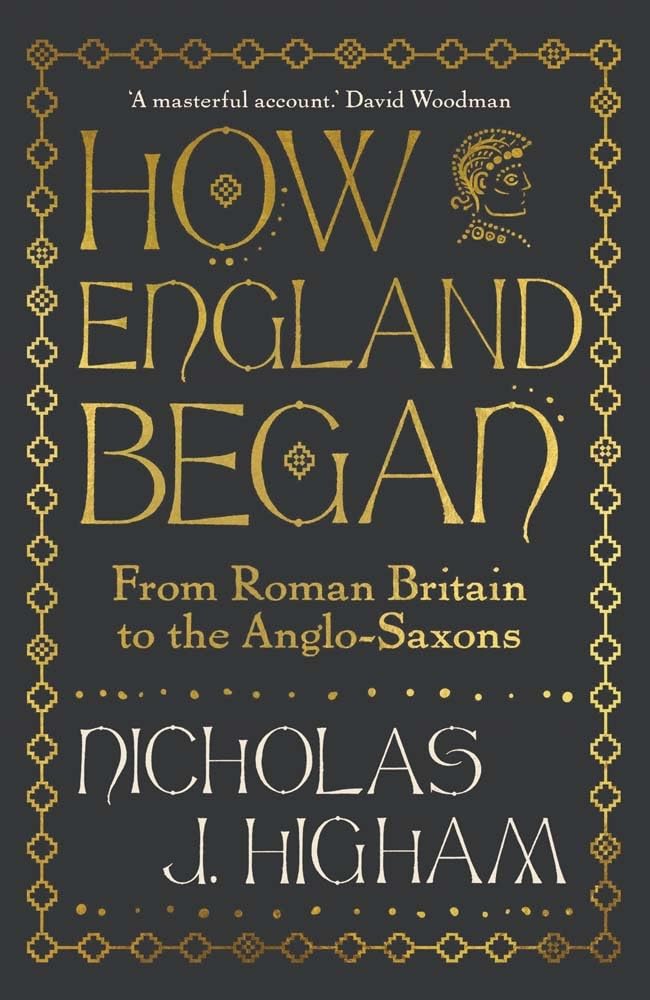



An engaging, wide-ranging exploration of the end of Roman Britain and the beginnings of England In 410 CE, Roman rule of Britain collapsed, bringing a centuries-long occupation to an end. A century later, Britain was dividing into two areas with contrasting cultures, an expansive “Anglo-Saxon” south and east, and a shrinking Celtic west and north. How did this transition happen? And why did the customs of the Germanic incomers prevail in England, unlike elsewhere in Europe? In this deeply researched account, Nicholas J. Higham addresses these difficult questions head on. Higham draws on archaeological evidence and contemporary literature, including the writings of Gildas, to reconsider the accepted narrative. We see anew the importance of culture, warfare, and language—as the arrival, spread, and dominance of incomers irrevocably changed the country. This period marked the beginnings of Englishness, and of such insular identities as Welsh and Cornish. Offering surprising new insights, Higham provides a penetrating account of how, as Roman Britain ended, Anglo-Saxon England emerged. “An ambitious work, densely detailed and covering a diverse range of subjects―but that is not to suggest that the book is heavy going: Higham writes with a brisk confidence and clarity, and he has a particular knack for summarising how interpretative trajectories have evolved over time.”― Current Archaeology “Higham . . . reminds readers that Rome conquered Britain in the first century and abandoned it in the fifth but always considered it a land at the edge of the world inhabited by barbarians.”― Kirkus Reviews “With a combination of lucidity and originality, Nick Higham’s account of how England began guides the reader confidently through the murky transition from Roman Britain to early Anglo-Saxon England. Thanks to Higham’s elegant prose and command of diverse sources, the result is an impressive, instructive journey that poses fresh answers as well as fresh questions.”―Rory Naismith, author of Offa “A timely and well-balanced consideration from a leading expert in both the written and archaeological sources of how the recent scientific and archaeological evidence for fifth- and sixth-century England sits alongside previous interpretations of the period.”―Barbara Yorke, author of The Conversion of Britain “Drawing on the most recent archaeological and historical research, Nicholas Higham provides a masterful account of one of the most obscure and complex periods of British history.”―David Woodman, author of The First King of England Nicholas J. Higham is professor emeritus of history at the University of Manchester. His many works include Ecgfrith: King of the Northumbrians, High-King of Britain ; King Arthur: Myth-Making and History ; and The Anglo-Saxon World .