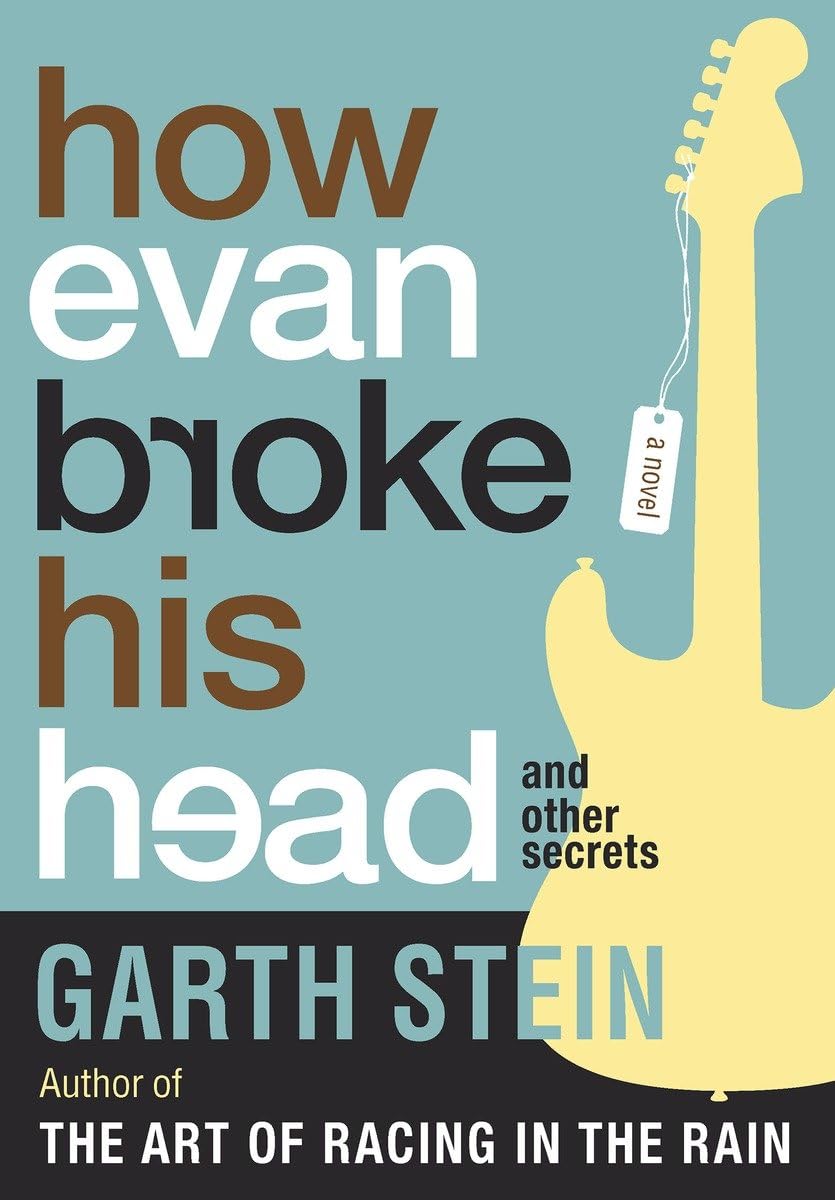



Tenth Anniversary Edition Featuring a conversation between Garth and his editor, Bryan Devendorf, drummer of The National. Fathers never forget seeing their kids for the first time. But Evan is greeting his son, Dean, fourteen years late. The boy had been shuttled secretly to another city, along with his teenaged mother, while still a newborn. Now his mother has passed away, and Evan is it—Dad. An instant single parent. Evan was once lead guitarist for a hot band with a hit single; now 31, he gets by as a guitar instructor to middle-aged guys, and does menial work in a music shop. With Dean in the picture he has to change fast, which means facing up to the past, to his own father, and to the epilepsy that haunts him and threatens his every moment. Praise for How Evan Broke His Head A BookSense pick * Winner of a Pacific Northwest Bookseller Award “A funny, bewitching, observant book about families, fathers and sons, and growing up, no matter how old you are.” — The Oregonian “A beautifully un-shiny novel of passion, forgiveness and the life force that is fatherhood.” —PNBA Awards Committee “Captivating, moving, and always observant ... a wonderful, beautiful book; I will never forget it!” —Ben Sherwood, author of The Death and Life of Charlie St. Cloud “A compelling tale.” — Seattle Post-Intelligencer “An engrossing family drama.” — Publishers Weekly “Hits all the frets of a powerful story: sharp-witted dialogue, vivid characters, insight into medical challenges and prose that snaps like well-placed plucks of guitar strings. . . . I hold up my lighter and turn it full-flame for Stein’s latest work. Encore!” — The Seattle Times Garth Stein is the author of two other novels, the worldwide bestseller The Art of Racing in the Rain , now published in 30 languages, and Raven Stole the Moon , as well as a play, Brother Jones . He lives in Seattle with his wife, three sons, and their dog, Comet. Chapter 1 Maybe a little reflection at this point in Evan’s life isn’t a bad thing. A gathering of mourners on a hill at a cemetery outside Walla Walla, a good five-hour drive from Seattle. A hot morning under an intense and brilliant sky. A dead girl in a box, suspended over a hole dug in the fertile soil. And Evan, watching from a distance like a father gazing through a nursery window at his newly born son, whose cries go unheard, untended, a helpless flail of tiny arms and legs and a little mouth that is open in silent scream, all of it safe from Evan’s unsanitary touch. He hikes up the hill and takes his place among the circle of attendees. They are all the same: pale complexions, downcast eyes; a wash of chalky faces. There are fewer than he’d hoped. Twenty at most. He’d been warned that the burial service would be small, reserved for family and the closest of friends. Still, he’d envisioned a pack into which he could fade. After all, Mormons tend to stick together; they like to travel in groups. He shifts uncomfortably. He has nowhere to hide. They are looking at him. Not directly, not staring. They are sneaking peeks, stealing sideways glances from behind flapping paper fans. They have no idea who he is; they don’t seem to care. A man speaks a few elegiac words that are swallowed by the breeze, tossed around and thrown over his shoulder for no one to hear. Evan recognizes Tracy’s mother and father. He remembers her brother, Brad, one of those high school peers who fell somewhere between friend and acquaintance. Around them stand several of Tracy’s older siblings. He doesn’t know them, couldn’t recall their names if called upon to do so. Three or four or five brothers and sisters who were already grown and were never around when Tracy was a teenager; shards of a fractured family. And there is another important family member present: Tracy’s son. Evan doesn’t recognize Dean, but he knows well enough who he is. A young man, fourteen-years-old, who, like Evan, stands out from the crowd, his dark hair hacked short, his face alert and defensive. Dean looks up and meets Evan’s eyes. He looks at Evan without suspicion. But why would he suspect? What could he think, other than that Evan was another from Grandpa’s congregation, come late for the passing of Tracy Smith? But he is curious about something, for he doesn’t look away. Tracy’s father places his arm around Dean’s shoulders, a gesture of comfort. Dean shifts slightly, stiffens a little bit, not dramatically, but enough to indicate that the gesture is not welcome. Enough so that Tracy’s father withdraws his arm. And in an instant, Evan knows Dean. He knows what is going on. For Dean to have to witness his mother’s burial is bad enough, but for him to be so uncomfortable with his fellow grievers that he cannot grieve himself is crushing. Evan remembers his own grandfather’s funeral, watching the people cry. He felt so separate from them. They may have been fri