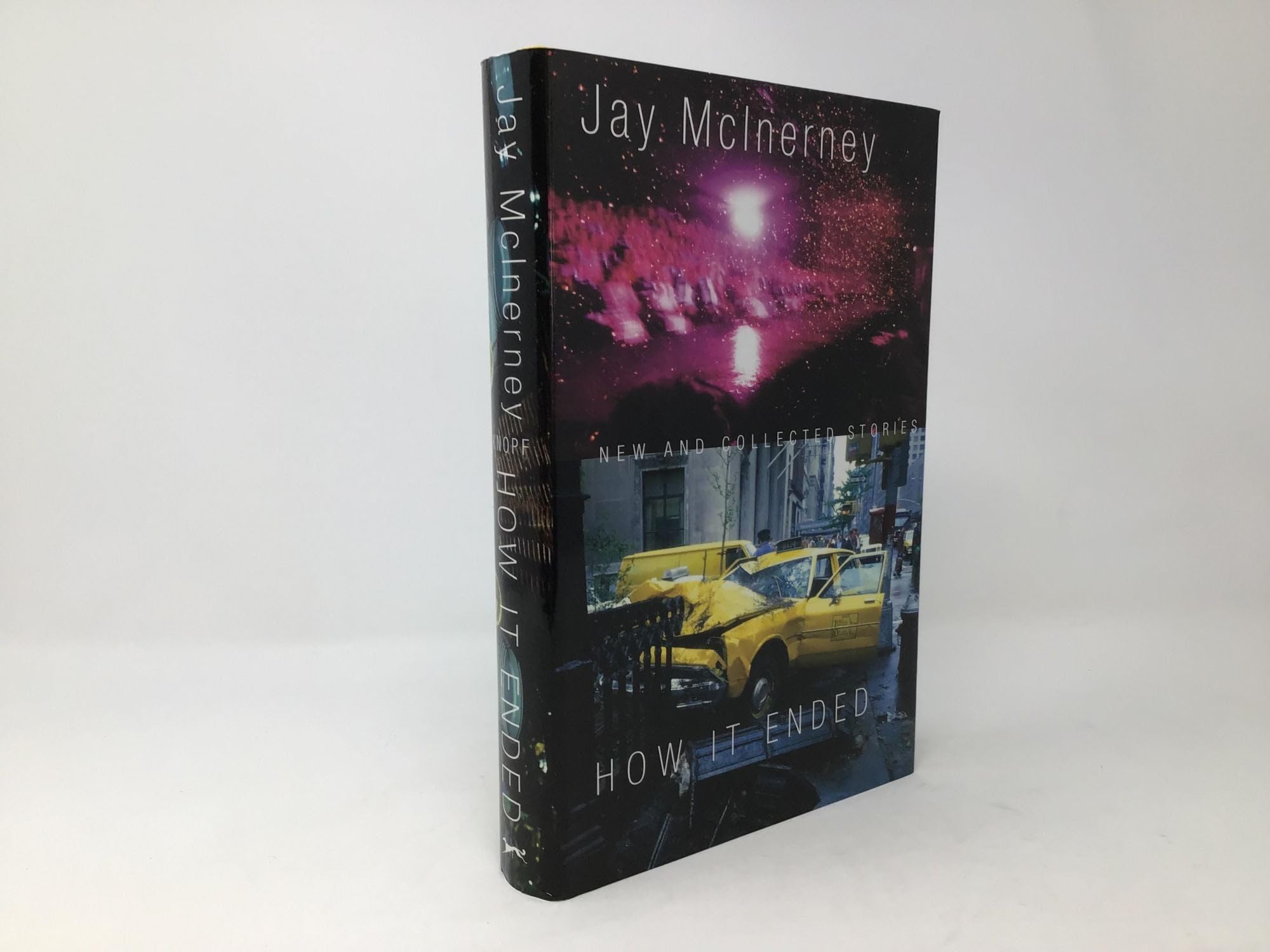



From the writer whose first novel, Bright Lights, Big City, defined a generation and whose seventh and most recent, The Good Life, was an acclaimed national best seller, a collection of stories new and old that trace the arc of his career over nearly three decades. In fact, the short story, as A. O. Scott wrote in The New York Times Book Review, shows “McInerney in full command of his gifts . . . These stories, with their bold, clean characterizations, their emphatic ironies and their disciplined adherence to sound storytelling principles, reminded me of, well, Fitzgerald and also of Hemingway—of classic stories like ‘Babylon Revisited’ and ‘The Short Happy Life of Francis Macomber.’ They are models of the form.” Only seven of these stories have ever been collected in a book, but all twenty-six unveil and re-create the manic flux of our society. Whether set in New England, Los Angeles, New York or the South, they capture various stages of adulthood, from early to budding to entrenched to resentful: a young man confronting the class system at a summer resort; a young woman holed up in a remote cabin while her (married) boyfriend campaigns for the highest office of all; a couple whose experiments in sexuality cross every line imaginable; an actor visiting his wife in rehab; a doctor contending with both convicts and his own criminal past; a youthful socialite returning home to nurse her mother; an older one scheming for her next husband; a family celebrating the holidays while mired in loss year after year; even Russell and Corrine Calloway, whom we first met in McInerney's novel Brightness Falls . A manifold exploration of delusion, experience and transformation, these stories display a preeminent writer of our time at the very top of his form. If the stories in this new collection from McInerney ( Bright Lights, Big City ) have a common ground, it's cocaine and parties. Some of these stories are about characters at opposite ends of the universe. Others feel like Noah Baumbach films, concerned with selfish, chemically imbalanced rich families, making it nearly impossible to identify with them despite what are supposed to be universal problems. The writing here is clearly good and the narration calm, understated, and nicely controlled—a trait McInerney probably picked up while studying under Raymond Carver, though these stories don't feel necessary, as Carver's do. In fact, these bite-sized stories are so smooth, each encapsulating a snippet of its characters' lives, that they can be read in just a few minutes. Some do get to universal truths on heartbreaking relationships, but only in the last few lines; mostly, they're like sitcoms. Not recommended, though libraries where McInerney is popular should consider. [See Prepub Alert, LJ 12/08.]—Stephen Morrow, Athens, OH Copyright © Reed Business Information, a division of Reed Elsevier Inc. All rights reserved. Compared by critics to such literary giants as F. Scott Fitzgerald, Ernest Hemingway, J. D. Salinger, and Graham Greene, McInerney has demonstrated impressive depth and range over the last three decades, and most critics valued How It Ended as a record of McInerney’s evolution as a writer. Retaining his mordant humor and panache alongside hard-won wisdom and maturity, McInerney dissects the ambitions and excesses of youth as they yield to the limitations and moderation of middle age. He revisits his signature themes—drugs, infidelity, and social climbing—and creates likeable, if self-absorbed, characters. Though the San Francisco Chronicle claimed that the newer stories felt rushed and other reviewers were annoyed by McInerney’s fascination with name brands and labels, How It Ended should please fans and newcomers alike. Copyright 2009 Bookmarks Publishing LLC *Starred Review* McInerney’s name is most associated with his splashy first novel, Bright Lights, Big City (1985), which helped define contemporary urban-chic fiction. Other novels followed, and it may come as a surprise to readers of such trendy fiction as McInerney’s that he is a splendid short-story writer. He writes about the same people and places as in his novels; on the other hand, he certainly understands the special qualities of the short story, saying in the preface to this career-spanning collection of 26 stories that “a good one requires perfect pitch and a precise sense of form; it has to burn with a hard, gem-like flame.” His stories are reminiscent of those of F. Scott Fitzgerald, John O’Hara, and Irwin Shaw (in fact, a line from McInerney’s “Smoke” refers to women “in their summer dresses,” and one of Shaw’s most famous stories is entitled “Girls in Their Summer Dresses”). McInerney shares with these predecessors a focus on the appurtenances of his characters: that is, the personal accessories that give away the characters’ social status and intentions (but McInerney contemporizes his stories by detailing what drugs his characters take). A New York slant colors every st