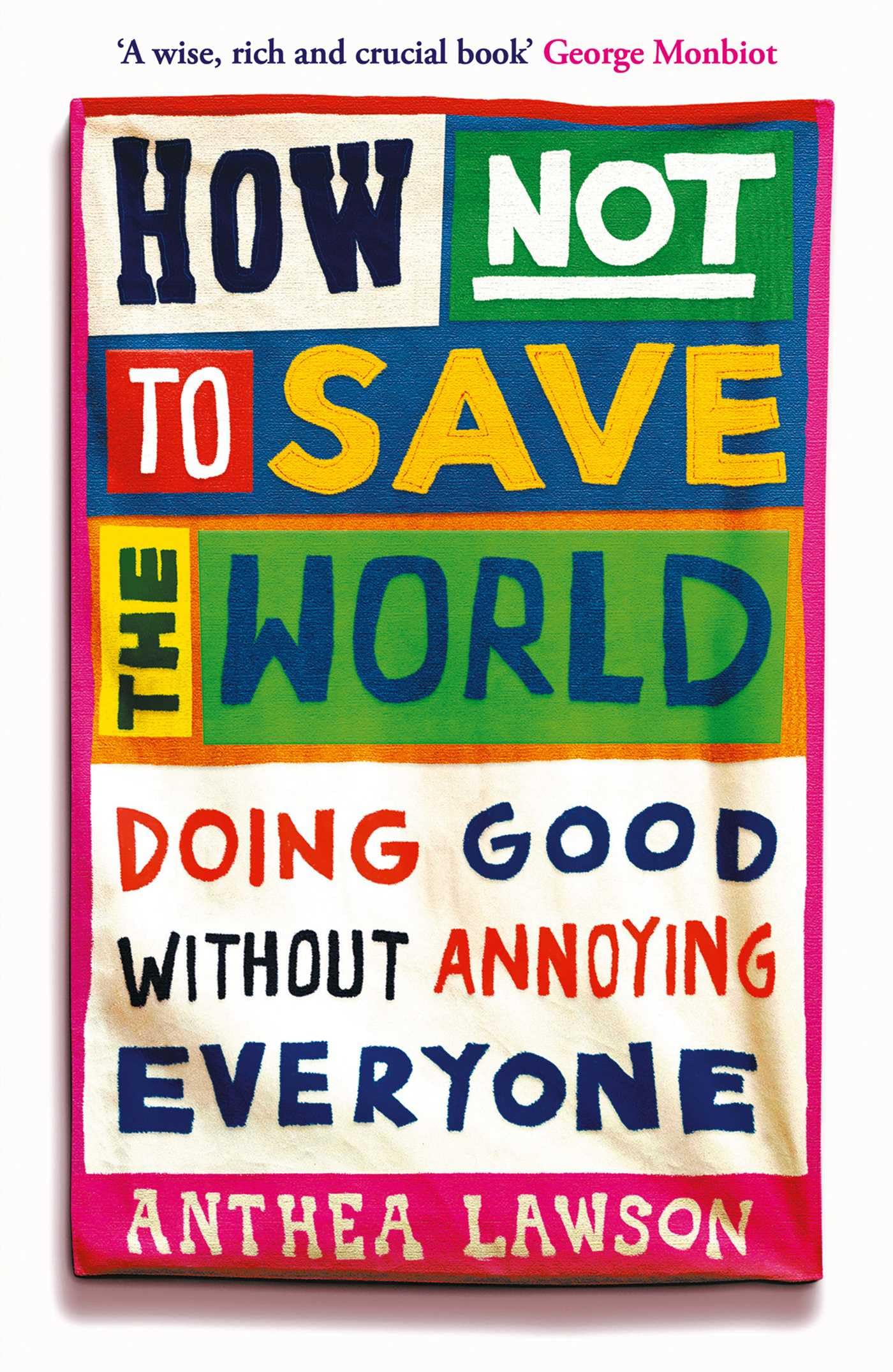



Do you want to change the world but wonder if there’s any point trying? Are you unsure what you can offer, or don’t feel that you fit the activist mould? Do you think activists can be self-righteous, even oblivious to the very people they’re trying to help? How Not To Save the World is a book about doing good, for anyone who has looked at politics or public discourse and thought, ‘we need better than this.’ The fervour that drives us to change the world can create blind spots, where we don’t see our own behaviour, or disregard it because the cause is urgent. Realistic, candid and hopeful, How Not To Save the World is a sympathetic exploration of alternatives to righteousness, purity traps and other unhelpful habits. It shows that there are ways to work together for what matters, without alienating the people we need to convince. ' A wise, rich and crucial book , which is helping me to do better, and will help many others.' —George Monbiot 'To change the world you don’t need to be a hero, or perfectly green, or meet any other purity tests. The first step is just to start talking to those around you... The stories in this book show how we can build bridges in order to work together for the world that we want .' —Brian Eno ' Read it and weep, laugh, cringe and sigh ... It might support your work to be more effective, it might help you to understand yourselves (there’s more than one you!) and others better; ultimately it might bring more compassion and togetherness in a broken world .' —Dr. Gail Bradbrook, co-founder of Extinction Rebellion 'Campaigning always looks very "black and white" – you're either for or against something. But it really isn't like that! With decades of hard-earned experience as a campaigner, with many highs and lows along the way, Anthea Lawson's provocative book provides us with deep insights into the tactical, emotional and ethical complexities of campaigning – and, in particular, of how best to set about saving the world.' —Sir Jonathon Porritt ' Anthea Lawson has written an urgent book, a scintillating call to match our outer activism with inner self-awareness . And this, not just to win campaigns, but towards the deeper transformation of the world.' —Professor Alastair McIntosh, author of Soil and Soul and Spiritual Activism ' A vital intervention . Even with the best intentions, organisations and individuals can inadvertently makes things worse. This book points a way forward that invites us all into our agency as citizens, so we can build the world we want together. And yes, there is still time.' —Jon Alexander, author of Citizens ' Deeply researched and refreshingly honest, this book is for activists – and the activism-weary. It helps readers interrogate their own protest practices, mindsets, and intentions, cultivating kinder, more reflective campaigning rooted in connection and community, not division or burnout.' —Sarah P. Corbett, author of The Craftivist Collective Handbook ' Highly readable even for the non-activist, yet sophisticated enough for the veteran , Lawson’s book provides a map of the possible pitfalls of working towards a better world. A realistic, funny assessment of what to do if you worry about the cringe parts of activist culture but can’t stand to watch the world burn. After reading you’ll have a sense that it might be enough to be “good enough”, as long as you get started. A crucial guide to the new skills and mindsets we’ll need to fight for a better world over the next decade .' —Sarah Stein Lubrano, author of Don’t Talk About Politics 'How Not To Save The World does two things at the same time: provides concrete storytelling and strategy about many different forms of social justice work while, at the same time, speaking directly to some of the ways that justice-oriented folk get in the way of the work we want to build. Anthea manages to tell these stories with a mix of directness and compassion . This is humility and it is a necessary part of this work. This is humility and it is part of how we become the world we want to see.' —Susan Raffo, author of Liberated to the Bone 'Lawson invites us to critically reflect on our own assumptions, shortcomings and strengths, whilst offering hope that change is possible. An outstanding book and essential reading for every activist, practitioner and thinker concerned about the future of our planet .' —Emma River-Roberts, Founder and Director of the Working Class Climate Alliance ' Anthea Lawson's book is a searing self-examination of her work as a climate activist . Her brutally honest account of her experience moved me in unexpected ways , especially as she came to realize the class divides that climate protestors have had such difficulty overcoming. Lawson articulates better than I ever could from within the movement, the limits to and psychology behind the stridency that often animates privileged protestors. She urges us to give up on the "protest voice" in orde