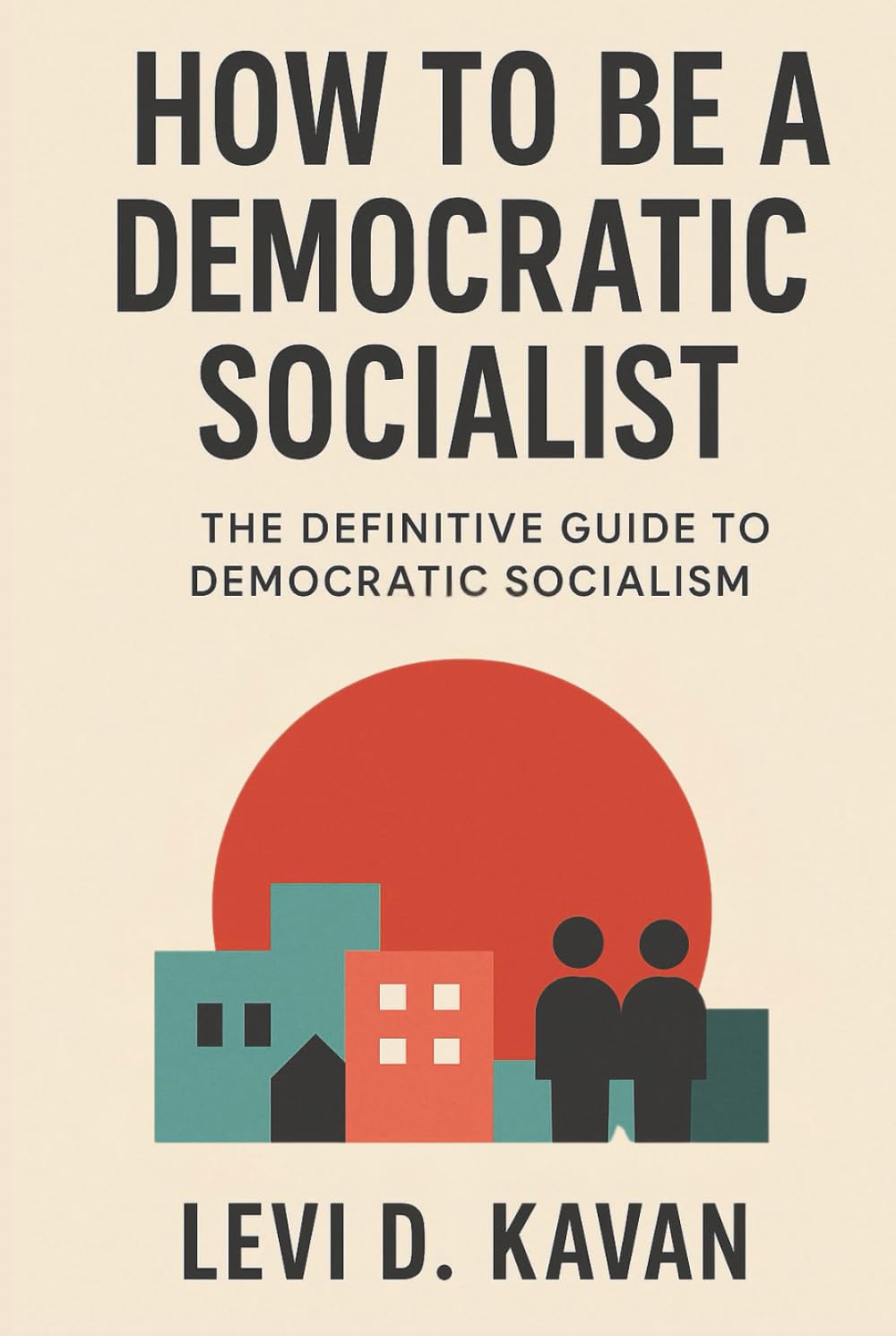
How To Be a Democratic Socialist: The Definitive Guide To Democratic Socialism (Power and Politics, Explained)
$24.99
by Levi D. Kavan



What if democratic socialism isn't something to fear—but a serious, practical philosophy grounded in centuries of struggle? For most of us, "socialism" triggers anxiety: Cold War images, failed states, angry online debates. Meanwhile, the system we're told is inevitable produces homelessness, medical bankruptcy, climate catastrophe, and billionaires while workers have less power than ever. How to Be a Democratic Socialist is a rigorous, beautifully written guide to understanding what democratic socialism actually is—and why it matters now. Blending intellectual rigor with historical narrative, this book traces socialism from nineteenth-century utopian visionaries through Marx's scientific analysis to contemporary movements led by figures like Bernie Sanders and Alexandria Ocasio-Cortez. You'll discover: Where these ideas came from — Not as abstract theory, but as living responses to real suffering: the factory child gasping for breath, the workers organizing in secret, the visionaries imagining different worlds. A history of both inspiring successes and hard-won failures. - How capitalism actually works — Not as "just the way things are," but as a system with internal contradictions that generates inequality, environmental destruction, and recurring crises. Marx, updated for the 21st century. - What democratic socialism really means — Economic democracy. Genuine worker power. Public ownership of essentials. Strong civil liberties. The extension of democracy into economic life. - Practical paths forward — From worker organizing and community alternatives to political engagement and global solidarity. How ordinary people build power. - A future that's believable, not utopian — Not fantasy, but grounded vision: healthcare as a right, education free from debt, work that dignifies rather than degrades, communities with genuine say over their lives. This book is for anyone who: Suspects the game is rigged and wants to understand why - Wants to know what Marx, Fourier, and contemporary socialists actually said (not caricatures) - Is ready to think seriously and deeply about alternatives - Wants to understand both theory AND practice - Believes "there must be something better" and wants to know what You don't need a background in political theory—but you do need curiosity, intellectual seriousness, and willingness to challenge everything you've been told about what's possible. Each chapter builds understanding while grounding ideas in real historical struggles and contemporary movements. Theory connects to practice. History illuminates present choices. If you've ever thought, "This can't be the best we can do," this book will show you why—and connect you to centuries of people who thought the same thing and spent their lives building alternatives. A complete guide to understanding democratic socialism in our time. I wrote this book because I kept running into the same problem, again and again. Conversations about democratic socialism were everywhere, but they rarely felt grounded. Too often they were reduced to slogans, caricatures, or arguments where no one was actually listening. People seemed to be talking past each other, armed with half-remembered history or inherited assumptions, rather than shared understanding. My goal in writing this book was not to convince anyone of what to believe. It was to slow the conversation down. I wanted to step back from the noise and ask simpler questions. Where did these ideas come from. What do they actually propose. How have they been tried, adapted, challenged, and changed over time. And how do they relate to the political and economic systems most people already live within. Writing this book required me to wrestle with my own assumptions as well. Democratic socialism is often treated as either a cure-all or a threat, depending on who is speaking. In reality, it is neither simple nor monolithic. It is a tradition shaped by debates, failures, compromises, and real people trying to solve real problems under imperfect conditions. I tried to approach it with both curiosity and skepticism, taking the ideas seriously without treating them as sacred. This book also builds on themes I explore throughout my other writing. I am consistently drawn to questions about democracy, power, and how abstract systems show up in everyday life. Whether I am writing about economic inequality, political institutions, or social movements, my focus is always on helping readers connect big ideas to lived experience. I believe people deserve explanations that respect their intelligence without assuming specialized knowledge. If this book does its job, it will not tell you what to think. Instead, it will give you a clearer framework for thinking. You may finish it agreeing with some parts and rejecting others. That is not a failure. That is the point. Understanding comes before judgment, and meaningful disagreement is only possible when we are talking about the same thing. I hope this book helps