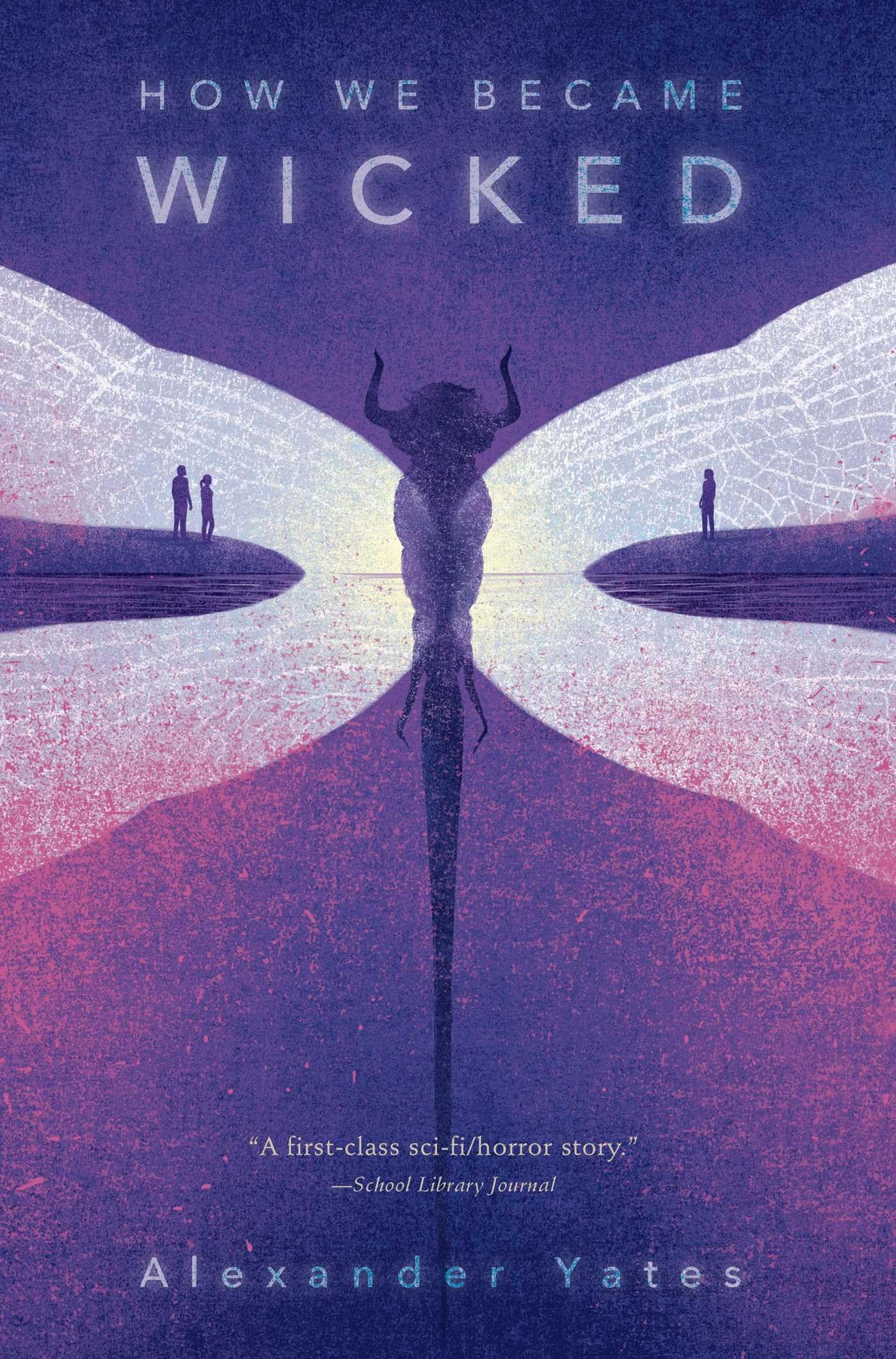



“Stunning, gut-punching.” — BCCB (starred review) “Vividly imagined and haunting.” — Booklist (starred review) When an insect-borne plague begins to envelop the world, three sixteen-year-olds struggle to survive amongst the healthy “trues” and the infected “wickeds” in this gripping dystopian tale from the author of The Winter Place . A plague, called Wickedness, is pulsing through the world; and in its wake, it’s dividing the population into thirds: The WICKED: Already infected by the droves of Singers, the ultraviolet mosquito-like insects who carry the plague, the Wicked roam the world freely. They don’t want for much—only to maim and dismember you. But don’t worry: They always ask politely first. The TRUE: The True live in contained, isolated communities. They’re the lucky ones; they found safety from the Singers. And while the threat of the Wicked may not be eliminated, for the True, the threat has certainly been contained… The VEXED: The Vexed are the truly fortunate ones—they survived the sting of the Singers, leaving them immune. But they’re far from safe. The Vexed hold the key to a cure, and there are those who will do anything to get it. In this brilliantly realized novel, three teens—Astrid, Hank, and Natalie—start to realize that the divisions of their world aren’t as clear as they seem, and are forced to question what being wicked truly means. Alexander Yates was born in Haiti and grew up in Mexico, Bolivia, and the Philippines. He is the author of the critically acclaimed adult novel Moondogs and YA novels The Winter Place and How We Became Wicked. Also a photographer, he lives in Dar es Salaam, Tanzania, with his wife. How We Became Wicked CHAPTER 1 The Lighthouse ASTRID AWOKE TO FIND THAT her bedroom was filled with a strange, warm light. It faded in an instant, leaving her blinking in the darkness. What had just happened? The clock said that it was four thirty in the morning. The whole sanctuary was on an electricity curfew, so the light couldn’t have come from any of her neighbors. And it certainly wasn’t a dream—Astrid didn’t have those. Then it came again. Her whole bedroom pulsed, brimming with white light. It was dull on her wallpaper and bright on the glass of her picture frames. Then once more it faded, plunging her back into darkness. Silently, Astrid counted the seconds as they ticked by. Exactly a minute later, there was another flash. A minute of darkness—a second of light. It could mean only one thing. “Oh, hell yes,” Astrid whispered to the walls of her bedroom. She jumped out of bed and went over to the window. It was a clear night, and in the starlight Astrid could just make out the glittering crescent of Goldsport—the seaside sanctuary where she’d spent her entire life. The harbor was socked in with a low-lying fog that stretched out into the bay, all the way to Puffin Island. There was a lighthouse on that island. It had been dead for years. And just now, for whatever reason, it had come back to life. The beam arced out over the water and across the sleeping village. Each time it passed across Astrid’s bedroom there was a flash, like a very slow knock-knock. Anybody home? Astrid turned to the window on the far side of her room, the one that looked out onto the Bushkirk house. She pulled up the glass. Cool air surged through the fine metal screen. “Hank,” she hissed as loud as she dared. “Wake up.” Hank’s bedroom window sat exactly opposite her own. The Bushkirks had lived next door to Astrid’s family since forever, and Hank Bushkirk had been her best friend for as long as either of them could remember. As it so happened, Hank was also Astrid’s ex-boyfriend. But that was a much newer development. “Hank,” she called again. Still no answer. Astrid considered leaving Hank to his sleep. But no—the light on Puffin Island was too important to let him miss. It might not have been a ship on the horizon, or a plane blinking across the stars, but it was the closest thing to a sign of life out there that either of them had seen in years. And besides, it was also a good excuse to talk to him. They’d barely spoken since breaking up. We didn’t break up. You dumped me. That was, in point of fact, the last thing Hank had said to her, nearly a month ago now. Astrid pressed her ear to the window screen, listening for the high-pitched hum of flying singers. When she heard nothing, she carefully worked her fingernails into the frame and pulled the screen back. It creaked, shedding little skins of rust. Astrid braced the screen open and plucked an old coin from the collection on her nightstand. The coin had a picture of a bearded man on one side and a picture of a house with columns on the other. It was called a penny. It used to be worth very little, and today it was worth even less. She had loads of them. Astrid took aim and flicked the penny against the screen of Hank’s bedroom window, where it made a loud, brassy ping. Astrid waited