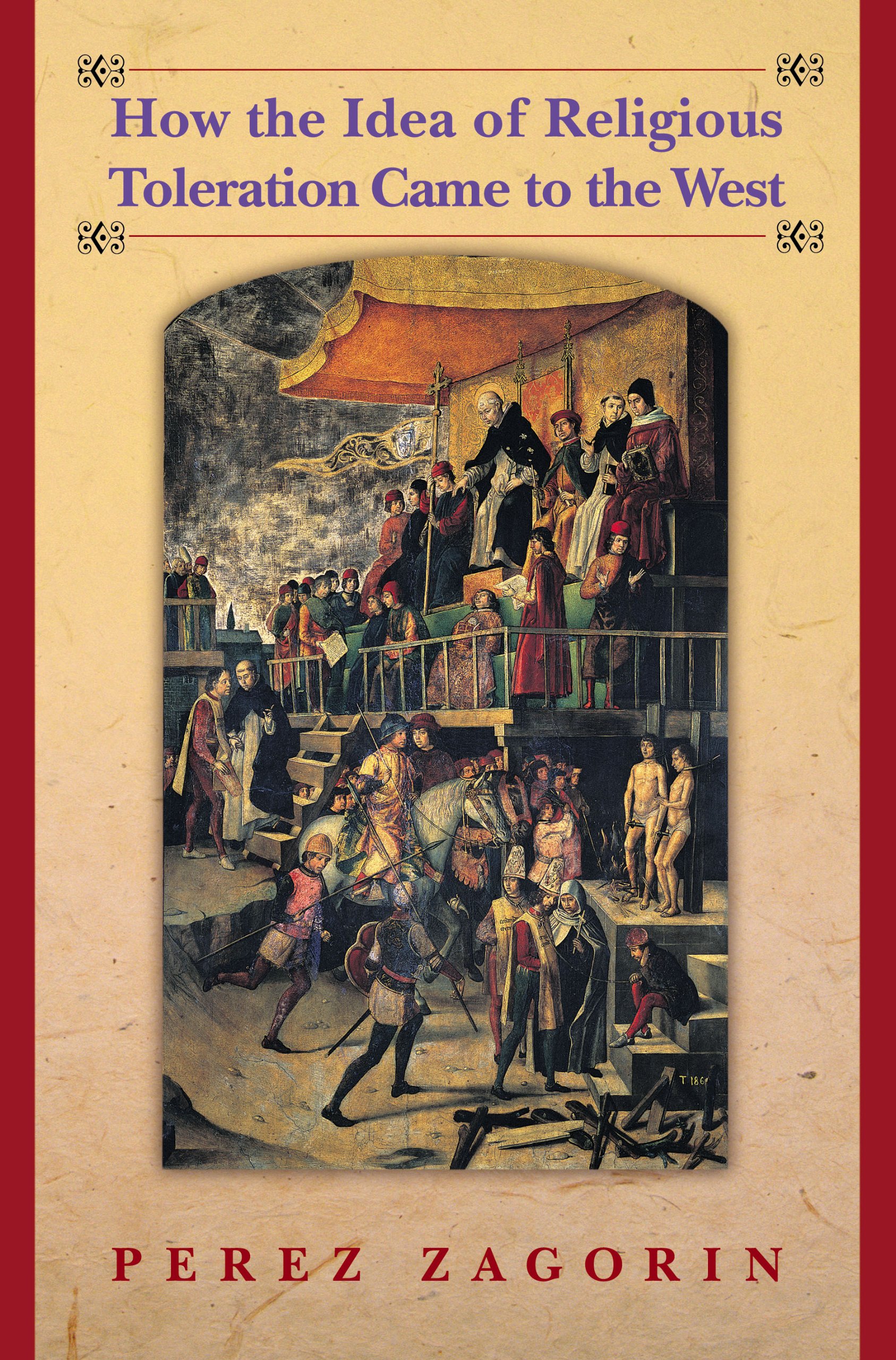



Religious intolerance, so terrible and deadly in its recent manifestations, is nothing new. In fact, until after the eighteenth century, Christianity was perhaps the most intolerant of all the great world religions. How Christian Europe and the West went from this extreme to their present universal belief in religious toleration is the momentous story fully told for the first time in this timely and important book by a leading historian of early modern Europe. Perez Zagorin takes readers to a time when both the Catholic Church and the main new Protestant denominations embraced a policy of endorsing religious persecution, coercing unity, and, with the state's help, mercilessly crushing dissent and heresy. This position had its roots in certain intellectual and religious traditions, which Zagorin traces before showing how out of the same traditions came the beginnings of pluralism in the West. Here we see how sixteenth- and seventeenth-century thinkers--writing from religious, theological, and philosophical perspectives--contributed far more than did political expediency or the growth of religious skepticism to advance the cause of toleration. Reading these thinkers--from Erasmus and Sir Thomas More to John Milton and John Locke, among others--Zagorin brings to light a common, if unexpected, thread: concern for the spiritual welfare of religion itself weighed more in the defense of toleration than did any secular or pragmatic arguments. His book--which ranges from England through the Netherlands, the post-1685 Huguenot Diaspora, and the American Colonies--also exposes a close connection between toleration and religious freedom. A far-reaching and incisive discussion of the major writers, thinkers, and controversies responsible for the emergence of religious tolerance in Western society--from the Enlightenment through the United Nations' Universal Declaration of Human Rights--this original and richly nuanced work constitutes an essential chapter in the intellectual history of the modern world. Americans who regard Islamic fundamentalists as peculiarly intolerant have much to learn from distinguished historian Zagorin, whose insightful research reminds us that for centuries no religionists persecuted heresy more ferociously than did Christians. In an analysis rich in narrative detail, Zagorin recounts the difficult and often perilous labors of the sixteenth- and seventeenth-century advocates of religious toleration, who challenged the West's terrible tradition of coercive orthodoxy. Though most early reformers valued dissent only long enough to create Protestant versions of the Catholic Inquisition, Zagorin's chronicle shows why followers of Luther and Calvin ultimately faced difficult questions about the state's traditional role as guardian of creedal uniformity. It may surprise readers that when oft-lauded cultural heroes such as John Milton, John Locke, and Roger Williams called for state tolerance of religious diversity, they were actually echoing the views of lesser-known religious libertarians, including the fearless French humanist Sebastian Castellio ("the first champion of religious toleration") and the outspoken Dutch patriot Dirck Volckertszoon Coornhert. And because Enlightenment thinkers, such as Voltaire and Jefferson, eventually secularized religious toleration in a broader advocacy of intellectual liberty, it may further surprise readers that the first warriors for freedom of belief found their warrant in Scripture. A book to dispel complacency about a priceless liberty. Bryce Christensen Copyright © American Library Association. All rights reserved "One of Los Angeles Times Book Review's Twenty Best Books for 2003" "The best introduction to the ideas of religious freedom can be found in Zagorin's volume. . . . [It] is never dull and often exciting." ---James Q. Wilson, Los Angeles Times Book Review "Ever since the Enlightenment, most Western governments have accepted religious toleration. In this superb intellectual history, noted early modern historian Zagorin traces the evolution of this concept from the first through the18th centuries; a brief conclusion carries the story to the present. . . . A well-written tract for our times." ― Choice "Americans who regard Islamic fundamentalists as peculiarly intolerant have much to learn from distinguished historian Zagorin. . . . A book to dispel complacency about a priceless liberty." ― Booklist "A deeply scholarly but ultimately engaging argument for the origins of religious toleration in Western culture since the Enlightenment. Combining elements of theology, philosophy, history, and politics, this intellectual history is less focused on thinkers than on a singular ideal: how the concept of religious toleration and freedom was born." ― Library Journal "Zagorin's exposition of the ideas on toleration emerging in the west in the early modern period is richly illuminating." ---Kimberly A. Bresler, Theology Today "This is an al