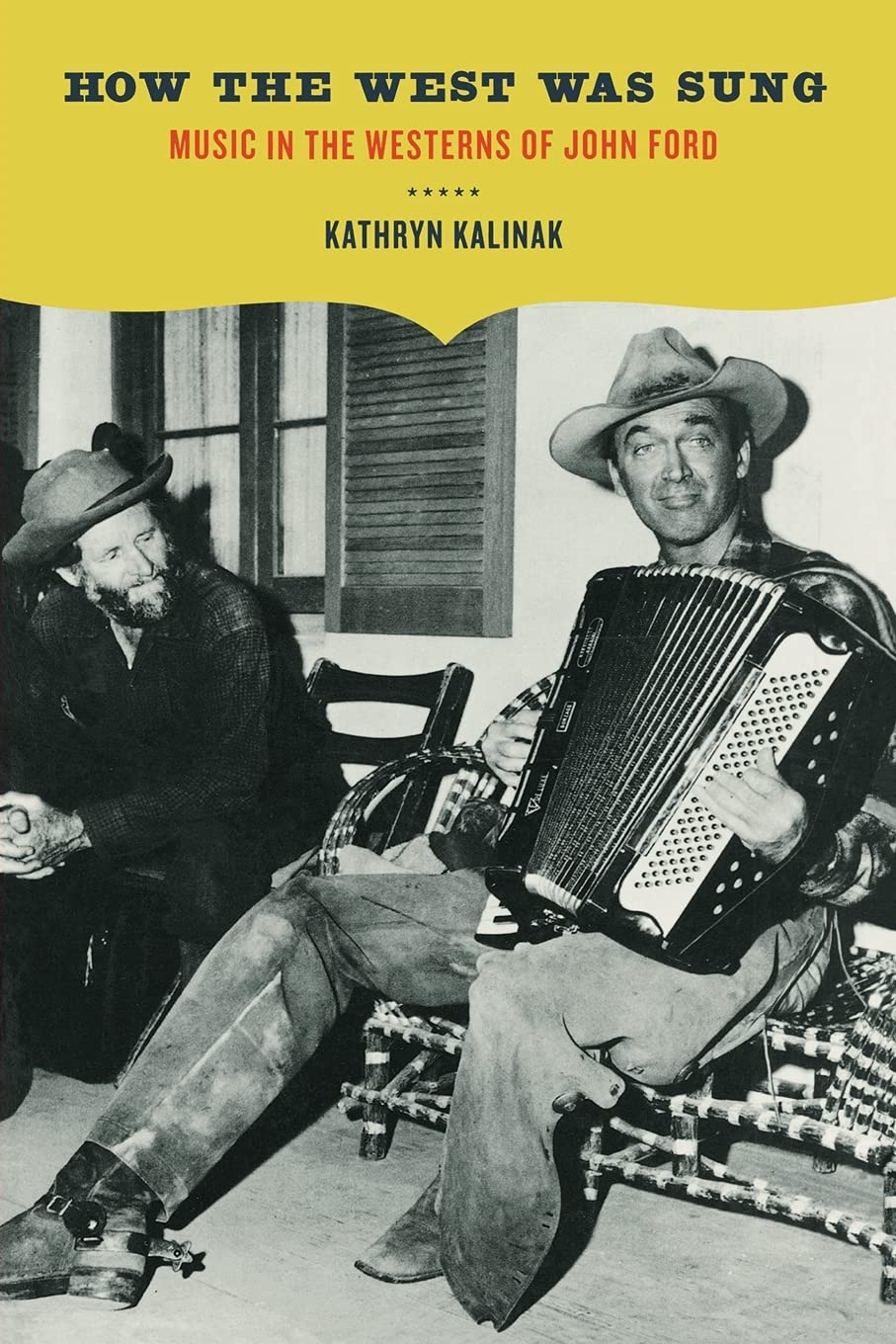



James Stewart once said, "For John Ford, there was no need for dialogue. The music said it all." This lively, accessible study is the first comprehensive analysis of Ford's use of music in his iconic westerns. Encompassing a variety of critical approaches and incorporating original archival research, Kathryn Kalinak explores the director's oft-noted predilection for American folk song, hymnody, and period music. What she finds is that Ford used music as more than a stylistic gesture. In fascinating discussions of Ford's westerns―from silent-era features such as Straight Shooting and The Iron Horse to classics of the sound era such as My Darling Clementine and The Searchers ―Kalinak describes how the director exploited music, and especially song, in defining the geographical and ideological space of the American West. “Kalinak artfully weaves the history and pedigree of nearly every tune [in] Ford’s Westerns . . . with their social and cultural meanings.” ― Notes Published On: 2010-07-06 “Thoroughly researched and well-written. . . . Illuminating.” ― American Studies Journal Published On: 2010-07-14 " How the West Was Sung is beautifully written, judiciously argued, and thoroughly researched. Even if you have a tin ear, Kathryn Kalinak will have you hearing Ford's Westerns in an entirely new way. This brilliant book represents a complete rethinking of films we thought we already knew." Krin Gabbard, author of Black Magic: White Hollywood and African American Culture " How the West Was Sung is beautifully written, judiciously argued, and thoroughly researched. Even if you have a tin ear, Kathryn Kalinak will have you hearing Ford's Westerns in an entirely new way. This brilliant book represents a complete rethinking of films we thought we already knew."―Krin Gabbard, author of Black Magic: White Hollywood and African American Culture Kathryn Kalinak is Professor of English and Film Studies at Rhode Island College and author of Settling the Score: Music and the Classical Hollywood Film. How the West Was Sung Music in the Westerns of John Ford By Kathryn Kalinak University of California Press Copyright © 2007 The Regents of the University of California All right reserved. ISBN: 978-0-520-25234-9 Contents Acknowledgments............................................................................................ixIntroduction...............................................................................................11. How the West Was Sung: Music in the Life and Films of John Ford.........................................92. Hearing the Music in John Ford's Silents: The Iron Horse and 3 Bad Men..................................233. "Based on American Folk Songs": Scoring the West in Stagecoach..........................................494. Two Fordian Film Scores: My Darling Clementine and The Man Who Shot Liberty Valance.....................765. "Western as Hell": 3 Godfathers and Wagon Master........................................................1006. "The Girl I Left Behind Me": Men, Women, and Ireland in the Cavalry Trilogy.............................1227. "What Makes a Man to Wander": The Searchers.............................................................1588. In the Shadow of The Searchers: Two Rode Together and Sergeant Rutledge.................................1819. Cheyenne Autumn: A Conclusion...........................................................................194Notes......................................................................................................203Select Bibliography........................................................................................235Index......................................................................................................241 Chapter One How the West Was Sung Music in the Life and Films of John Ford There were two pianos in the Ford household, but neither John Ford nor anyone else in his immediate family played them. Among the notable directors of Hollywood's classical studio era, Ford took the most active and sustained control of the music for his films, and yet he couldn't read music, he couldn't play an instrument, and he sang aloud only when drunk (and then only Irish songs), his grandson Dan told me. Yet professional musicians listened to what he had to say about the music. Much is made and rightly so of Ford's extraordinary visual sense, an eye for composition that seldom failed him. Ford had a musical sense, too, an instinctive feeling for when to use music and an encyclopedic knowledge of what music to use. For the westerns, he liked folk songs, nineteenth-century popular tunes, and Protestant hymnody. Ford treated music in much the same way he treated dialogue: pared it down to its essence, eliminated the irrelevant, and delivered it simply and without affectation. Such a minimalist approach, of course, depends upon choosing exactly the right line of dialogue and exac