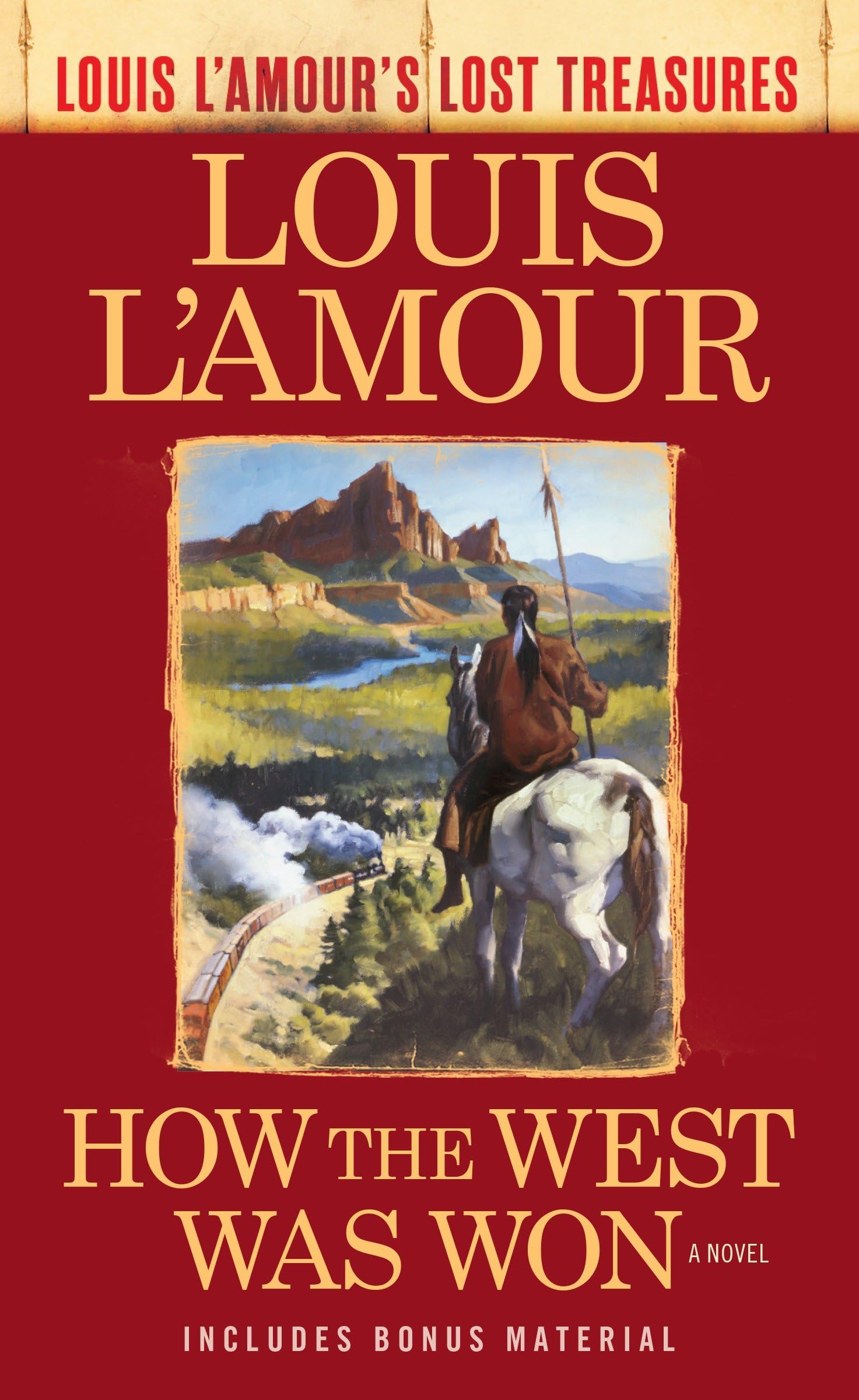



As part of the Louis L’Amour’s Lost Treasures series, this edition contains exclusive bonus materials! They came by river and by wagon train, braving the endless distances of the Great Plains and the icy passes of the Sierra Nevada. They were men like Linus Rawlings, a restless survivor of Indian country who’d headed east to see the ocean but left his heart—and his home—in the West. They were women like Lilith Prescott, a smart, spirited beauty who fled her family and fell for a gambling man in the midst of a frontier gold boom. These pioneering men and women sowed the seeds of a nation with their courage—and with their blood. Here is the story of how their paths would meet amid the epic struggle against fierce enemies and nature’s cruelty, to win for all time the rich and untamed West. Louis L’Amour’s Lost Treasures is a project created to release some of the author’s more unconventional manuscripts from the family archives. In Louis L’Amour’s Lost Treasures: Volumes 1, Beau L’Amour takes the reader on a guided tour through many of the finished and unfinished short stories, novels, and treatments that his father was never able to publish during his lifetime. L’Amour’s never-before-seen first novel, No Traveller Returns, faithfully completed for this program, is a voyage into danger and violence on the high seas. These exciting publications will be followed by Louis L’Amour’s Lost Treasures: Volume 2 . Additionally, many beloved classics will be rereleased with an exclusive Lost Treasures postscript featuring previously unpublished material, including outlines, plot notes, and alternate drafts. These postscripts tell the story behind the stories that millions of readers have come to know and cherish. Our foremost storyteller of the American West, Louis L’Amour has thrilled a nation by chronicling the adventures of the brave men and woman who settled the frontier. There are more than three hundred million copies of his books in print around the world. 9780425286098
excerpt L'Amour / HOW THE WEST WAS WON CHAPTER 1 THE SUN WAS not an hour high when Linus Rawlings came upon the trail of the Ute war party. The high walls of the narrowing valley of the Rio Grande barred all escape, and Linus knew he was in trouble. A man of infinite patience, he was patient now, sitting his line-backed buckskin in the dappling shadow of the aspens. Behind him trailed three packhorses carrying his winter’s catch of furs, while before him the mountain slope lay bright with the first shy green of spring. Nothing moved along that slope, nor in the valley below . . . only the trembling leaves of the aspen. Linus, never one to accept the appearance of things in Indian country, remained where he was. Against the background of the aspens he was invisible as long as he remained still, for his clothing, the horses, and their packs were all of a neutral color, blending well with their surroundings. Methodically, his eyes searched the slope, sweeping from side to side, taking in every clump of brush or aspen, every outcropping of rock, each color change in the grass. It had been a long time since Linus Rawlings had skylined himself on the top of a ridge, or slept beside a campfire. He had known men who did both things . . . they were dead now. It was no accident that he always stopped with a background against which his shape could offer no outline. When in Indian country you never took a risk, whether you suspected an enemy to be near or not. You learned also to make a fire that was small, on which to prepare your meal, and after eating to shift your camp a few miles and sleep in darkness, without a fire. Such things as these were the simple rules of survival in the Indian country; and besides these, there were others—never to take a step without a weapon, as well as to observe the movements of birds and animals as indications of danger. Linus no longer even thought about the necessity of doing such things, for they had become as natural as breathing. He saw that the Ute war party comprised a dozen Indians; and if they were headed for a raid on the Spanish settlements to the south, they might well plan a rendezvous with other Indians along the trail. They were only minutes ahead of him, and the question was . . . did they know he was behind them? He studied the slope with a skeptical eye. Behind his lazy, easygoing façade, Linus Rawlings’s mind had been sharpened and his senses honed by thirty-two years of frontier living. Born in the dark forests of western Pennsylvania, where his family had been among the first to settle, Linus had moved west with his father to Illinois when only fifteen, and shortly after his father’s death he had taken up with a keelboat outfit and had gone west to trap fur. In the sixteen years that followed he ranged from the Kootenal River in Montana to the Gila in Arizona, from the shores of the Pacific to the eastern slopes of the Black Hills. He trapped in company with Jim B
excerpt L'Amour / HOW THE WEST WAS WON CHAPTER 1 THE SUN WAS not an hour high when Linus Rawlings came upon the trail of the Ute war party. The high walls of the narrowing valley of the Rio Grande barred all escape, and Linus knew he was in trouble. A man of infinite patience, he was patient now, sitting his line-backed buckskin in the dappling shadow of the aspens. Behind him trailed three packhorses carrying his winter’s catch of furs, while before him the mountain slope lay bright with the first shy green of spring. Nothing moved along that slope, nor in the valley below . . . only the trembling leaves of the aspen. Linus, never one to accept the appearance of things in Indian country, remained where he was. Against the background of the aspens he was invisible as long as he remained still, for his clothing, the horses, and their packs were all of a neutral color, blending well with their surroundings. Methodically, his eyes searched the slope, sweeping from side to side, taking in every clump of brush or aspen, every outcropping of rock, each color change in the grass. It had been a long time since Linus Rawlings had skylined himself on the top of a ridge, or slept beside a campfire. He had known men who did both things . . . they were dead now. It was no accident that he always stopped with a background against which his shape could offer no outline. When in Indian country you never took a risk, whether you suspected an enemy to be near or not. You learned also to make a fire that was small, on which to prepare your meal, and after eating to shift your camp a few miles and sleep in darkness, without a fire. Such things as these were the simple rules of survival in the Indian country; and besides these, there were others—never to take a step without a weapon, as well as to observe the movements of birds and animals as indications of danger. Linus no longer even thought about the necessity of doing such things, for they had become as natural as breathing. He saw that the Ute war party comprised a dozen Indians; and if they were headed for a raid on the Spanish settlements to the south, they might well plan a rendezvous with other Indians along the trail. They were only minutes ahead of him, and the question was . . . did they know he was behind them? He studied the slope with a skeptical eye. Behind his lazy, easygoing façade, Linus Rawlings’s mind had been sharpened and his senses honed by thirty-two years of frontier living. Born in the dark forests of western Pennsylvania, where his family had been among the first to settle, Linus had moved west with his father to Illinois when only fifteen, and shortly after his father’s death he had taken up with a keelboat outfit and had gone west to trap fur. In the sixteen years that followed he ranged from the Kootenal River in Montana to the Gila in Arizona, from the shores of the Pacific to the eastern slopes of the Black Hills. He trapped in company with Jim B