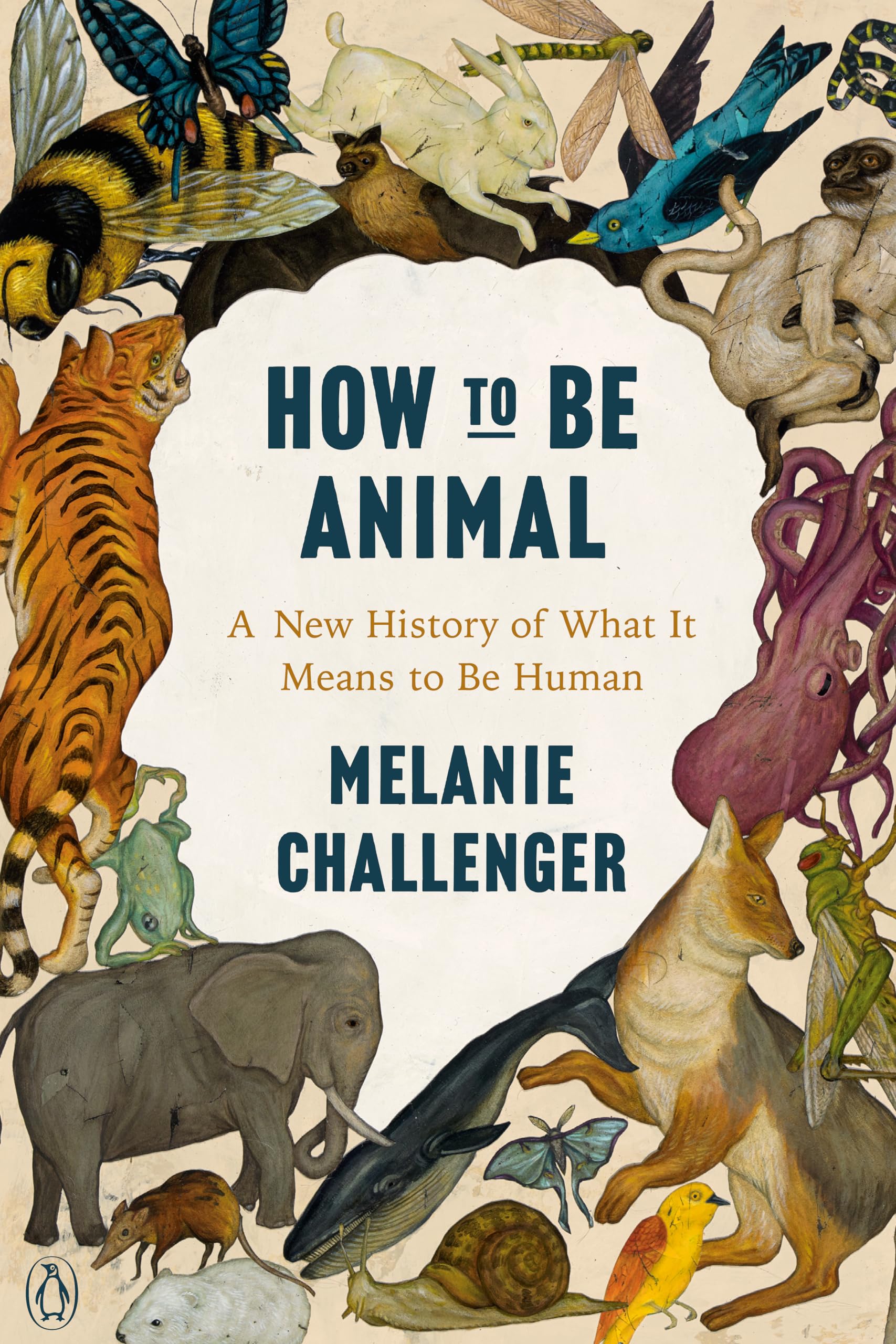



“A remarkable combination of biology, genetics, zoology, evolutionary psychology and philosophy.” —Richard Powers, Pulitzer Prize-winning author of The Overstory “A brilliant, thought-provoking book.” —Matt Haig, New York Times bestselling author of The Midnight Library A wide-ranging take on why humans have a troubled relationship with being an animal, and why we need a better one Human are the most inquisitive, emotional, imaginative, aggressive, and baffling animals on the planet. But we are also an animal that does not think it is an animal. How well do we really know ourselves? How to Be Animal tells a remarkable story of what it means to be human and argues that at the heart of our existence is a profound struggle with being animal. We possess a psychology that seeks separation between humanity and the rest of nature, and we have invented grand ideologies to magnify this. As well as piecing together the mystery of how this mindset evolved, Challenger's book examines the wide-reaching ways in which it affects our lives, from our politics to the way we distance ourselves from other species. We travel from the origin of homo sapiens through the agrarian and industrial revolutions, the age of the internet, and on to the futures of AI and human-machine interface. Challenger examines how technology influences our sense of our own animal nature and our relationship with other species with whom we share this fragile planet. That we are separated from our own animality is a delusion, according to Challenger. Blending nature writing, history, and moral philosophy, How to Be Animal is both a fascinating reappraisal of what it means to be human, and a robust defense of what it means to be an animal. “[ How To Be Animal ] is a remarkable combination of biology, genetics, zoology, evolutionary psychology and philosophy. And I think it’s one of the better explorations and refutations of human exceptionalism that I’ve read. Challenger actually raises this suggestion that it may be our own discomfort and denial of our own animal nature that makes it so easy to denigrate our fellow citizens. I think that her reflections on the relations between humans and non-humans belong on the shelf next to people like Peter Singer and David Abraham.” —Richard Powers, author of The Overstory “[A] brilliant, thought-provoking book. It is so wise and so well researched and makes you realize that so much of where we go wrong as a species—socially, psychologically, environmentally—involves forgetting or trying to escape our nature.” —Matt Haig, author of The Midnight Library , via Instagram “As Challenger observes, ‘our fear of being animal’ may cause us ‘to hammer out a more frightening world’ . . . Challenger’s book is a dizzyingly ambitious attempt to correct this destructive logic by examining its genesis. How to Be Animal induces the same kind of vertigo I experienced as a child while pondering where I was before I was born . . . . What [it] brings forth so beautifully is that impermanence is not a state confirmed by death. It’s not that I exist until I’m dead, it’s that my sense of an ‘I’ is never concrete but arrives continuously.” —Charlotte Shane, Bookforum “Challenger mounts a searching critique of our ingrained sense that we are not wholly animal . . . she argues that humans are essentially embodied creatures . . . showing how our minds are integrally connected with not only our brains but the rest of our bodies, our nervous systems and inner organs.” — New York Review of Books “This is a brilliant book that, like many brilliant books, explores what it means to be human. The difference here is that the author answers this by highlighting one central human dilemma: we are an animal in denial that we are actually an animal.” — Observer “[R]iveting . . . How to Be Animal and the exceptionalist model are useful starting points for thinking about the broad context in which the COVID-19 pandemic sits.” — Psychology Today “This is a provocative, incisive and worried book, carried off with no small degree of élan. It is multi-disciplinary, taking in ecology, philosophy, law, futurology, psychology, palaeontology and anthropology . . . One of the very best parts of this book is the manner in which Challenger conflates intellectual activities that can seem opposed . . . There are plenty of books I could recommend on each one of Challenger’s topics, but this book skillfully braids all of them.” — The Scotsman “[A] winning rumination . . . Challenger convincingly demonstrates that ‘the human form of consciousness and its capacity to deliver meaning’ doesn’t negate the natural world’s ‘spectacle of richness.’ Impassioned and intelligent, this is a treatise with the possibility to change minds.” — Publishers Weekly , STARRED REVIEW “[A] fascinating and cutting-edge meditation on humanity . . . humbling [and] timely . . . Every chapter is more riveting than the last, a truly remarkable read.”