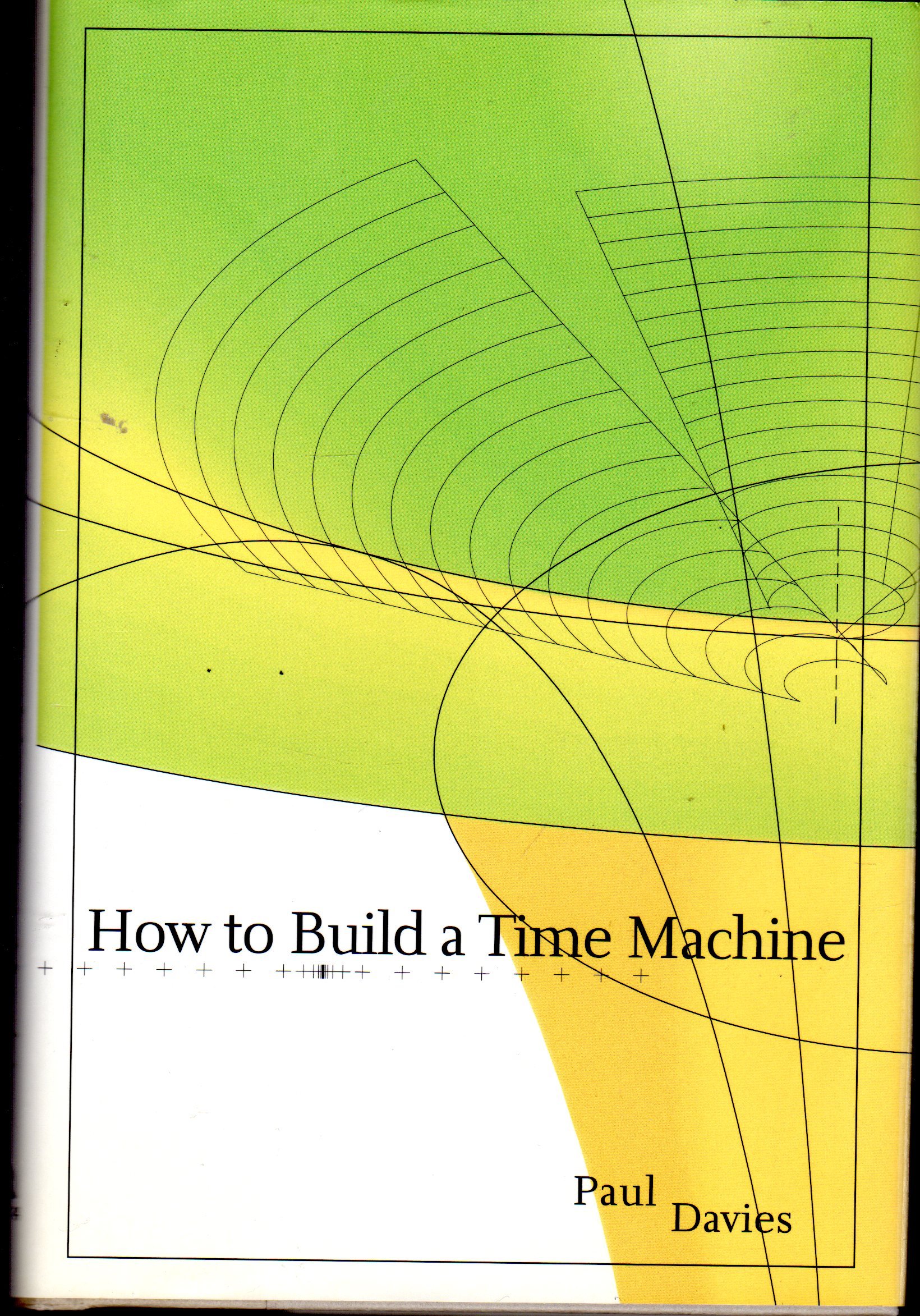



An award-winning physicist delves deeply into the science behind time travel, speculating that recent developments in physics make the sci-fi scenario a scientific possibility. Is time travel possible? Yes, says Davies, who recently retired (in his early 50s) as professor of mathematical physics at the University of Adelaide in Australia to concentrate on his writing. But "a moment's thought uncovers some tricky questions." Whereupon he discusses lucidly and engagingly both the concepts of physics that establish the possibility of time travel and the tricky questions. You could reach the future "by simply moving very fast." For visiting the past, the most popular proposal is a wormhole, "a sculpture in the structure of space that provides a shortcut between two widely separated spaces." There may be "cosmic taboos," though, that make time travel forever elusive. Editors of Scientific American A time-traveling machine can be constructed--provided one rotates a superdense cylinder of infinite length or locates a wormhole. Such are the contraptions contemporary physicists such as Frank Tipler and Kip Thorne ( Black Holes and Time Warps , 1994) have conceived in their explorations of whether it's possible to build a time machine. Davies, also a physicist, has an impressive track record of writing popular titles about space-time (e.g., About Time , 1995), and he opens up the fascinating yet weird concept of time travel to readers new to the basic features of space-time. That does not mean his precis is simple, but it is lucid throughout, even sketching out the four technical parts required in a time machine that exploits quantum effects. And if a machine were actually built, many paradoxes would arise, which Davies explores in an inventive manner. An excellent explainer, Davies will well reward the curious bent on bending space-time. Gilbert Taylor Copyright © American Library Association. All rights reserved ...a challenging, occassionally whimsical examination of the theoretical and practical difficulties facing a 'time machine.' -- Chicago Tribune , April 4, 2002 ...a terrific...explanation of the theoretical foundations upon which the notion of time itself...is understood. -- San Diego Union Tribune , March 10, 2002 ...to undertake such a journey, you'd first need to read Paul Davies' new book... -- Dallas Morning News , March 18, 2002 Davies is an old pro at this topic, and he does a commendable job of keeping the explanations simple. -- Discover , March 2002 An internationally acclaimed theoretical physicist, Paul Davies has explained the mysteries of science to a huge audience through his bestselling books and radio broadcasts. In 1995, Davies won the prestigious Templeton Prize for his work on the philosophical meaning of science, and he was recently awarded the Kelvin Medal by the UK Institute of Physics. Davies is based in Australia, but spends a good deal of his time traveling, teaching, and lecturing all over the world, especially in the United States.