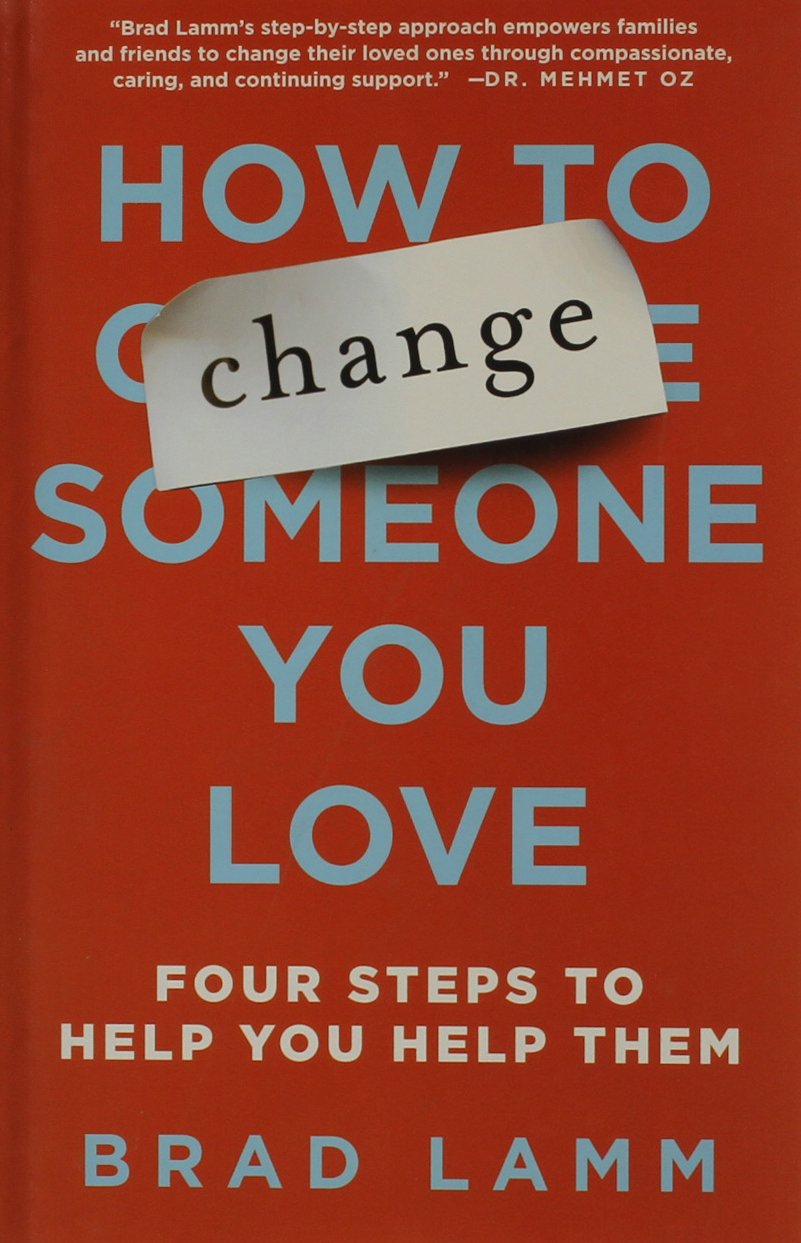



A powerful, ground-breaking book that shows you, in concrete steps, how to stop a loved one from engaging in self destructive behavior. Stop your husband from drinking himself to death. Don't let your brother lose it all to gambling. Get your kid off drugs. Motivate your best friend to lose weight. Make your spendthrift brother-in-law stop maxing out his credit cards. Get your sister out of an abusive relationship. Erase anger in your co-worker. If you're tired of watching your spouse, child, relative, or best friend go downhill, dragging you with them, How to Change Someone You Love will help you turn their lives around. You don't have to endure behavior that is unhealthy, abusive, possibly deadly, and that threatens to unravel relationships. You can change it. Many books will tell you that you can't change anyone. They advise you not to even try. The problem is, they ignore the tremendous power you actually have to change people. If most books about change are written for the addict or troubled person, How to Change Someone You Love reaches out to the loved ones who know that change is critical and urgent. How to Change Someone You Love is not just a self-help book; this is a help-you-act book. "Brad Lamm’s step-by-step approach empowers families and friends to change their loved ones through compassionate, caring and continuing support."-- Dr. Mehmet Oz Brad Lamm has been helping others get sober and stay sober for years. Highly motivated and with long-term sobriety himself, he is a Board-Registered Interventionist, a teacher and speaker, and a founder of Intervention Specialists. Previously a news anchor, his TV work today centers on family systems and teaching people how to begin change in their own lives, and in the lives of those they love. PART I At the End of Your Rope Is Hope ONE You’ve Got the Power! If anyone needed to change, it was me. From the time I was a teenager, I had a preoccupation with catching a buzz. The son of a preacher, I grew up in a drug-and alcohol-free home in Eugene, Oregon. Our house, situated on an acre of land, was a neat, modest wood-frame home on Kirkwood Street, a road away from my father’s church. Our house was surrounded by azaleas, rosebushes, towering oak trees, and a large lawn that I and my three brothers mowed regularly. There was a garden in our backyard where we grew a lot of our own food, and we were able to can a season’s worth of fruit and vegetables. Folks from the church, many of them farmers and fishermen, would stop by with beef, lamb, salmon, and crab to fill our two large freezers. There were sidewalks, neighbors waving from their porches, and schools within walking distance of my house. Life in Eugene was largely predictable and tranquil. But mine was not. I was born with a birth defect: abnormal breast tissue. In other words, I had boobs. I looked like I needed a bra. I refused to take a shower at school, and my secret was something I tried to keep. But in fifth grade, I was exposed by a coach who took delight in making sure I was always a "skin"—that is, assigned to the team that had to take their shirts off to play ball. "Look at Lamm’s tits!" the coach would yell. It was cruel. To be laughed at. To be different. To be in fear of discovery. It just hurt way too much. I decided one day that I should kill myself—and confessed my intention to my parents. They were shocked: "We never brought it up because we didn’t want you to be even more self-conscious," they said. My emotional crisis forced a decision on their part—to correct my deformity as soon as possible. At age fifteen, I had surgery, and voila, the outside had changed. Yes, the physical was improved, fixed. But the birth deformity, although corrected, left me feeling damaged emotionally; the psychological scars of being laughed at and mocked as a kid still remained. For most of my life, I felt like I didn’t belong, like I could never belong, like every room I walked into was an unwelcome one. The same year I had the surgery, I attended a Christmas party at a retirement home where I played the piano on Sunday mornings for the old folks’ church service. When no one was looking, I snuck a bottle of champagne, locked myself in a bathroom, and chugged it down. My first experience with alcohol equalized all the unease with which I lived. Gradually, alcohol became something I felt I needed desperately, in order to remove my insecurities, make me feel like I fit in, and provide relief from my feelings. The more alcohol something had, the better, and I conscientiously read the bottle labels to make sure I was getting the highest proof available. My drinking escalated. At the beginning of my freshman year in college, I’d get drunk before classes, then snort cocaine to boot myself out the door. As time went on, drugs of all types became a fixation, especially cocaine. It was an obsession, lord and master over my life, all I ever thought about. I decided to leave college at age nineteen. My life