How to Save Your Own Life: 15 Inspiring Lessons Including: Finding Blessings in Disguise, Coping with Life's Greatest Challanges, and Discovering
$14.00
by Michael Gates Gill



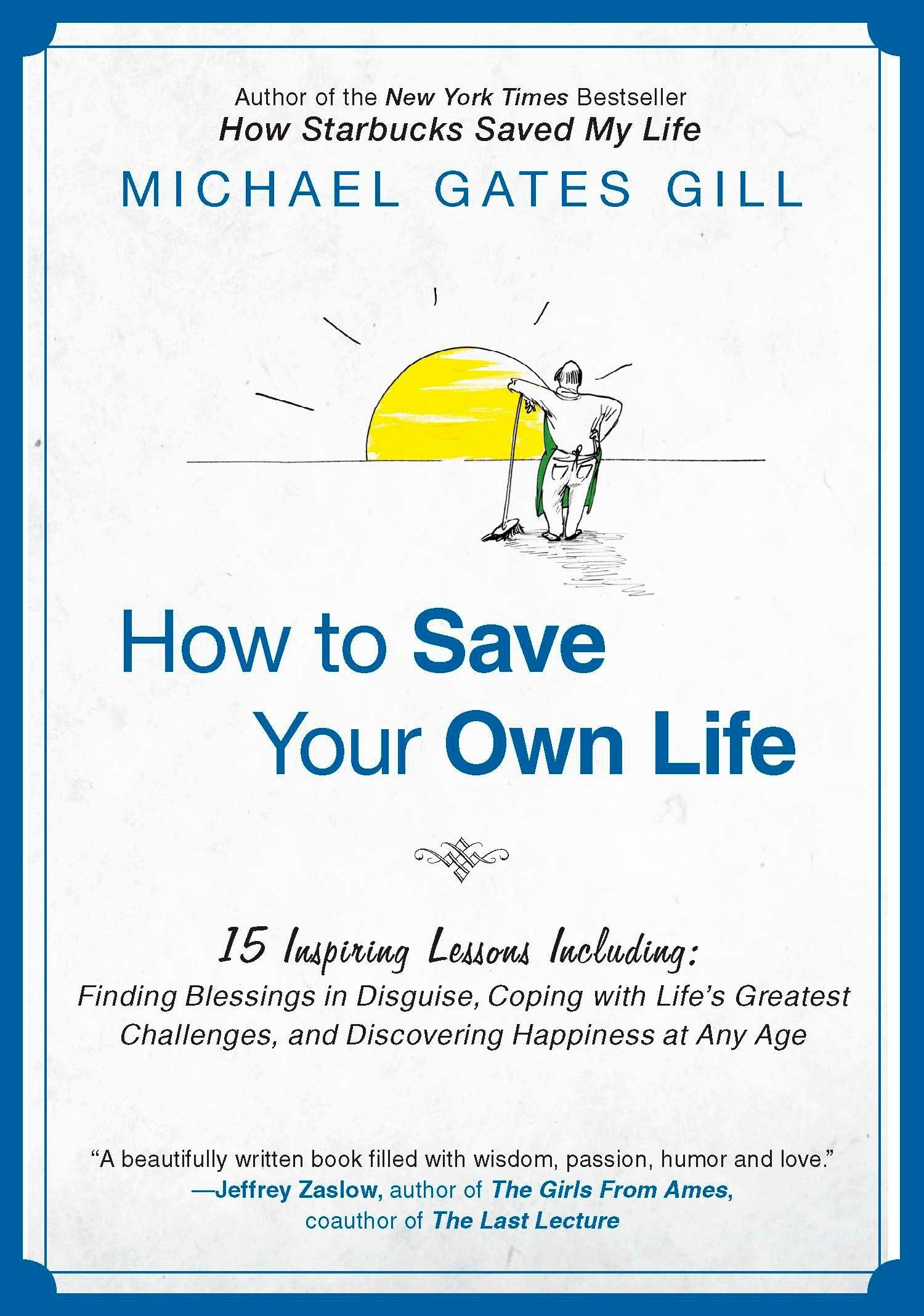
The author of the New York Times bestseller How Starbucks Saved My Life perks up America with inspiring lessons on finding true happiness at any age and any stage of life. Michael Gill's lemons-to-lemonade memoir chronicled his transformative year working at Starbucks after losing his high-powered job, his marriage, and his health (he developed a brain tumor). In response to overwhelming requests from readers who wanted to know how they, too, could weather downturns, he has distilled his wisdom into fifteen meaningful lessons, including: ? Leap...With faith: Sometimes it pays to leap without looking and say "yes" without thinking (Gill accepted the Starbucks job immediately, on a whim). ? Let . . .Yourself be Helped: pride is even more paralyzing than fear. ? Lose . . .Your Watch (and Cell phone and PDA!): Our obsession with productivity produces madness, not gladness. Offering living proof that extraordinary happiness is found in ordinary moments, How to Save Your Own Life provides empowering words and hope for anyone facing a reversal of fortune. True fortune, Gill discovered, lies not in fate but in discovering the innate capacity we all possess to rescue ourselves. "In this poignant follow-up [...] Gill-who still serves coffee at a New York Starbucks-examines what exactly he learned during that year. His 15 truisms on how to savor ordinary moments are simple yet powerful reminders." - Book Page "We are all lucky that Starbucks saved Michael Gates Gill's life. It enabled him to return with this beautifully written book filled with wisdom, passion, humor and love." - Jeffrey Zaslow, author The Girls From Ames , coauthor The Last Lecture The son of New Yorker writer Brendan Gill, Michael Gates Gill was a creative director at J. Walter Thompson Advertising, where he was employed for over twenty-five years. He lives in New York within walking distance of the Starbucks store where he works, and has no plans to retire from what he calls the best job he’s ever had. Lesson 1 Listen . . . To Others Who Have Suffered and Survived “A problem shared is a problem halved.” —English Proverb The other day I was standing in line at the checkout counter of a grocery store when a man came up to me, clearly upset and shaking with anxiety. “I read your book,” he said. “I recognize you from TV.” I nodded. It was my local store and he was my neighbor, so I smiled—not just to indicate that I welcomed his presence but also to calm him down. Not only was he literally shaking, but his hair was wild and uncombed, and he looked like he had not shaved for days. “I need to speak to you,” he said. “I am near the edge. You talked of thinking at one time you were near the end.” “Yes,” I said as the line inched forward. “How can I help?” “No one can really help,” he said, twisting his face almost into a snarl. It seemed full of anger—as much against the world as against me. “What happened?” I stammered, hoping to keep him talking as he hugged the grocery bag he was carrying and looked toward the exit. He was about to leave. He turned. I sensed that he was embarrassed even to be there, in a public place, asking for anyone’s help. His instinct when he had recognized me, as a guy who had made it through some hard times, had been powerful, though. He had reached out to me. I sensed he knew he’d involuntarily cried for help. But now as he glanced around with red-rimmed eyes, I could tell he was hoping to escape and forget that this encounter had ever happened. Yet he leaned a little closer to me, as though to confide a secret. “I worked for years,” he said, “like you. But I had my own business. I built it up myself!” Here I heard a clear ring of pride in his voice. Compared to me, he had really achieved something. I had only received a high-profile job through my connections. A Skull & Bones friend had offered me a job in the largest advertising agency in the world, and I’d ridden to my corporate life on the back of my birth and legacy and social position. My neighbor’s tone seemed to imply—which was his right and was also probably accurate—that in my corporate life as a top advertising executive, I had merely been a comfortable passenger on a huge train. Starting a company yourself took pride and courage that merely working for a company did not. “But recently,” he continued, his voice taking on a kind of complaining, rasping sound, “with these greedy bankers . . .” He left the sentence incomplete. The line was moving. I stepped forward. He now followed me. “I’ve been screwed,” he said. “The business I built over a lifetime is . . .” He couldn’t bring out the words. “I’m broke. The business is done.” Tears actually started into his eyes. I could sympathize. When I was fired, I stepped out into the street and wept. I knew how frightening it was to feel threatened in your professional life—especially if you defined yourself by that life, as I once had. Having experienced the shocking loss of a job myself, I wa