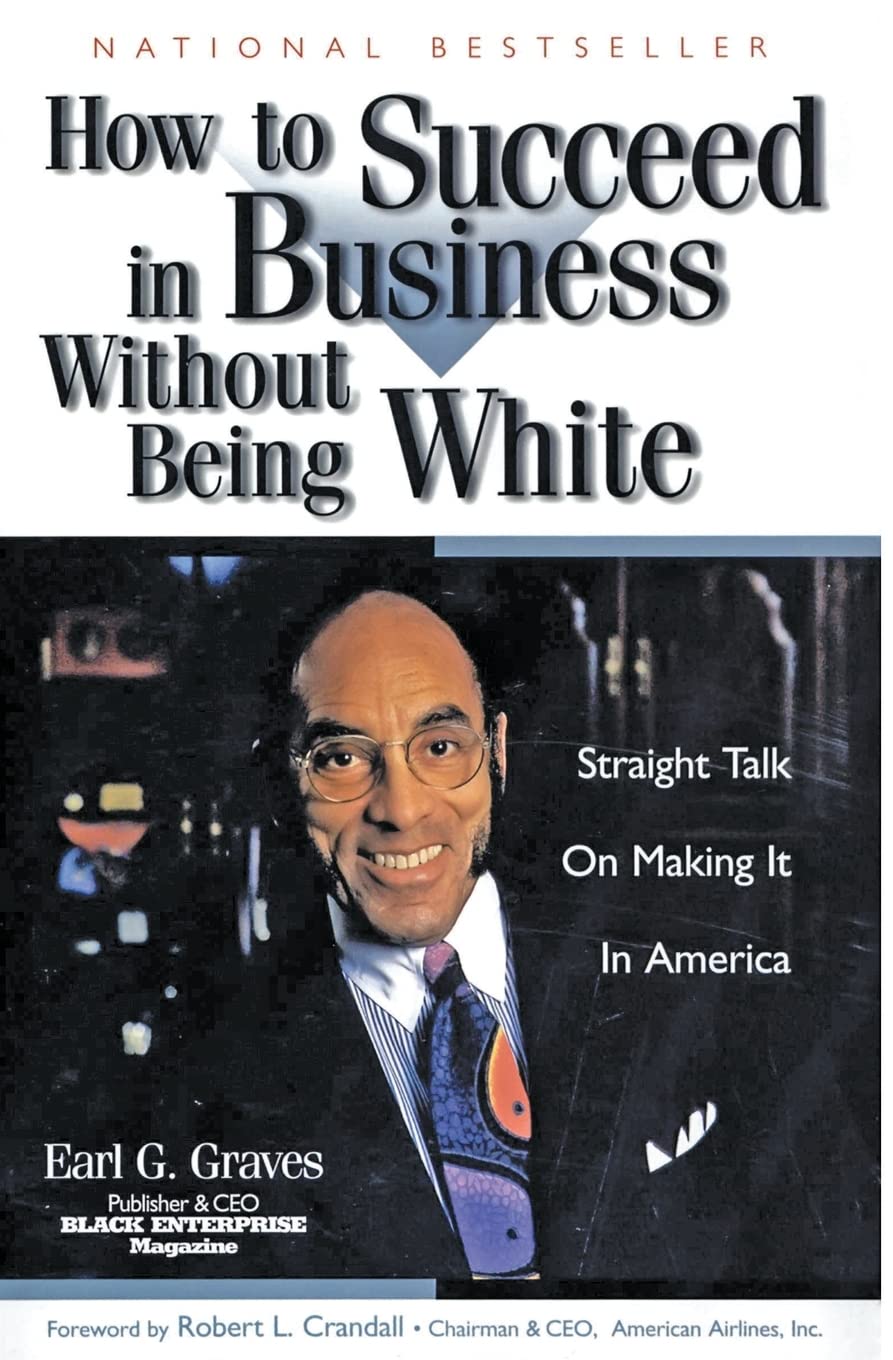
How to Succeed in Business Without Being White: Straight Talk on Making It in America – An Inspirational Entrepreneurship Guide for Black
$10.22
by Earl G. Graves



African-Americans are entering the business world in unprecedented numbers, and Earl G. Graves serves as their role model and mentor. Graves, one of the most influential and well-known executives in the world, in this timely andimportant book shows how he, the son of a West Indian garment worker, became a multimillionaire entrepreneur, director of several of America's Fortune 500 corporations and a philanthropist. Using his own story (which includes careers in the military, real estate and public service as an assistant to Senator Robert F. Kennedy), and those of dozens of other black men and women who have made it in the business world as examples, Graves offers inspirational and down-to-earth advice to help readers take advantage of opportunities to achieve personal and professional success. From overcoming the challenges blacks confront in getting financing for new ventures to identifying the best dustries and jobs for black job-seekers and cultivating the behaviors needed to make it as an entrepreneur, How to Succeed in Business Without Being White clearly lights the path readers can take to overcome adversity and succeed intoday's largely white business environment. "Graves engagingly dispenses blunt advice and sharp commentary."--"New York Times""A clarion call for African Americans."--Colin Powell"Highly valuable for anyone of any color."--Kenneth I. Chenault president and COO, American Express Company African-Americans are entering the business world in unprecedented numbers, and Earl G. Graves serves as their role model and mentor. Graves, one of the most influential and well-known executives in the world, in this timely andimportant book shows how he, the son of a West Indian garment worker, became a multimillionaire entrepreneur, director of several of America's Fortune 500 corporations and a philanthropist. Using his own story (which includes careers in the military, real estate and public service as an assistant to Senator Robert F. Kennedy), and those of dozens of other black men and women who have made it in the business world as examples, Graves offers inspirational and down-to-earth advice to help readers take advantage of opportunities to achieve personal and professional success. From overcoming the challenges blacks confront in getting financing for new ventures to identifying the best dustries and jobs for black job-seekers and cultivating the behaviors needed to make it as an entrepreneur, How to Succeed in Business Without Being White clearly lights the path readers can take to overcome adversity and succeed intoday's largely white business environment. EARL G. GRAVES is president and CEO of Earl G. Graves, Ltd., and publisher of Black Enterprise magazine, an award-winning monthly publication for African Americans in business. He is chairman and CEO of Pepsi-Cola of Washington, D.C., L.P., the largest minority-controlled Pepsi-Cola franchise in the United States. Graves is a nationally recognized authority on black business development and serves on the boards of the Black Business Council, Howard University, the Boy Scouts of America, and the Glass Ceiling Commission. He is a director of Aetna Inc.; AMR Corporation (American Airlines); Chrysler Corporation; Federated Department Stores, Inc.; and Rohm & Haas Corporation. Graves is the recipient of 37 honorary degrees. Graves lives in Westchester County, New York, with his wife of 37 years, Barbara. They have three married sons and a growing brood of grandchildren. Opening Business On December 4, 1991, less than two years after his release from 27 years' imprisonment, South African hero Nelson Mandela came to meet with many of the most powerful African American business and political leaders in the country at the corporate offices of Black Enterprise and Earl G. Graves Ltd. on Fifth Avenue in New York City. In our executive boardroom, Mandela met with professional black men and women who have led the way in creating unprecedented wealth in this country He met with leaders of government, founders of multimillion-dollar international corporations, investors, bankers, lawyers, industrialists, religious leaders, visionaries and entrepreneurs. All of them with skin as richly colored as his. "We asked for this meeting because of our desire to learn the principles and strategies of economic empowerment for blacks in our country," Mandela said. "Until we have a very strong business class, it is going to be difficult for us to make real progress." Mandela's powerful voice echoed themes near and dear to my heart and, I believe, to yours too: economic empowerment for African Americans and blacks around the worldthe creation of a strong business class with the ability to leverage its might for the good of the entire black communityequal opportunity for blacks to achieve success at whatever it is that we want to do with our talents and initiative In the pages that follow, I offer you the key to all of those things. No one, black or