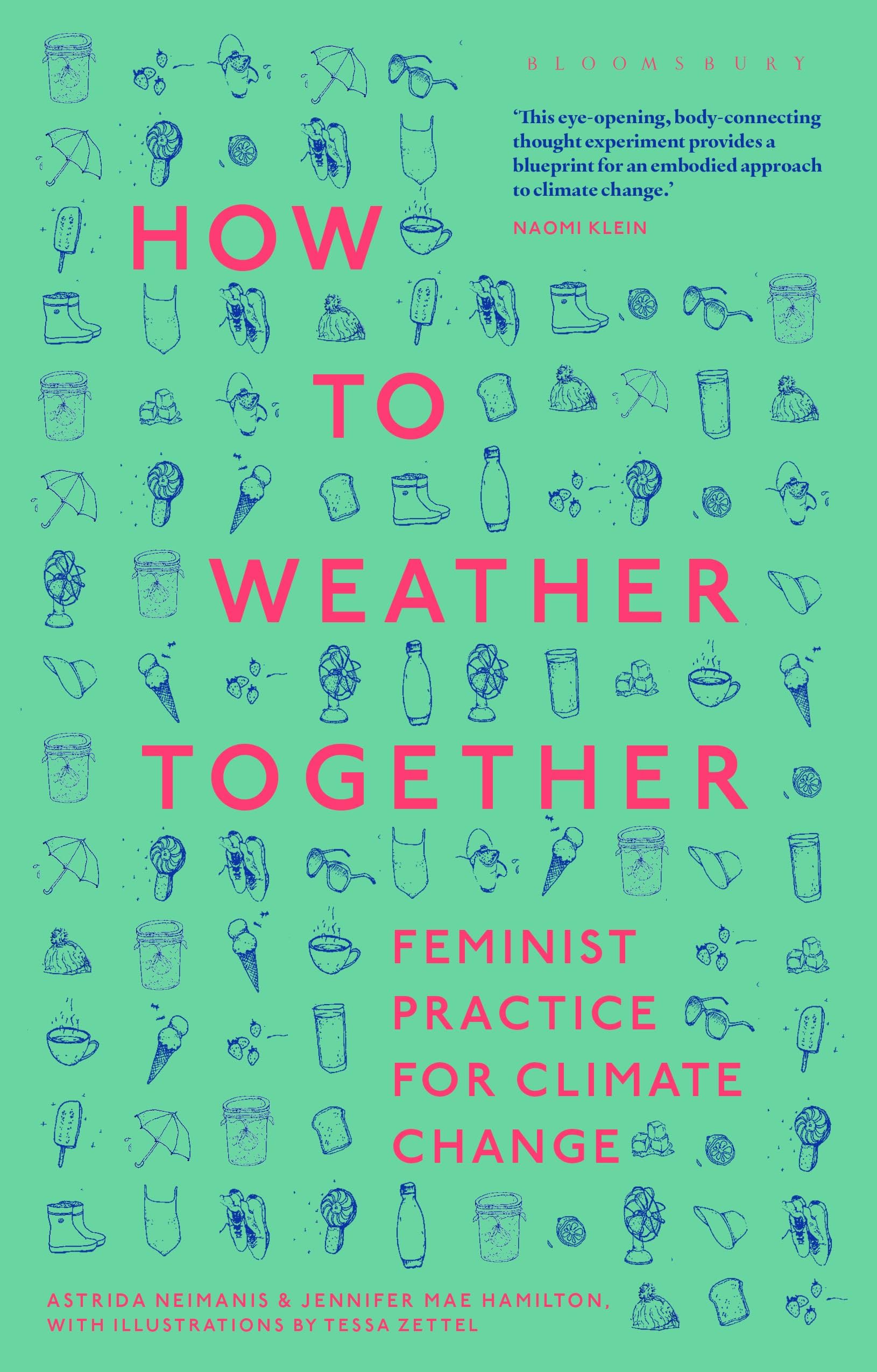
How to Weather Together: Feminist Practice for Climate Change (Environmental Cultures)
$80.00
by Astrida Neimanis



In How to Weather Together , Astrida Neimanis and Jennifer Mae Hamilton develop an innovative model for climate change mitigation and adaptation that brings together climate justice and community engagement. Translating feminist theory into practice, they demonstrate how we can gradually change the world as the world changes us. Drawing on a rich and varied history of feminist, queer and anticolonial scholarship, Neimanis and Hamilton propose 'weathering' as both a theoretical framework and a set of practical tools for responding to environmental catastrophe. They ask how we can reckon with existential crisis through playful, low-tech practice by connecting the planetary to the personal. With photographs and a series of illustrated weathering activities throughout, the book turns academic concepts into practical, hands-on guidance for community groups, artists, students, researchers, and others. It shows how climate adaptation requires building better social infrastructures for our shared but different worlds. “This eye-opening, body-connecting thought experiment provides a blueprint for an embodied approach to climate change. Neimanis and Hamilton span continents and communities with stories of building community infrastructures for dealing with the changing weather.” ― Naomi Klein “Framed in feminist, queer and anticolonial theories and ethics, Astrida Neimanis and Jennifer Hamilton's How to Weather Together: Feminist Practice for Climate Change is a brilliant book on weathering, a new concept so well discussed in theory and practice that it will change the way we understand and respond to climate change and weather, as well as to social-political weathers.” ― Serpil Oppermann, Professor of Environmental Humanities, and Director of Environmental Humanities Center, Cappadocia University, Turkey. Astrida Neimanis is Canada Research Chair in Feminist Environmental Humanities at the University of British Columbia, Canada on unceded syilx territory. Jennifer Mae Hamilton lives and works on unceded Anaiwan Country as Senior Lecturer in Literary Studies at the University of New England, Australia. Richard Kerridge is a nature writer and ecocritic who leads the MA in Creative Writing and co-ordinates research and postgraduate studies in English Literature and Creative Writing at Bath Spa University, UK. His works include: Cold Blood: Adventures with Reptiles and Amphibians (2014), J. H. Prynne's place-based poem-sequence The Oval Window, in collaboration with the late N. H. Reeve (2018), Writing the Enviornment (1998) and his other nature writing has been broadcast and published in BBC Wildlife, Poetry Review and Granta. He was awarded the 2012 Roger Deakin Prize by the Society of Authors, and has twice received the BBC Wildlife Award for Nature Writing. He was founding Chair of ASLE-UKI and has been an elected member of the ASLE Executive Council. With Greg Garrard he is co-editor of the Bloomsbury Academic series 'Environmental Cultures' – the first series of monographs in the Environmental Humanities to be published in Britain and he is a member of the steering committee of New Networks for Nature. Greg Garrard is Associate Professor of Sustainability at the University of British Columbia, Canada. He is the author of the bestselling book Ecocriticism (2nd edition, 2011) and editor of The Oxford Handbook of Ecocriticism (2014).